
Horse breed
Kalmyk
The Kalmyk horse originates from the steppes of Kalmykia, a region located in southwestern Russia. It was developed by the Kalmyk people, nomads of Mongolian origin, from Mongolian horses and crosses with local breeds.

The breed at a glance
The Kalmyk is renowned for its calm, courageous, and resilient temperament. It is intelligent, easy to train, and very enduring, making it an excellent companion for long rides and work. It is also very hardy and self-sufficient.
- Category
- hardy breed
- Origin
- Russia (Kalmykia) · 17th century
- Height at withers
- 135–145 cm
- Weight
- 350–400 kg
- Lifespan
- 20-25 years
- Common coats
- bay, chestnut, grey, black, dun, grullo
- Disciplines
- endurance riding, trail riding, working equitation
- Other names
- Kalmouk
Origin and history
The Kalmyk horse originates from the steppes of Kalmykia, a region located in southwestern Russia. It was developed by the Kalmyk people, nomads of Mongolian origin, from Mongolian horses and crosses with local breeds. This breed played a crucial role in the migrations and survival of the Kalmyks, being used for riding, light draft work, and as a source of milk and meat. Its official recognition as a distinct breed is closely tied to the history of this people.
Conformation and physique
The Kalmyk is a small, compact, and robust horse, typical of steppe breeds. It possesses a solid bone structure and well-developed musculature, adapted to life in a harsh environment.
The head is medium-sized, with a straight or slightly convex profile. The eyes are expressive, and the ears are medium-sized and well-set.
The neck is short, thick, and muscular, well-set into the shoulders. The Withers are not very pronounced, blending into the topline.
The back is short and strong, with a straight topline. The chest is broad and deep, ensuring good respiratory capacity. The croup is short, muscular, and slightly sloped.
The legs are short, clean, and very strong, with well-defined joints and robust tendons. The hooves are hard and resilient, adapted to varied terrains. Feathering is generally sparse.
- Common coats: bay, chestnut, grey, black, dun, grullo
Temperament and aptitudes
The Kalmyk is renowned for its calm, courageous, and resilient temperament. It is intelligent, easy to train, and very enduring, making it an excellent companion for long rides and work. It is also very hardy and self-sufficient.
The gaits are energetic, sure-footed, and enduring, with a ground-covering walk and trot. The gallop is powerful, allowing for long distances to be covered.
- Uses: saddle horse for nomads, pack horse, light draft horse, source of milk (from mares) and meat, equestrian trail riding, extensive rearing
- Disciplines: endurance riding, trail riding, working equitation
Feeding the Kalmyk
The Kalmyk is a very thrifty horse, accustomed to harsh living conditions and a frugal diet. Its metabolism is adapted to make the most of low-quality forage. It has a strong tendency to gain weight if its diet is not controlled, especially during periods of rest. It generally thrives on pasture and hay, with concentrated supplements only needed during intense work or extreme winter conditions.
Due to its thrifty metabolism, the Kalmyk can be predisposed to laminitis and Equine Metabolic Syndrome (EMS) if overfed or given unlimited access to rich pastures. It is important to monitor its weight and limit sugar and starch intake.
With Equio, every feed, supplement or treat is read against the horse's real profile (age, weight, Body Condition Score, conditions) — useful for a Kalmyk as soon as a metabolic or digestive sensitivity is known.

Health and points to watch
The Kalmyk's hardiness generally makes it resistant to diseases. However, particular attention should be paid to weight management to prevent metabolic problems. Regular hoof care is also recommended, even though they are naturally strong.
- More frequent conditions: laminitis (if overfed), Equine Metabolic Syndrome (EMS)
Care and grooming
Caring for a Kalmyk is relatively simple due to its hardiness. Its hard hooves require regular trimming but are less prone to problems than other breeds. The mane and tail are often thick and may require occasional detangling. Its dense coat protects it well from the elements, and clipping is rarely necessary, except for aesthetic reasons or intense work.
Did you know?
- Kalmyk horses are renowned for their ability to survive harsh winters with extreme temperatures and scarce food.
- They are often raised semi-feral in the steppes, thus developing great self-sufficiency and a keen survival instinct.
- Kalmyk mare's milk is traditionally used to make koumys, a fermented beverage highly prized in Central Asia.
The Kalmyk and how to track it
The Kalmyk breed is very rare in France and is not significantly bred there. A few individuals may exist, imported for reasons of curiosity or conservation.
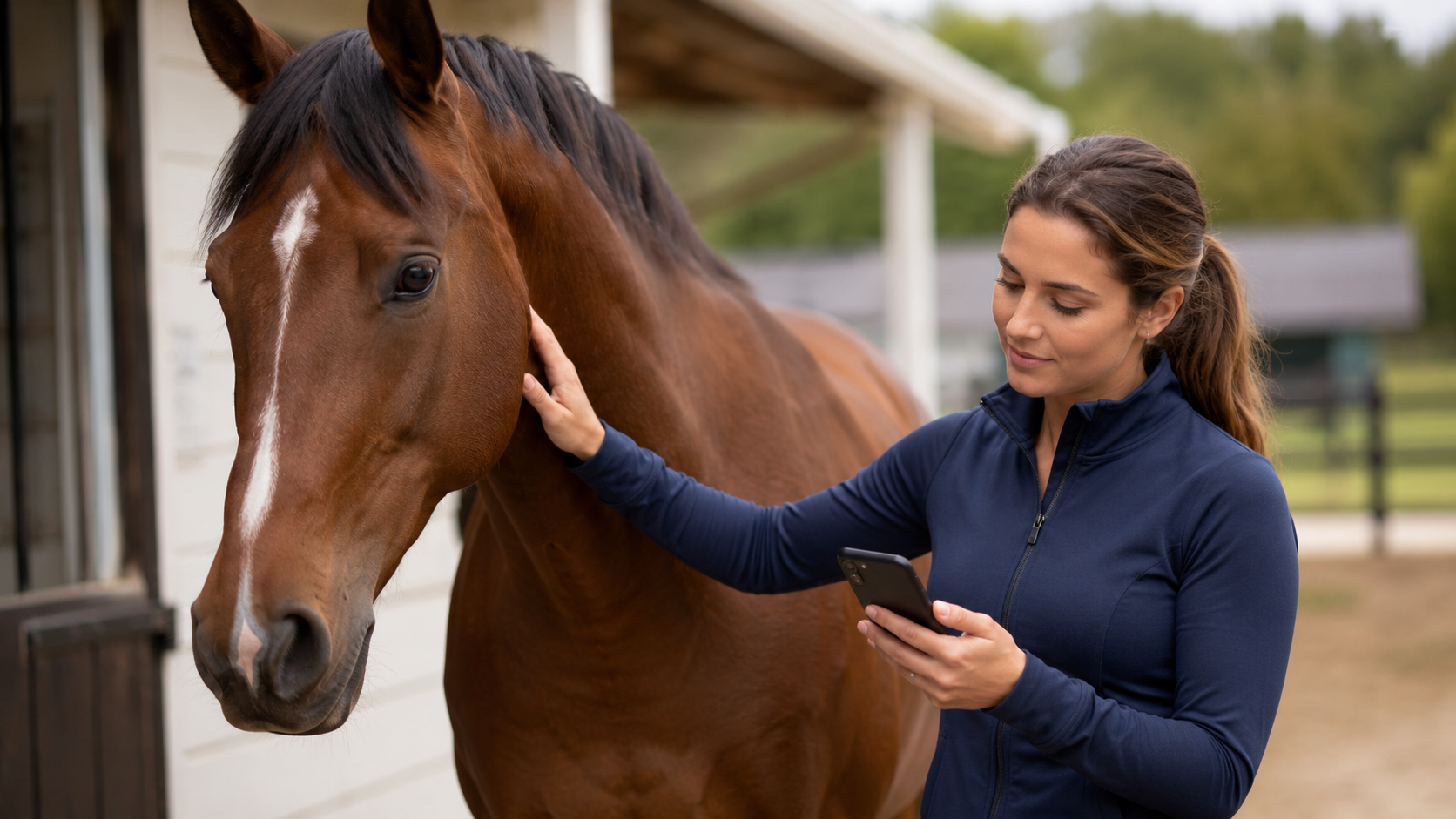
Equio lets you build a complete profile for a Kalmyk: identity, weight, Body Condition Score, feeding, conditions, care reminders (vaccines, worming, trimming) and an exportable health log. The breed sets the identity; everyday decisions still depend on the real horse and your vet's advice.
- Record the activity level: rest, leisure, sport or breeding
- Add known conditions or sensitivities
- Scan feeds, plants and care products
- Keep reminders (vaccines, worming, trimming)
- Prepare a PDF export before a vet appointment
Frequently asked questions
Is the Kalmyk horse suitable for beginners?
Yes, thanks to its calm temperament and docility, the Kalmyk can be a good horse for beginners, provided its training is well-managed. Its small size also makes it less intimidating.
What is the life expectancy of a Kalmyk?
The typical life expectancy of a Kalmyk horse is around 20 to 25 years, but some individuals can live longer, especially if well-cared for and living in conditions suited to their hardiness.
Is the Kalmyk a good family horse?
Yes, its gentle temperament and hardiness make it an excellent family horse, capable of adapting to various activities, from simple hacks to more demanding trail riding. It is generally patient with children.
Where can one buy a Kalmyk horse in France?
It is very difficult to find a Kalmyk horse in France, as the breed is not raised there. Acquisition would likely require direct importation from Russia or a neighboring country, with all the associated administrative and sanitary procedures.
Is the Kalmyk resistant to cold?
Absolutely. The Kalmyk is extremely resistant to cold, having evolved in the Russian steppes where winters are very harsh. Its thick coat and ability to store fat reserves allow it to withstand extreme temperatures.