
Horse breed
Kabarda
The Kabarda is an ancient breed originating from the Caucasus mountains, developed by the Kabardian people. It originated from crosses between local steppe horses and Arabian, Persian, and Turkmen horses.

The breed at a glance
The Kabarda is renowned for its calm, courageous, and intelligent temperament. It is very enduring, hardy, and possesses an excellent sense of direction, making it a reliable and willing partner for work.
- Category
- hardy breed
- Origin
- Russia (North Caucasus) · 16th century
- Height at withers
- 150–160 cm
- Weight
- 400–500 kg
- Lifespan
- 25-30 years
- Common coats
- bay, black, grey, chestnut
- Disciplines
- endurance riding, trail riding, working equitation, dressage (leisure)
- Other names
- Kabardin, Kabardian
Origin and history
The Kabarda is an ancient breed originating from the Caucasus mountains, developed by the Kabardian people. It originated from crosses between local steppe horses and Arabian, Persian, and Turkmen horses. The breed was selected for its hardiness, endurance, and adaptation to mountainous terrain. Its studbook was officially established in 1926, solidifying its recognition.
Conformation and physique
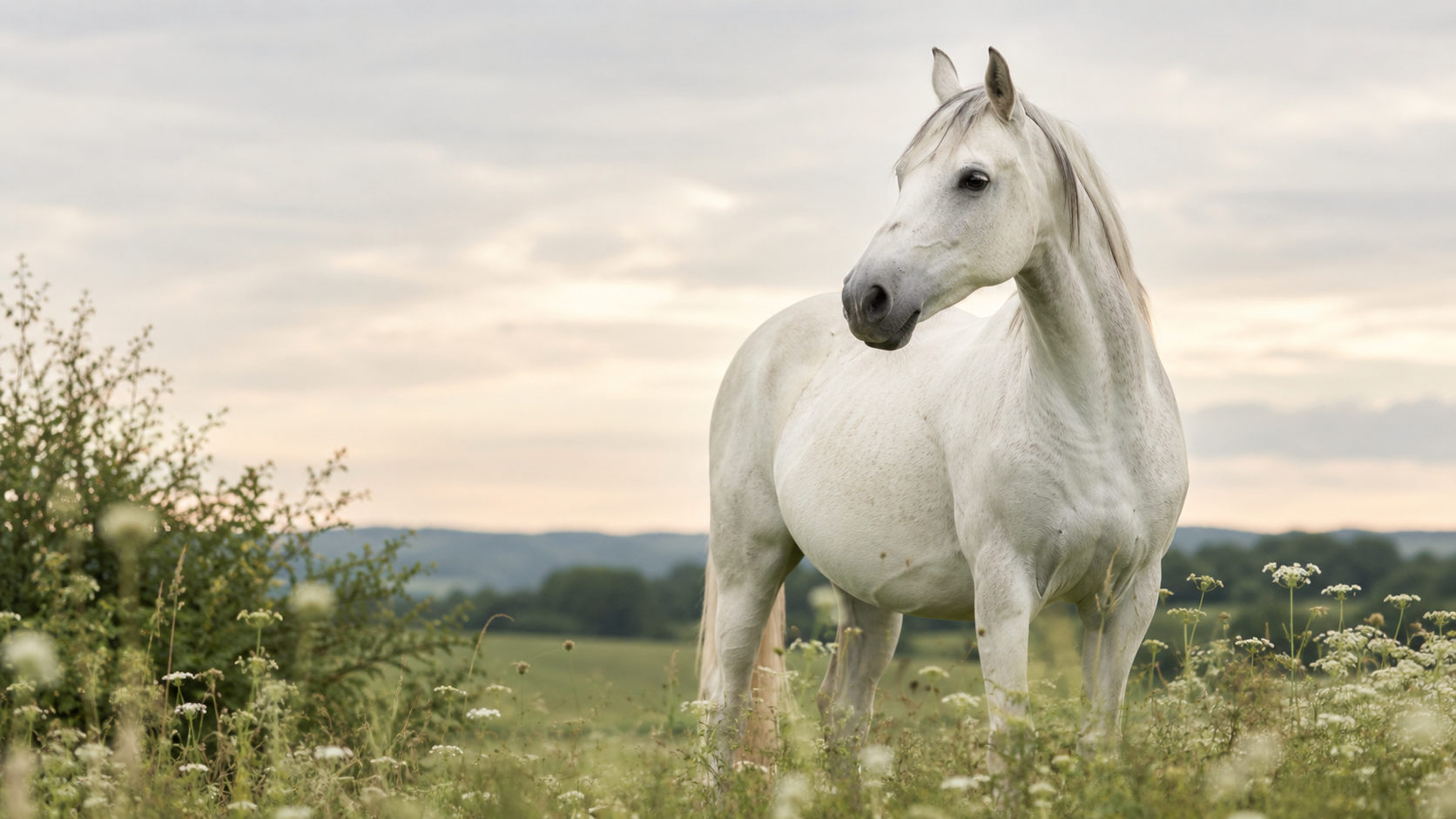
The Kabarda is a medium-sized, compact, and muscular horse with solid bone structure. It has a harmonious silhouette, typical of mountain horses, combining strength and agility.
The head is medium-sized, with a straight or slightly convex profile (Roman nose). The eyes are large and expressive, the ears medium-sized and well-placed.
The neck is long, muscular, and well-set, often arched. The withers are well-defined and long, blending harmoniously into the back.
The back is straight and strong, the topline is solid. The chest is broad and deep, ensuring good respiratory capacity. The croup is long, muscular, and slightly sloped.
The limbs are clean, strong, and well-muscled, with large and solid joints. The cannons are short, and the hooves are hard and resistant, adapted to rocky terrain. Feathering is generally sparse.
- Common coats: bay, black, grey, chestnut
Temperament and aptitudes
The Kabarda is renowned for its calm, courageous, and intelligent temperament. It is very enduring, hardy, and possesses an excellent sense of direction, making it a reliable and willing partner for work.
The gaits are expansive, supple, and energetic, with excellent regularity. The walk is sure-footed, the trot is extended, and the canter is powerful, allowing it to cover long distances over varied terrain.
- Uses: saddle horse, pack horse, light draft horse, equestrian trail riding, mountain breeding, endurance races
- Disciplines: endurance riding, trail riding, working equitation, dressage (leisure)
Feeding the Kabarda
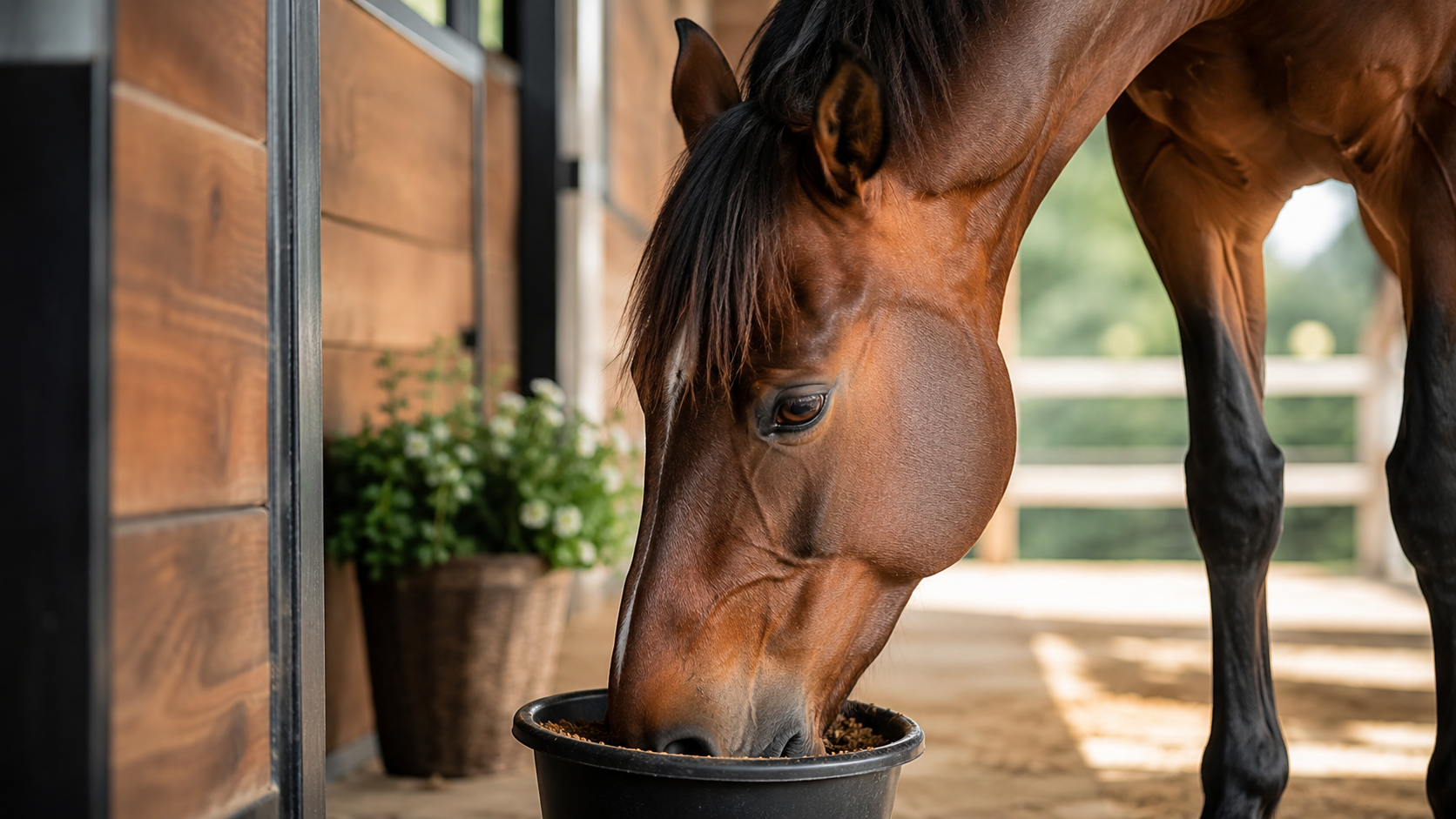
The Kabarda is a hardy horse with an efficient metabolism, capable of utilizing medium-quality forage. It tends to gain weight if overfed or sedentary. A diet based on good quality hay ad libitum is often sufficient. Concentrates are only necessary in cases of intense work or specific needs (growth, lactation), and should be adjusted carefully to avoid excess weight.
Due to its efficient metabolism, the Kabarda can be predisposed to obesity and, consequently, to risks of laminitis or Equine Metabolic Syndrome (EMS) if fed inappropriately with diets rich in sugars and starch. Careful dietary management is crucial.
With Equio, every feed, supplement or treat is read against the horse's real profile (age, weight, Body Condition Score, conditions) — useful for a Kabarda as soon as a metabolic or digestive sensitivity is known.
Health and points to watch
The hardiness of the Kabarda generally makes it resistant to diseases. However, regular hoof monitoring is essential due to their exposure to rocky terrain. Particular attention must be paid to weight management to prevent metabolic disorders.
- More frequent conditions: locomotor disorders related to wear and tear on difficult terrain (osteoarthritis, tendinitis) if not managed, age-related dental problems
Care and grooming
The Kabarda's hooves are naturally hard and resistant, requiring regular trimming but often less intensive than other breeds. The mane and tail are generally thick and may require regular detangling. The coat is dense and does not require special care, except for regular brushing to remove dirt and dead hair.
Did you know?
- The Kabarda is renowned for its ability to move on steep and slippery terrain with remarkable agility and sure-footedness.
- There are two main types within the breed: the mountain type, smaller and hardier, and the plain type, larger and more refined, influenced by the Thoroughbred.
- The Kabarda has been used to develop other breeds, notably the Tersk.
The Kabarda and how to track it
The Kabarda breed is very poorly represented in France, where it is mainly known by enthusiasts of hardy breeds and endurance horses. There is no significant breeding in France.
Equio lets you build a complete profile for a Kabarda: identity, weight, Body Condition Score, feeding, conditions, care reminders (vaccines, worming, trimming) and an exportable health log. The breed sets the identity; everyday decisions still depend on the real horse and your vet's advice.
- Record the activity level: rest, leisure, sport or breeding
- Add known conditions or sensitivities
- Scan feeds, plants and care products
- Keep reminders (vaccines, worming, trimming)
- Prepare a PDF export before a vet appointment
Frequently asked questions
Is the Kabarda a good horse for trail riding?
Yes, the Kabarda is an excellent trail horse. Its endurance, sure-footedness, calm demeanor, and ability to navigate difficult terrain make it an ideal companion for long rides and mountain treks.
What is the typical temperament of a Kabarda?
The Kabarda is known for its balanced temperament: it is courageous, intelligent, calm, and very hardy. It is generally easy to handle and willing to work, making it suitable for many riders.
Is the Kabarda suitable for beginners?
Thanks to its calm temperament and docility, a well-trained Kabarda can be suitable for beginner or intermediate riders, especially for leisure activities such as trail riding. Its hardiness also forgives some rider errors.
What are the main qualities of the Kabarda?
The main qualities of the Kabarda are its exceptional endurance, hardiness, surefootedness on difficult terrain, calm and courageous temperament, and its ability to adapt to harsh climatic conditions.
Where can Kabarda horses be found in France?
Kabarda horses are rare in France. It is unlikely to find them in breeding establishments. The few individuals present are often imported or owned by enthusiasts. It is advisable to contact rare breed associations or specialized breeders in Eastern Europe.