
Horse breed
Jaca Navarra
The Jaca Navarra is a native equine breed from Navarre, in northern Spain, whose origins trace back to primitive Iberian horses. It has been influenced by genetic contributions over the centuries, notably from Celtic horses and local breeds.
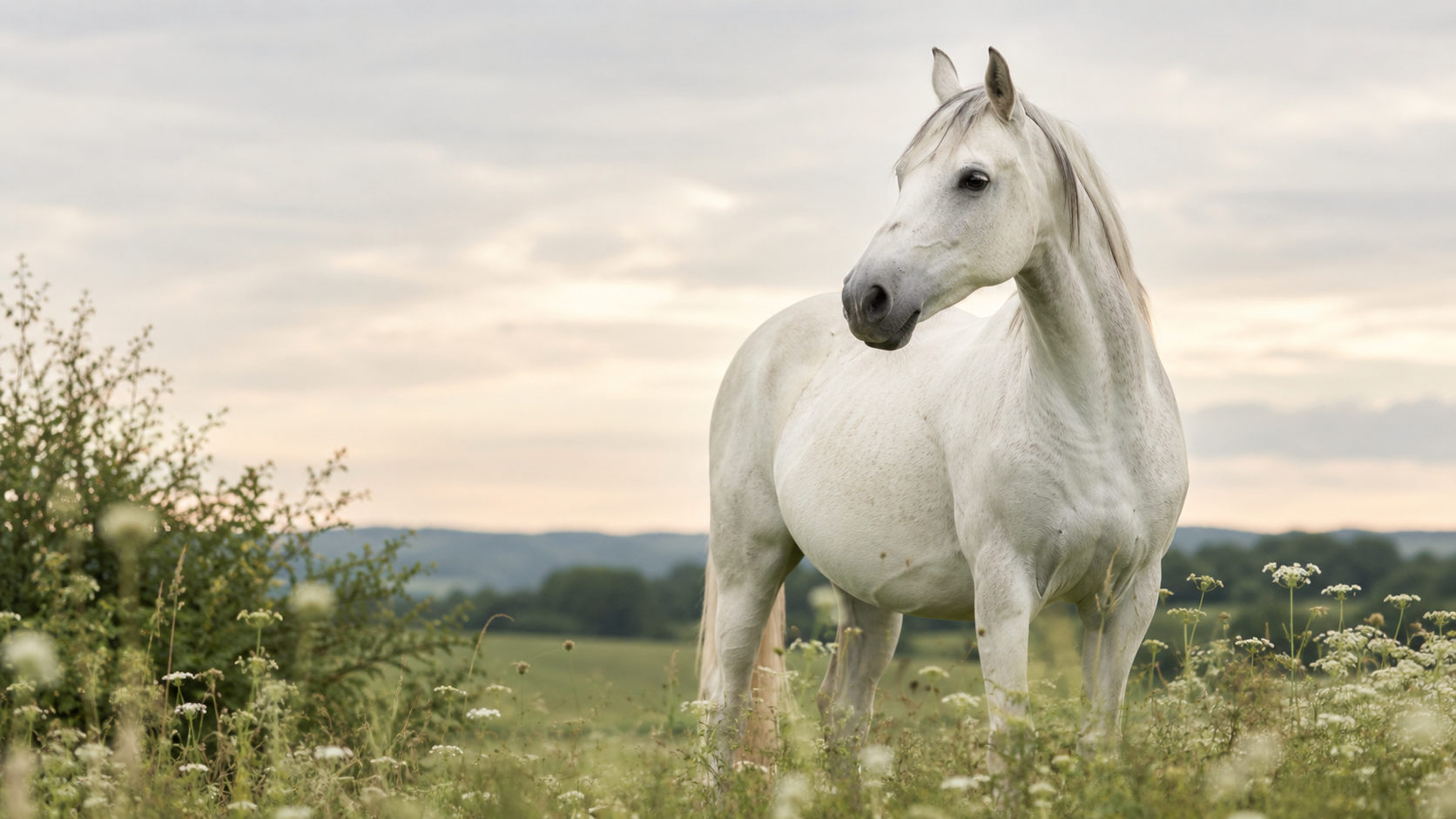
The breed at a glance
The Jaca Navarra is renowned for its hardy, docile, and courageous temperament. It is an intelligent, enduring, and very self-assured horse, making it an excellent companion for work or trekking.
- Category
- hardy breed
- Origin
- Spain · Antiquity / Middle Ages
- Height at withers
- 120–135 cm
- Weight
- 300–400 kg
- Lifespan
- 25-30 years
- Common coats
- bay, black, chestnut
- Disciplines
- equestrian trail riding, TREC, working equitation
- Other names
- Pottoka de Navarre
Origin and history
The Jaca Navarra is a native equine breed from Navarre, in northern Spain, whose origins trace back to primitive Iberian horses. It has been influenced by genetic contributions over the centuries, notably from Celtic horses and local breeds. Historically used for agricultural work and mountain transport, its population declined before benefiting from conservation programs. The breed is officially recognized, and its studbook is managed by the Asociación de Criadores de Jaca Navarra.

Conformation and physique
It is a small, compact, and robust horse, typical of mountain breeds. It has a solid bone structure and well-developed musculature, adapted to difficult terrain.
The head is medium-sized, with a straight or slightly subconvex profile. The eyes are expressive and the nostrils well-opened.
The neck is short, strong, and well-set, joining a low but muscular wither.
The back is short and straight, and the topline is strong. The chest is broad and deep, and the croup is rounded and muscular, often slightly sloped.
The limbs are short, strong, and well-set, with clean joints and well-defined tendons. The hooves are small, hard, and very resilient. Feathers are sparse.
- Common coats: bay, black, chestnut
Temperament and aptitudes
The Jaca Navarra is renowned for its hardy, docile, and courageous temperament. It is an intelligent, enduring, and very self-assured horse, making it an excellent companion for work or trekking.
The gaits are energetic, sure-footed, and balanced, with good impulsion. They are particularly suited to rugged terrain and long distances in the mountains.
- Uses: mountain agricultural work, pack animal / carrying loads, recreational riding, equestrian trail riding, landscape maintenance, extensive rearing
- Disciplines: equestrian trail riding, TREC, working equitation
Feeding the Jaca Navarra
The Jaca Navarra is a very economical breed, accustomed to sparse diets and extensive rearing. Its metabolism is adapted to efficiently utilize coarse forages. It tends to gain weight if overfed with concentrates. A primary intake of good quality forage (grass, hay) is sufficient for most individuals, along with mineral and vitamin supplements. Concentrates are only necessary for intense work or specific needs (gestation, lactation).
Due to its efficient metabolism, the Jaca Navarra can be prone to obesity and, consequently, to increased risks of laminitis and Equine Metabolic Syndrome (EMS) if its diet is not managed correctly, particularly with an excess of sugars and starch.
With Equio, every feed, supplement or treat is read against the horse's real profile (age, weight, Body Condition Score, conditions) — useful for a Jaca Navarra as soon as a metabolic or digestive sensitivity is known.

Health and points to watch
Regular monitoring of weight and body condition is essential to prevent obesity and associated pathologies. The hooves, although very resilient, require regular trimming to maintain their integrity, especially if the horse is not worked much on abrasive terrain.
- More frequent conditions: laminitis (if overfed), Equine Metabolic Syndrome (EMS)
Care and grooming
Care is relatively simple for this hardy breed. The hooves, which are very hard, require regular trimming but are rarely shod, except for specific uses. The mane and tail are generally left natural. The thick coat does not require special care, and clipping is rarely necessary, except for horses working intensely in winter. Particular attention should be paid to the skin in cases of prolonged humidity.
Did you know?
- The Jaca Navarra is one of the oldest equine breeds on the Iberian Peninsula, demonstrating a millennia-long adaptation to its mountainous environment.
- It is often used in ecological management programs for grazing and the maintenance of hard-to-reach natural areas.
- Despite its small size, it is renowned for its strength and ability to carry heavy loads over steep terrain.
Frequently asked questions
Is the Jaca Navarra suitable for children?
Yes, thanks to its calm, docile, and reliable temperament, the Jaca Navarra can be an excellent mount for children and beginner riders, especially for trail riding and recreational riding.
What is the acquisition cost of a Jaca Navarra?
The acquisition cost of a Jaca Navarra is generally moderate, especially in Spain. In France, the rarity of the breed can influence the price, but it often remains more affordable than more common sport horse breeds.
Can the Jaca Navarra live outdoors all year round?
Absolutely. Thanks to its hardiness and thick coat, the Jaca Navarra is perfectly suited to living outdoors all year round, even in harsh climates, provided it has natural or artificial shelter from the elements.
Is it a breed suitable for dressage or show jumping?
While versatile, the Jaca Navarra is not specifically bred for high-level dressage or show jumping. Its natural aptitudes make it more suited for trail riding, trekking, and working disciplines.
How to manage a Jaca Navarra's diet to prevent obesity?
To prevent obesity, it is crucial to base its diet on ad libitum quality forage (grass, hay) and strictly limit concentrates. A mineral and vitamin supplement is recommended. Regularly monitor its body condition and adjust rations according to its activity level.