
Horse breed
Hirzai
The Hirzai is an equine breed originating from Balochistan, a province of Pakistan. It was developed in the early 20th century by the Khan of Kalat, Mir Ahmad Yar Khan, with the aim of creating a fast and enduring racing and saddle horse.

The breed at a glance
The Hirzai is known for its lively, courageous, and energetic temperament, but also for its docility and intelligence. It is receptive to training and shows great loyalty to its rider, making it an excellent working partner.
- Category
- saddle horse
- Origin
- Pakistan · 20th century
- Height at withers
- 142–152 cm
- Weight
- 350–450 kg
- Lifespan
- 20-25 years
- Common coats
- bay, chestnut, grey, black
- Disciplines
- speed races, endurance riding, working equitation
Origin and history
The Hirzai is an equine breed originating from Balochistan, a province of Pakistan. It was developed in the early 20th century by the Khan of Kalat, Mir Ahmad Yar Khan, with the aim of creating a fast and enduring racing and saddle horse. The breed resulted from crosses between local Balochi horses and imported Arabian purebreds. Although not widely known internationally, it is recognized in Pakistan for its qualities.
Conformation and physique
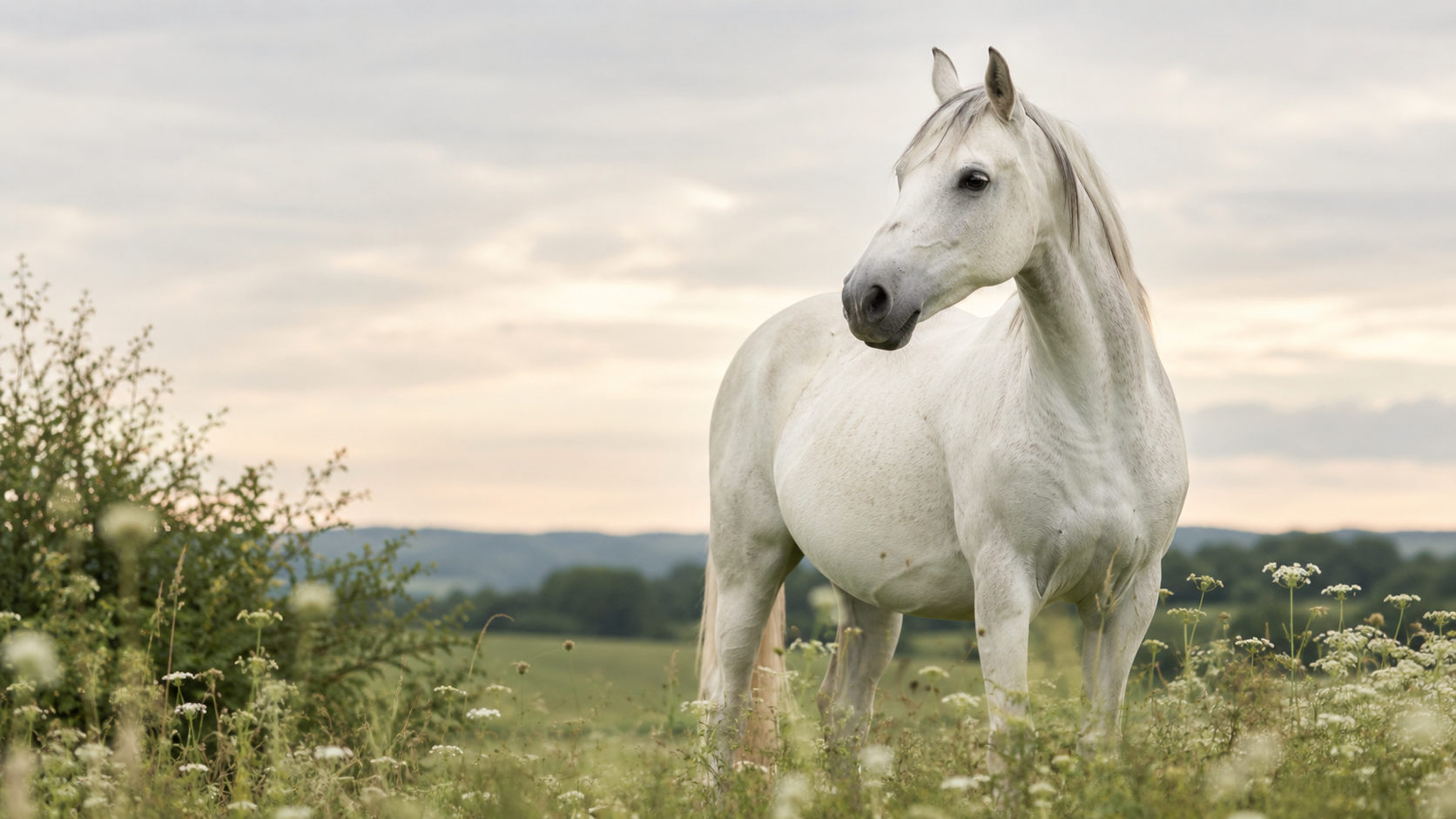
The Hirzai is a medium-sized horse, elegant and athletic, with a light but solid bone structure. It has a harmonious silhouette, typical of oriental saddle horses, with good proportions between the body and limbs.
The head is refined, with a straight or slightly concave (Arabian) profile. The eyes are large and expressive, the nostrils wide, and the ears small and well-shaped.
The neck is long, fine, and well-arched, blending harmoniously into a well-defined and muscular wither, promoting good freedom of movement.
The back is short and strong, and the topline is taut. The chest is deep, offering good lung capacity. The croup is long and muscular, often slightly sloped.
The limbs are fine but robust, with clean joints and well-defined tendons. The cannons are short, and the hooves are hard and well-formed. Feathering is generally absent or very sparse.
- Common coats: bay, chestnut, grey, black
Temperament and aptitudes
The Hirzai is known for its lively, courageous, and energetic temperament, but also for its docility and intelligence. It is receptive to training and shows great loyalty to its rider, making it an excellent working partner.
The gaits of the Hirzai are renowned for their lightness, suppleness, and amplitude. The gallop is particularly valued for its speed and endurance, essential qualities for traditional races.
- Uses: traditional horse races, saddle horse, trail riding, cattle work
- Disciplines: speed races, endurance riding, working equitation
Feeding the Hirzai
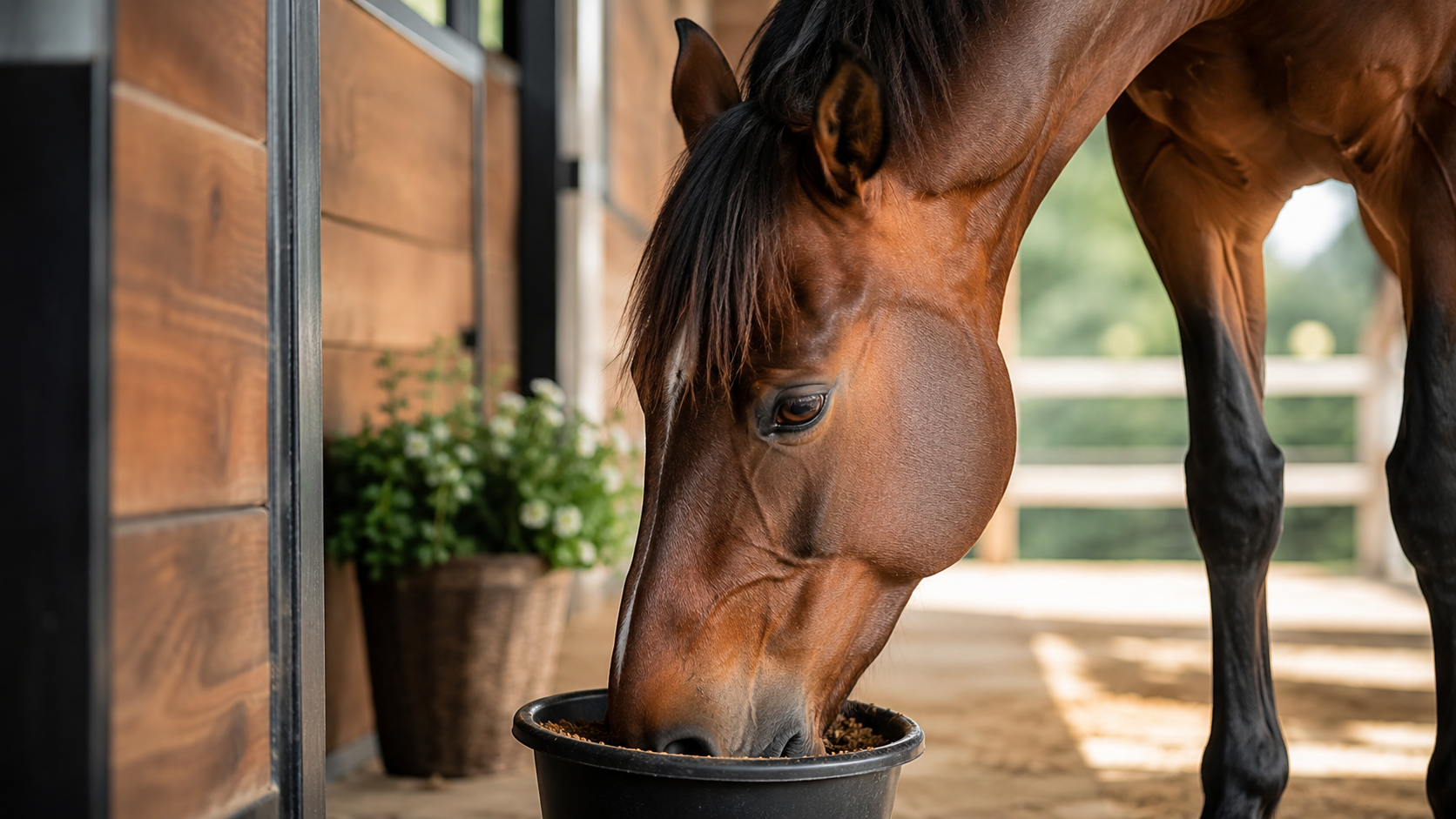
The Hirzai, originating from an arid region, is a horse with a rather efficient metabolism, capable of utilizing medium-quality forage. It does not easily tend to gain excessive weight if worked regularly. A diet based on good quality forage in sufficient quantity is paramount. Concentrates are only necessary in cases of intense work or specific needs (growth, reproduction) and must be adapted to its activity level to avoid excesses.
There are no documented specific predispositions for the Hirzai breed regarding dietary sensitivities such as laminitis, Equine Metabolic Syndrome (EMS), or PSSM. However, like any horse, an unbalanced diet or one too rich in sugars and starch can lead to general metabolic disorders.
With Equio, every feed, supplement or treat is read against the horse's real profile (age, weight, Body Condition Score, conditions) — useful for a Hirzai as soon as a metabolic or digestive sensitivity is known.
Health and points to watch
Particular attention must be paid to the condition of the limbs and feet, especially in horses subjected to intense work. Regular dental care and appropriate deworming are also essential for maintaining good general health.
- More frequent conditions: locomotor disorders related to intensive training (tendinitis, lameness)
Care and grooming
The Hirzai's hooves, naturally hard, require regular trimming adapted to their shape. The mane and tail are generally left natural, with no particular maintenance beyond brushing. The short, fine coat does not require specific care; regular brushing is sufficient to keep it clean and shiny. Clipping is rarely necessary.
Did you know?
- The Hirzai is sometimes nicknamed the 'desert horse' due to its origin and its ability to adapt to arid environments.
- It is highly valued by local tribes for its speed and endurance in traditional races, which are an important cultural event.
- The name 'Hirzai' is said to derive from the name of a particularly renowned horse lineage in the region.
The Hirzai and how to track it
The Hirzai breed is extremely rare outside of Pakistan and is neither bred nor used in France. Its population is primarily concentrated in its region of origin.
Equio lets you build a complete profile for a Hirzai: identity, weight, Body Condition Score, feeding, conditions, care reminders (vaccines, worming, trimming) and an exportable health log. The breed sets the identity; everyday decisions still depend on the real horse and your vet's advice.
- Record the activity level: rest, leisure, sport or breeding
- Add known conditions or sensitivities
- Scan feeds, plants and care products
- Keep reminders (vaccines, worming, trimming)
- Prepare a PDF export before a vet appointment
Frequently asked questions
Where can Hirzai horses be found?
Hirzai horses are primarily bred and found in Balochistan, a province of Pakistan. They are very rare outside this region and are not available on the international market.
Is the Hirzai a good horse for recreational riding?
Yes, thanks to its lively yet docile temperament and its endurance, the Hirzai can be an excellent horse for recreational riding, especially for trail riding. However, its rarity makes it an unrealistic choice for most riders.
What is the most distinctive physical characteristic of the Hirzai?
Although it shares traits with other oriental breeds, the Hirzai stands out for its combination of elegance, lightness, and robustness, with a refined head and dry, solid limbs, adapted for speed and endurance.
Is the Hirzai a threatened breed?
The Hirzai population is relatively small and geographically concentrated. Although it is not officially classified as threatened internationally, its conservation is a local issue in Pakistan to preserve its genetic heritage.
Is the Hirzai adapted to cold climates?
Originating from a region with a hot and arid climate, the Hirzai is well-adapted to these conditions. It might require specific protection and adaptation if introduced to cold climates, although its general hardiness could help it acclimate.