
Horse breed
Russian Don
The Russian Don originated in the steppes of the Don River, where it was developed by the Cossacks. It resulted from crosses between local steppe horses and imported Oriental horses (Turkmen, Persian, Karabakh).

The breed at a glance
The Russian Don is known for its calm, courageous, and willing temperament. It is intelligent, easy to train, and very loyal to its rider. Its endurance and hardiness make it an excellent working horse, reliable and versatile.
- Category
- saddle horse
- Origin
- Russia · 17th century
- Height at withers
- 160–165 cm
- Weight
- 450–550 kg
- Lifespan
- 25-30 years
- Common coats
- chestnut, bay, golden
- Disciplines
- endurance riding, dressage, show jumping, eventing
- Other names
- Cheval du Don, Don Horse
Origin and history
The Russian Don originated in the steppes of the Don River, where it was developed by the Cossacks. It resulted from crosses between local steppe horses and imported Oriental horses (Turkmen, Persian, Karabakh). In the 19th century, infusions of English Thoroughbred and Orlov Trotter refined the breed. It played a crucial role as a light and enduring cavalry horse for the Russian army, particularly during the Napoleonic Wars, and was officially recognized as a breed in the early 20th century.
Conformation and physique
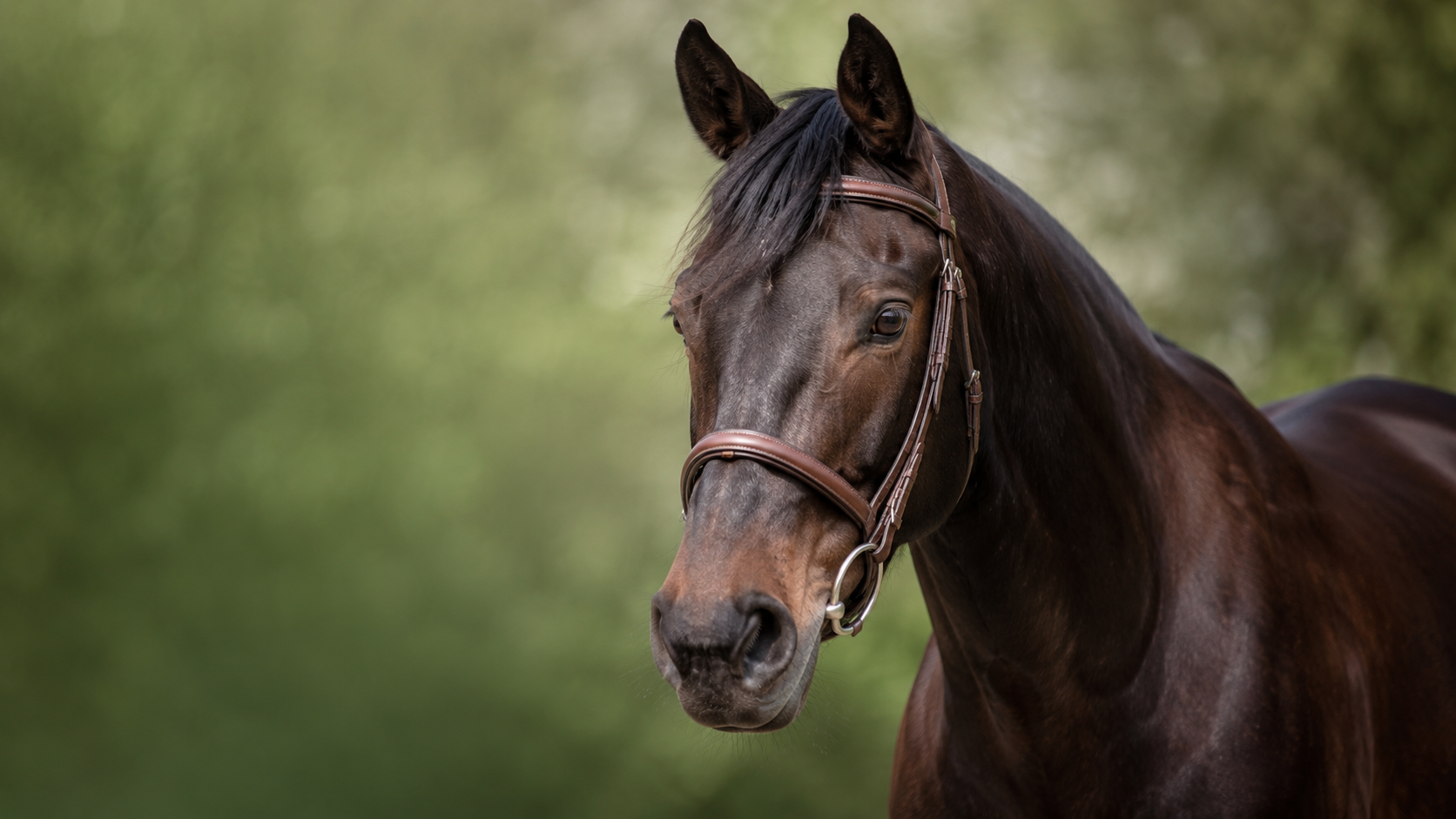
The Russian Don is a medium to large-sized horse, with a harmonious and athletic build. It possesses strong bone structure and well-developed musculature, reflecting its endurance and power. It is renowned for its hardiness and ability to live in harsh conditions.
The head is medium-sized, well-proportioned, with a straight or slightly convex (Roman) profile. The eyes are large and expressive, the ears are medium-sized and well-placed. The muzzle is broad and the nostrils are open.
The neck is long, muscular, and well-set, often arched, blending harmoniously into a well-defined and extended wither. This contributes to good freedom of movement and an elegant head carriage.
The back is long and straight, the topline is strong. The chest is broad and deep, providing good lung capacity. The croup is long, muscular, and slightly sloped, with a high-set tail.
The limbs are clean, strong, and well-muscled, with large joints and well-defined tendons. The cannons are short and the hooves are hard and well-formed, suited for varied terrain. Feathers are generally sparse.
- Common coats: chestnut, bay, golden
Temperament and aptitudes
The Russian Don is known for its calm, courageous, and willing temperament. It is intelligent, easy to train, and very loyal to its rider. Its endurance and hardiness make it an excellent working horse, reliable and versatile.
The Russian Don's gaits are expansive, supple, and energetic, with good impulsion. The walk is regular, the trot is extended, and the canter is powerful and enduring, ideal for long distances.
- Uses: cavalry horse, driving, versatile riding horse, breeding, endurance riding
- Disciplines: endurance riding, dressage, show jumping, eventing, driving
Feeding the Russian Don
The Russian Don is a hardy breed with a rather efficient metabolism, capable of utilizing medium-quality forage. It tends to gain weight easily if not regularly exercised or if its diet is too rich. A base of good quality hay fed ad libitum is essential. Concentrate requirements are moderate and should be adjusted according to work intensity, favoring low-starch and low-sugar feeds to prevent imbalances.
Due to its efficient metabolism, the Russian Don can be predisposed to Equine Metabolic Syndrome (EMS) and laminitis if overfed or given unrestricted access to rich pastures, especially in spring. Careful dietary management is crucial to prevent these conditions.
With Equio, every feed, supplement or treat is read against the horse's real profile (age, weight, Body Condition Score, conditions) — useful for a Russian Don as soon as a metabolic or digestive sensitivity is known.

Health and points to watch
It is important to monitor the Russian Don's weight and adjust its diet and exercise level to prevent obesity and the risk of laminitis. Particular attention should be paid to hoof quality, although generally robust, to avoid problems related to excessive moisture or dryness.
- More frequent conditions: laminitis, Equine Metabolic Syndrome (EMS)
Care and grooming
Care for the Russian Don is relatively simple. Its hard hooves require regular trimming but are generally resilient. Its mane and tail, often thick, require regular brushing to prevent tangles. Its coat is easy to maintain and does not require special care, although clipping may be considered for sport horses in intense work.
Did you know?
- The Russian Don is renowned for its characteristic golden coat, often called 'Don coat', which is particularly shiny in the sun.
- The Cossacks used the Russian Don for their swift raids and long patrols, appreciating its endurance and ability to live self-sufficiently.
- The Russian Don contributed to the formation of several other Russian breeds, notably the Budyonny.
The Russian Don and how to track it
The Russian Don breed is very rare in France, with a very limited population of individuals. There is no significant breeding or specific registry in France; the few specimens present are generally imported for specific uses or by enthusiasts.
Equio lets you build a complete profile for a Russian Don: identity, weight, Body Condition Score, feeding, conditions, care reminders (vaccines, worming, trimming) and an exportable health log. The breed sets the identity; everyday decisions still depend on the real horse and your vet's advice.
- Record the activity level: rest, leisure, sport or breeding
- Add known conditions or sensitivities
- Scan feeds, plants and care products
- Keep reminders (vaccines, worming, trimming)
- Prepare a PDF export before a vet appointment
Frequently asked questions
Is the Russian Don a good horse for beginners?
Thanks to its calm temperament and docility, the Russian Don can be suitable for beginner or intermediate riders, provided they have good guidance. Its intelligence and willingness to please facilitate its training.
What is special about the Russian Don's golden coat?
The golden coat, often chestnut or bay with metallic reflections, is a distinctive characteristic of the Russian Don. It is due to a dilution gene that gives the coat a unique sheen, particularly visible in sunlight.
Is the Russian Don adapted to cold climates?
Yes, the Russian Don is a very hardy breed, perfectly adapted to the harsh climates and difficult living conditions of the Russian steppes. It possesses great resistance to cold and climatic variations.
Where can Russian Don horses be found for sale?
The Russian Don is rare outside of Russia. To acquire one, it is generally necessary to contact specialized breeders in Russia or international breed associations that can direct you to importers or sellers.
Is the Russian Don a versatile horse?
Absolutely. The Russian Don is a very versatile horse, capable of excelling in various equestrian disciplines thanks to its endurance, strength, and good temperament. It is valued in endurance riding, driving, dressage, and as a leisure horse.