
Horse breed
Connemara
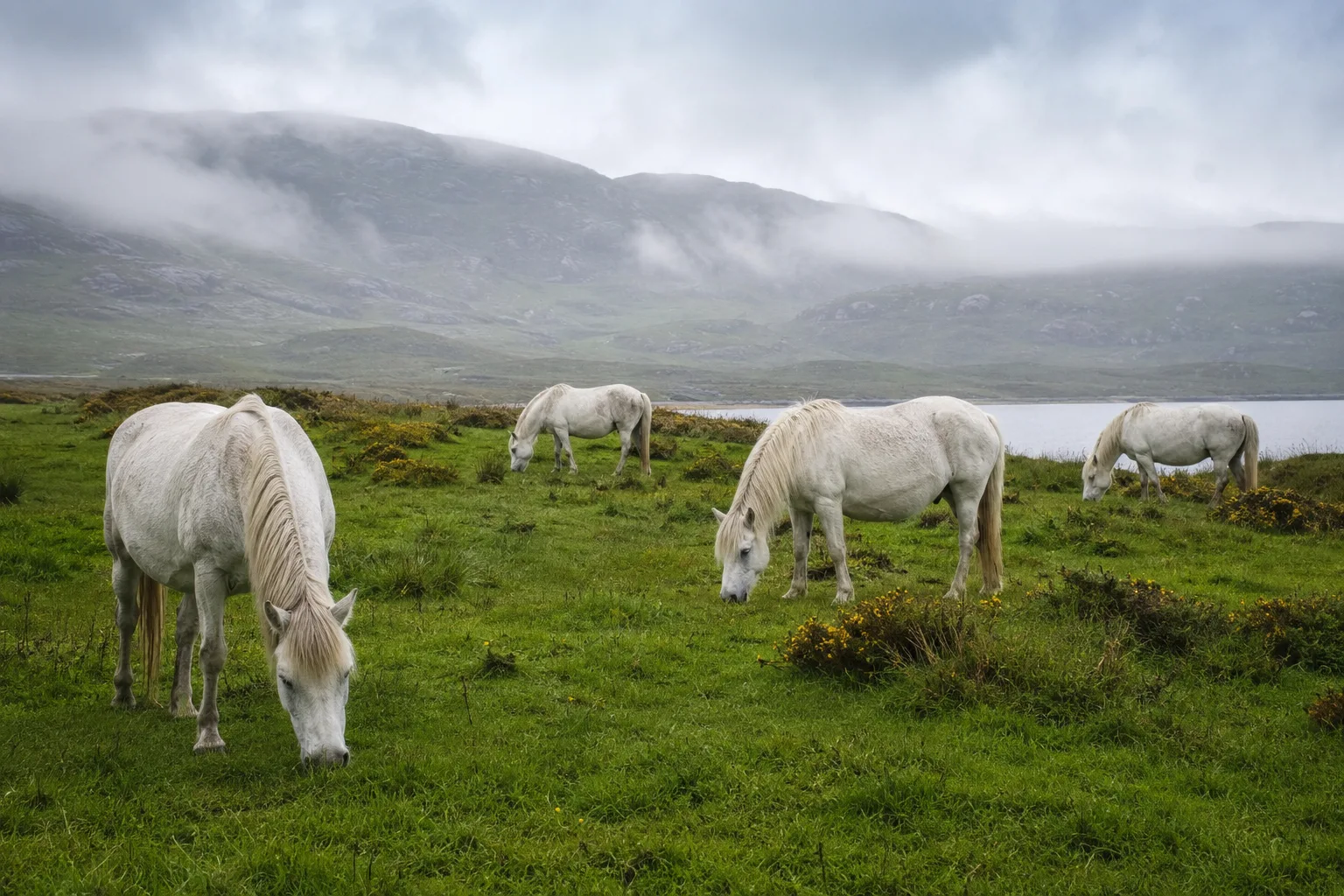
Originating from the wild Connemara region in western Ireland, the breed developed from hardy local ponies. Crosses with shipwrecked Spanish horses (likely Barbs and Iberian horses) and later with Thoroughbreds and Welsh ponies contributed to its establishment.
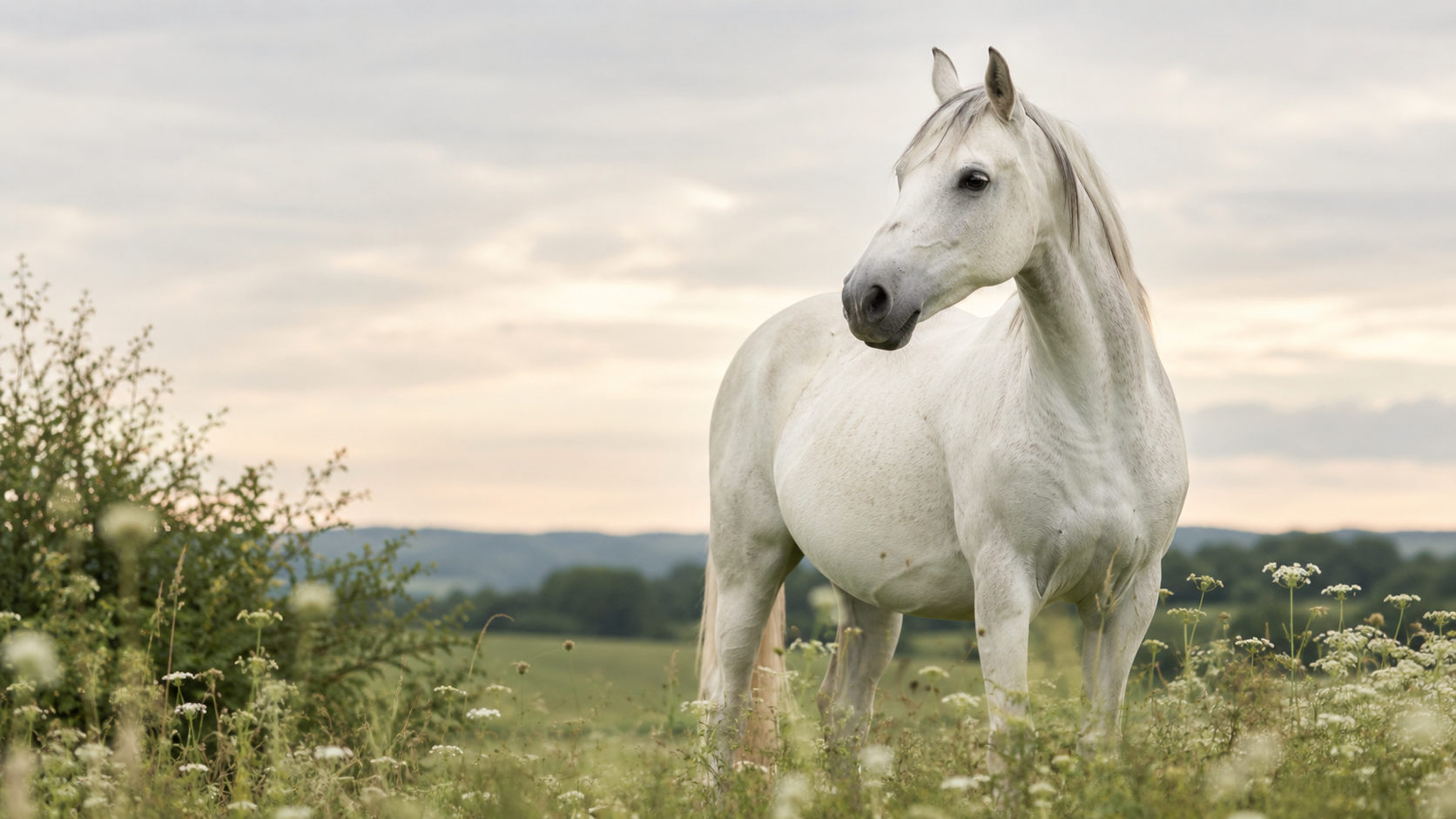
The breed at a glance
The Connemara is renowned for its calm, intelligent, and willing temperament. It is a courageous, versatile, and easy-to-train pony, making it an excellent companion for riders of all levels, including children.
- Category
- pony
- Origin
- Ireland · 18th century
- Height at withers
- 128–148 cm
- Weight
- 350–450 kg
- Lifespan
- 25-30 years
- Common coats
- grey, bay, black, chestnut, dun, palomino, roan
- Disciplines
- show jumping, dressage, eventing, driving
- Other names
- Connemara Pony
Origin and history
Originating from the wild Connemara region in western Ireland, the breed developed from hardy local ponies. Crosses with shipwrecked Spanish horses (likely Barbs and Iberian horses) and later with Thoroughbreds and Welsh ponies contributed to its establishment. The studbook was created in 1923 by the Connemara Pony Breeders' Society, formalizing the breed and its standards. Today, it is globally recognized for its athletic qualities.
Conformation and physique
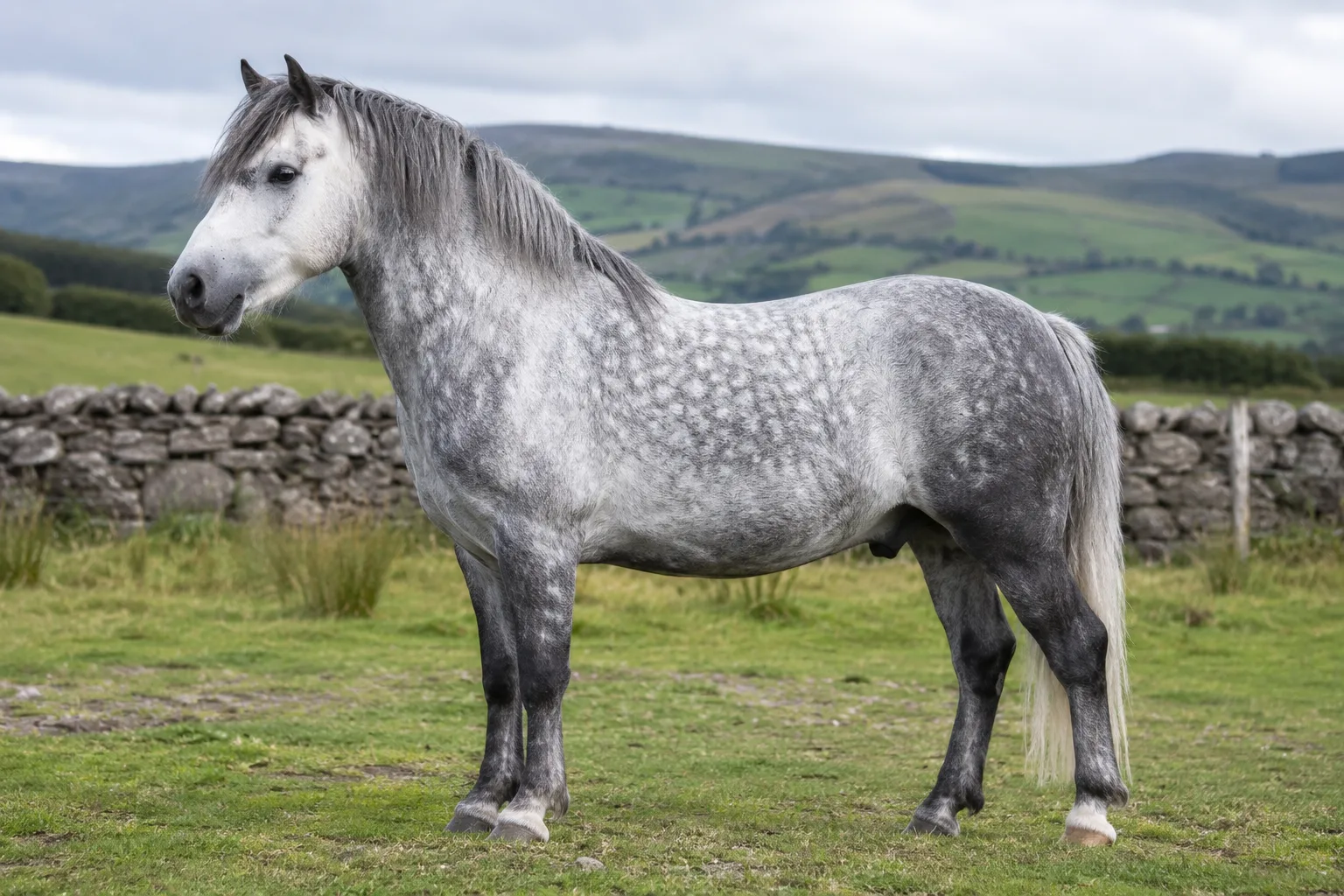
A medium-sized pony, compact and powerful, with strong bone structure and well-developed musculature. It exudes an impression of strength and elegance, with good depth and width.
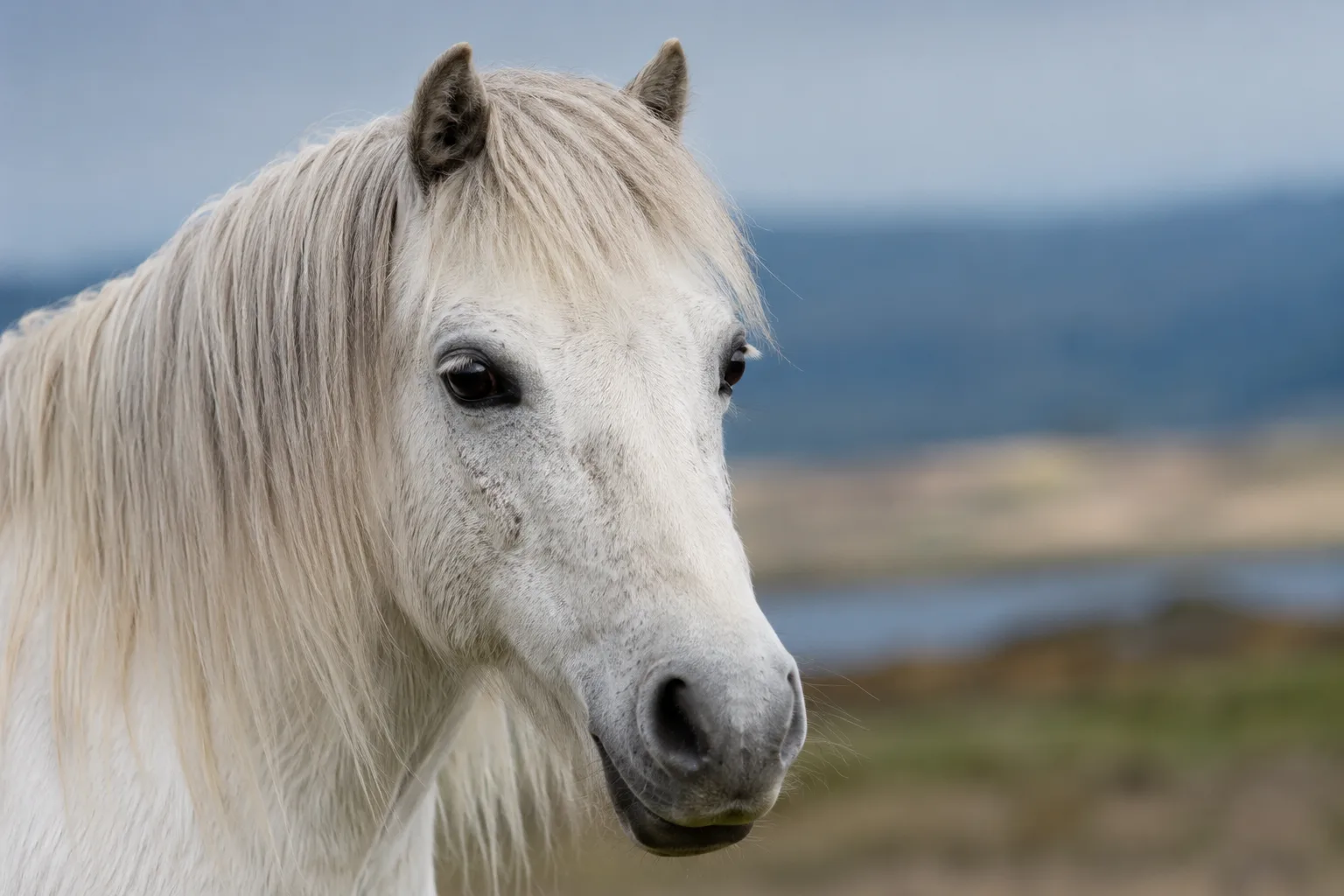
Well-proportioned, expressive head, with a broad forehead, large and lively eyes, and small, well-set ears. The profile is straight or slightly concave.
Well-set, long, and muscular neck, tapering towards the head. The withers are well-defined and long, blending smoothly into the back.
Short, strong back, taut and muscular topline. Deep and wide chest, well-sprung ribs. Long, muscular, and slightly sloping croup, with a well-set tail.
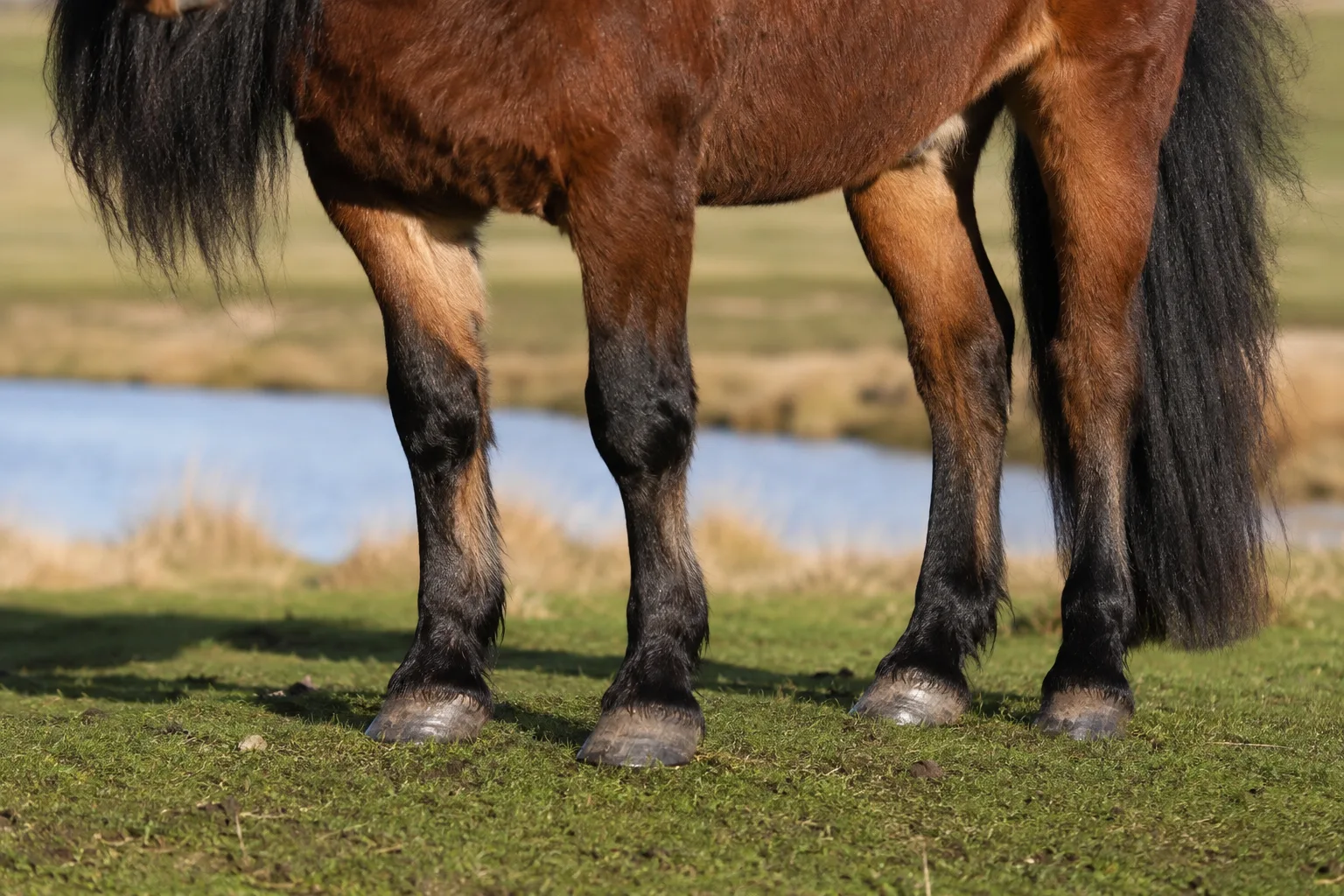
Strong, clean legs, with large and well-defined joints. The cannons are short, and the feet are hard, round, and well-formed. Little to no feathering.
- Common coats: grey, bay, black, chestnut, dun, palomino, roan
Temperament and aptitudes
The Connemara is renowned for its calm, intelligent, and willing temperament. It is a courageous, versatile, and easy-to-train pony, making it an excellent companion for riders of all levels, including children.
The gaits are free, supple, and energetic, with good balance and excellent impulsion. The walk is active, the trot extended, and the canter balanced and comfortable.
- Uses: agricultural work mount, transport, hunting, recreational riding, equestrian sport, breeding
- Disciplines: show jumping, dressage, eventing, driving, endurance riding, pony games, trail riding
Feeding the Connemara
The Connemara is a hardy pony with an efficient metabolism, inherited from its origins in poor pastures. It has a tendency to gain weight easily if its diet is not managed. A diet based primarily on good quality forage (hay or grass) is essential. Concentrates are only necessary for intense work or specific needs and should be given sparingly to avoid excess weight.
Due to its efficient metabolism, the Connemara is predisposed to Equine Metabolic Syndrome (EMS) and laminitis, especially if overfed or given unlimited access to rich pastures. Careful monitoring of its weight and diet is crucial to prevent these conditions.
With Equio, every feed, supplement or treat is read against the horse's real profile (age, weight, Body Condition Score, conditions) — useful for a Connemara as soon as a metabolic or digestive sensitivity is known.

Health and points to watch
It is important to regularly monitor the Connemara's weight and adjust its diet and exercise to prevent obesity and associated risks like laminitis. Particular attention should be paid to hoof quality, especially in individuals affected by HWSD, although genetic testing allows for avoiding the breeding of carriers.
- Documented genetic disorders: Connemara Foal Syndrome (Hoof Wall Separation Disease - HWSD)
- More frequent conditions: laminitis, Equine Metabolic Syndrome (EMS), obesity
Care and grooming
The Connemara's hooves are generally hard and healthy, requiring regular trimming like any equidae. Its mane and tail are often thick and may require regular detangling. Its hardy coat does not require special care, but clipping may be considered for ponies working intensely in winter. Good general hygiene is sufficient.
Did you know?
- The Connemara is the only native pony of Ireland.
- It is often nicknamed the 'pony of a thousand talents' due to its exceptional versatility.
- The grey coat is the most common in the Connemara, but all solid colors are accepted, with the exception of pie.
The Connemara and how to track it
The Connemara is very popular in France, where it is widely bred and used, particularly in equestrian clubs and competitions for children and teenagers, thanks to its versatility and good temperament.
Equio lets you build a complete profile for a Connemara: identity, weight, Body Condition Score, feeding, conditions, care reminders (vaccines, worming, trimming) and an exportable health log. The breed sets the identity; everyday decisions still depend on the real horse and your vet's advice.
- Record the activity level: rest, leisure, sport or breeding
- Add known conditions or sensitivities
- Scan feeds, plants and care products
- Keep reminders (vaccines, worming, trimming)
- Prepare a PDF export before a vet appointment
Frequently asked questions
What is the maximum height of a Connemara?
The maximum permitted height for a Connemara is 148 cm at the withers. Beyond this, it cannot be registered as a purebred Connemara in the studbook.
Is the Connemara suitable for beginners?
Yes, the Connemara is particularly well-suited for beginners and children due to its calm temperament, kindness, and intelligence. It is renowned for its patience and willingness to cooperate.
What coat colors are accepted for the Connemara?
The most common coat colors are grey, bay, black, and chestnut. Dun, palomino, and roan are also accepted. Pinto is the only coat pattern excluded from the breed standard.
Is the Connemara a good jumping horse?
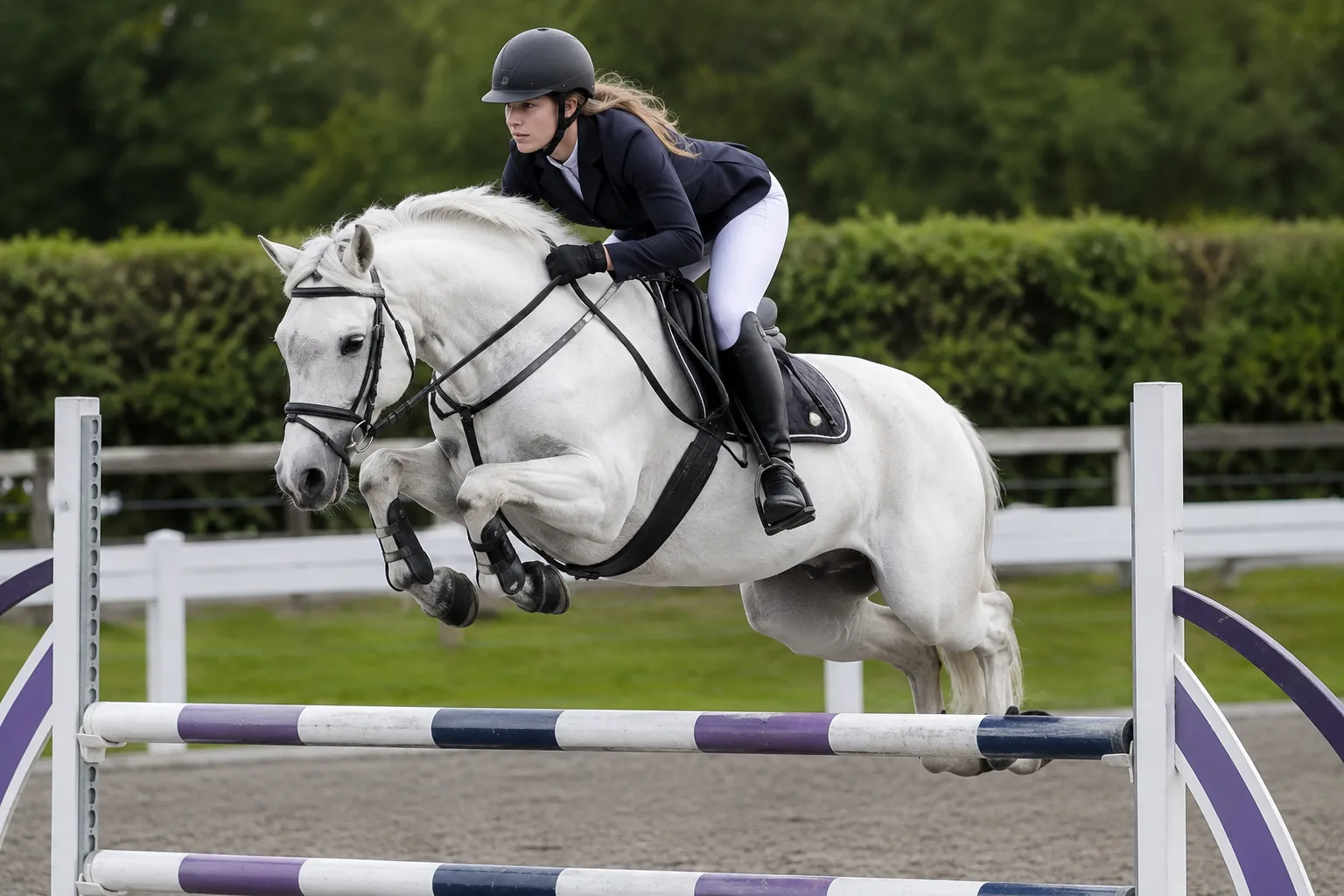
Absolutely. The Connemara is an excellent jumper, possessing great agility, a good jumping scope, and natural courage. It excels in show jumping and eventing disciplines, even when competing against larger horses.
What is HWSD in Connemaras?
HWSD (Hoof Wall Separation Disease) is a recessive genetic condition specific to the Connemara, which causes fragility and separation of the hoof wall. A genetic test is available to identify carriers and avoid breeding two carriers together.