
Horse breed
Heck Horse
The Heck Horse is a reconstituted breed, created by the brothers Heinz and Lutz Heck in the 1920s and 1930s. Their objective was to recreate the Tarpan, an extinct subspecies of Eurasian wild horse, using primitive domestic horse breeds.
The breed at a glance
The Heck Horse is known for its hardy, resilient, and self-sufficient temperament. It is generally calm and docile with regular handling, but can be wary if not accustomed to humans. It is intelligent and possesses a strong survival instinct.
- Category
- hardy breed
- Origin
- Germany · 1920s-1930s
- Height at withers
- 130–145 cm
- Weight
- 350–450 kg
- Lifespan
- 25-30 years
- Common coats
- grullo, mouse grey, seal brown
- Disciplines
- equestrian trail riding, trail riding, leisure driving
- Other names
- Heck Horse, Cheval de Heck (reconstitution)
Origin and history
The Heck Horse is a reconstituted breed, created by the brothers Heinz and Lutz Heck in the 1920s and 1930s. Their objective was to recreate the Tarpan, an extinct subspecies of Eurasian wild horse, using primitive domestic horse breeds. They crossed Konik ponies, Icelandic ponies, Gotingue ponies, and other rustic breeds. The breed was officially recognized as an attempt to recreate the Tarpan.
Conformation and physique
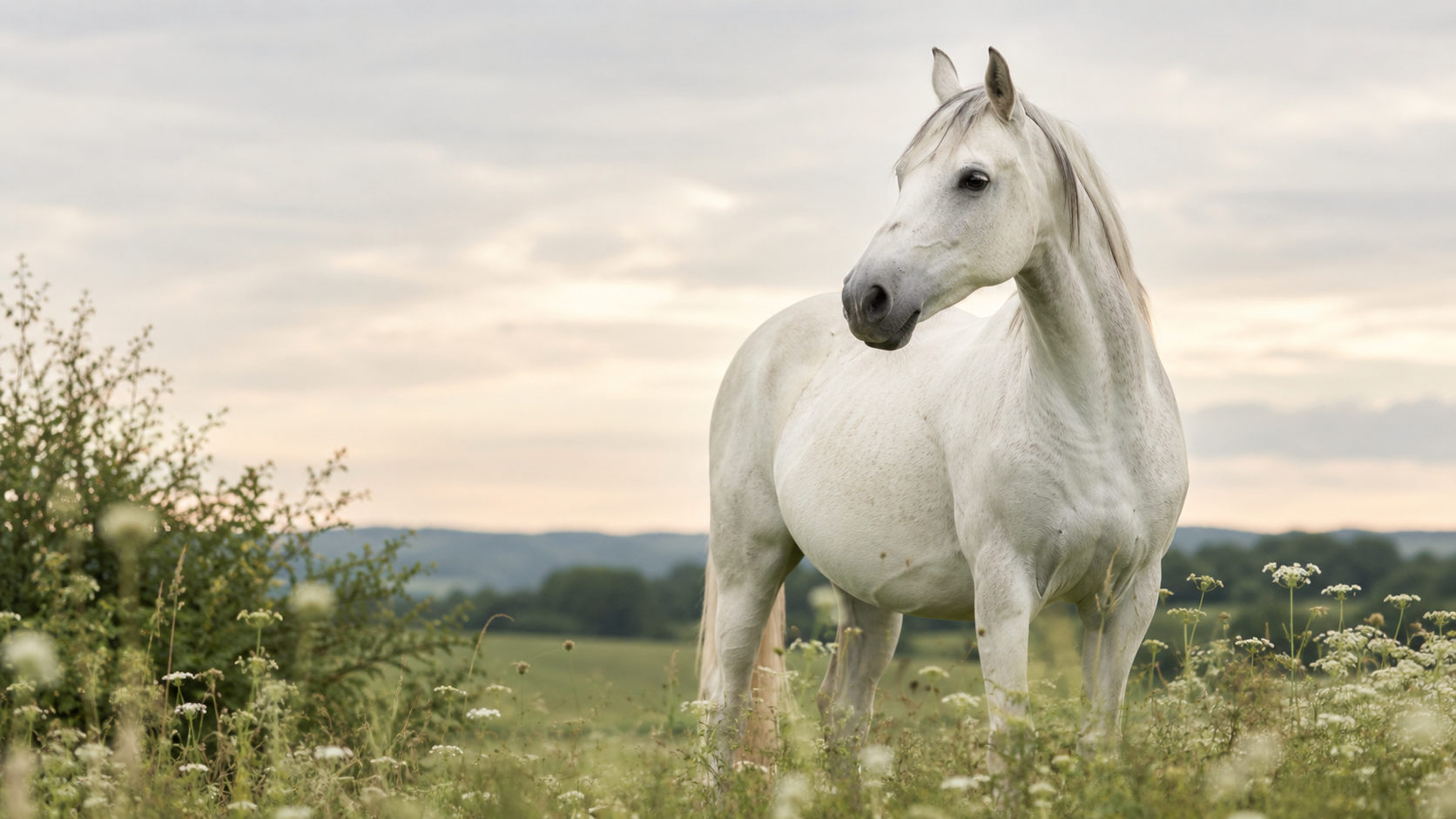
It is a small-sized horse, compact and robust, with solid bone structure. It has a typical primitive horse silhouette, adapted to semi-feral life.
Relatively heavy head, with a straight or slightly concave profile, with lively eyes and small, pointed ears. The nasal bone is broad.
Short and thick neck, well-muscled, often carried low. The withers are not very pronounced, blending into the topline.
Short and strong back, straight topline. Deep and broad chest. Sloping and muscular croup, often with a low-set tail.
Short, clean, and very strong limbs, with well-developed joints and hard hooves. Feathering is generally sparse or absent.
- Common coats: grullo, mouse grey, seal brown
Temperament and aptitudes
The Heck Horse is known for its hardy, resilient, and self-sufficient temperament. It is generally calm and docile with regular handling, but can be wary if not accustomed to humans. It is intelligent and possesses a strong survival instinct.
The gaits are free, energetic, and sure-footed, covering ground well. The walk is active, the trot is supple, and the canter is balanced, reflecting its adaptability to varied terrain.
- Uses: conservation breeding, ecological landscape management, recreational riding, light driving
- Disciplines: equestrian trail riding, trail riding, leisure driving
Feeding the Heck Horse
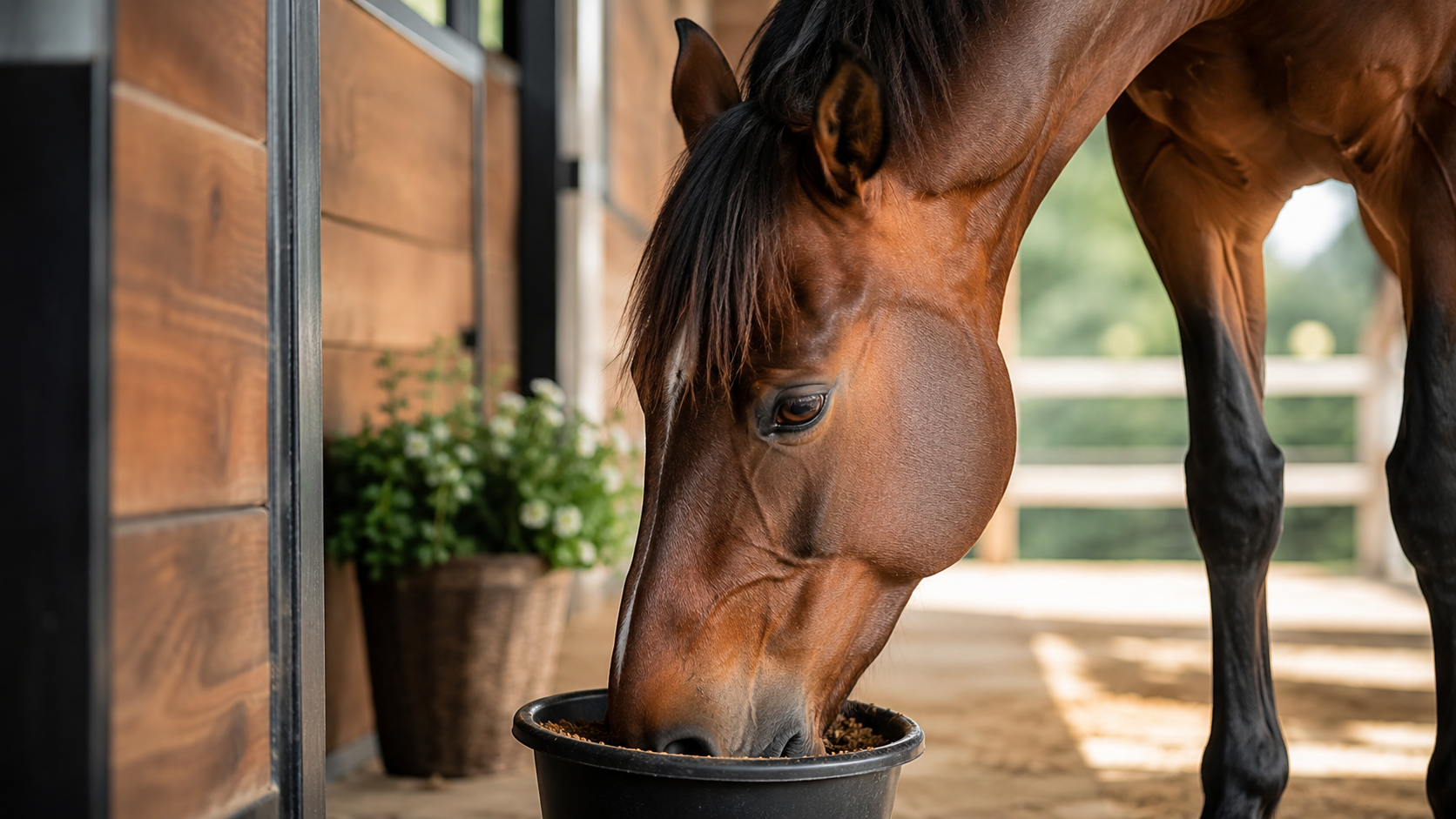
The Heck Horse is a very thrifty horse, adapted to poor diets and the utilization of coarse forage. It tends to become overweight if overfed. Its diet should primarily consist of good quality forage (grass, hay) and mineral and vitamin supplements. Concentrates are only necessary in cases of intense work or specific needs.
Due to its thrifty metabolism, the Heck Horse can be predisposed to laminitis and Equine Metabolic Syndrome (EMS) if fed a diet too rich in sugars and starch, or if it is overweight. Careful dietary management is crucial to prevent these conditions.
With Equio, every feed, supplement or treat is read against the horse's real profile (age, weight, Body Condition Score, conditions) — useful for a Heck Horse as soon as a metabolic or digestive sensitivity is known.

Health and points to watch
Regular monitoring of weight and body condition is essential to prevent obesity and associated pathologies. The hooves, though very resilient, nonetheless require regular trimming to maintain their integrity.
- More frequent conditions: laminitis, Equine Metabolic Syndrome (EMS)
Care and grooming
Care is relatively simple due to its hardiness. The naturally hard hooves require regular trimming but are rarely shod. The mane and tail are thick and can be left natural. The dense coat does not require clipping, and brushing is sufficient for routine maintenance.
Did you know?
- The Heck brothers also attempted to recreate the Aurochs, the wild ancestor of domestic cattle, using primitive cattle breeds.
- The Heck Horse is sometimes used in rewilding projects in Europe for its role as a large herbivore.
- Despite efforts, the Heck Horse is not genetically identical to the Tarpan, but it is a morphological and behavioral approximation.
The Heck Horse and how to track it
The breed is not widely represented in France, primarily found in natural parks or reserves for ecological pasture management, or with a few breeders passionate about primitive breeds.
Equio lets you build a complete profile for a Heck Horse: identity, weight, Body Condition Score, feeding, conditions, care reminders (vaccines, worming, trimming) and an exportable health log. The breed sets the identity; everyday decisions still depend on the real horse and your vet's advice.
- Record the activity level: rest, leisure, sport or breeding
- Add known conditions or sensitivities
- Scan feeds, plants and care products
- Keep reminders (vaccines, worming, trimming)
- Prepare a PDF export before a vet appointment
Frequently asked questions
Is the Heck Horse a true wild horse?
No, the Heck Horse is a reconstituted domestic breed, resulting from crosses of primitive domestic horses. It is not genetically identical to the extinct wild Tarpan, but it shares many morphological and behavioral characteristics.
What is the temperament of the Heck Horse?
It is a hardy, resilient, and self-sufficient horse. It is generally calm and intelligent, but can be wary of strangers. It requires gentle and regular handling to develop a good relationship with humans.
Is the Heck Horse suitable for beginners?
Due to its sometimes independent nature and pronounced survival instinct, the Heck Horse is better suited for experienced or supervised riders. It can be an excellent leisure horse for patient and consistent individuals.
What are the specific needs of the Heck Horse?
It needs plenty of space and an outdoor living environment. Its diet must be monitored to prevent obesity, and it requires regular hoof trimming. It is a very weather-resistant horse.
Where can Heck Horses be found in France?
They are rare in France, primarily found in nature conservation projects or with breeders specializing in primitive breeds. It is advisable to contact associations for hardy equine breeds for more information.