
Horse breed
Dutch Harness Horse
The Dutch Harness Horse is a relatively young breed, developed after World War II. It resulted from selective crosses between Dutch saddle horses (Groningen and Gelderland) and American harness horses (American Saddlebred, Hackney).
The breed at a glance
The Dutch Harness Horse is known for its willing, energetic, and courageous temperament. It is intelligent, responsive, and eager to work, making it an excellent partner for competitive driving. It can sometimes be sensitive and requires a soft but firm hand.
- Category
- sport horse
- Origin
- Netherlands · Mid-20th century
- Height at withers
- 158–170 cm
- Weight
- 500–650 kg
- Lifespan
- 20-25 years
- Common coats
- bay, chestnut, black, grey
- Disciplines
- Competitive Driving (dressage, cones, marathon), Show Driving (presentation)
- Other names
- Tuigpaard, Dutch Harness Horse
Origin and history
The Dutch Harness Horse is a relatively young breed, developed after World War II. It resulted from selective crosses between Dutch saddle horses (Groningen and Gelderland) and American harness horses (American Saddlebred, Hackney). The objective was to create an elegant and powerful horse, specifically intended for show driving. The breed was officially recognized in the Netherlands and is managed by the KWPN (Koninklijk Warmbloed Paardenstamboek Nederland) as a distinct section.

Conformation and physique
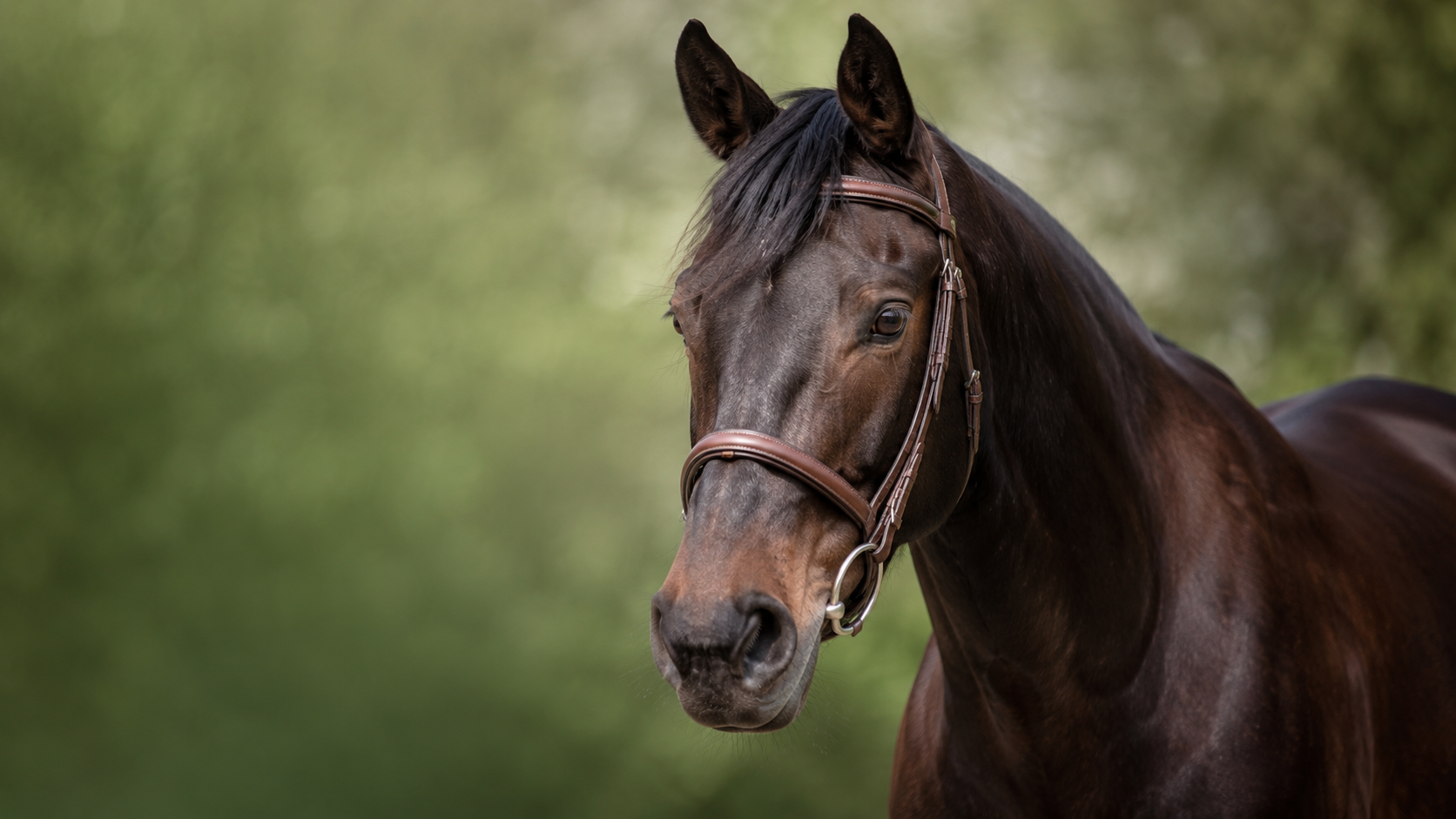
It is a medium to large-sized horse, with an elegant and athletic silhouette, characterized by solid yet refined bone structure. It exhibits a typical harness horse conformation, with a high head carriage and a proud demeanor.
The head is expressive, medium-sized, with a straight or slightly convex profile. The eyes are large and lively, the ears well-placed and alert.
The neck is long, strongly muscled, and carried very high, setting well into a pronounced wither. This characteristic is essential for the high head carriage desired in harness.
The back is short and strong, the topline taut. The chest is deep and wide, providing ample room for the lungs. The croup is powerful, often slightly sloped, with a high-set tail.
The limbs are long, clean, and muscular, with large and well-defined joints. The cannons are of good length, and the pasterns are medium in length. Feathering is generally absent or very sparse.
- Common coats: bay, chestnut, black, grey
Temperament and aptitudes
The Dutch Harness Horse is known for its willing, energetic, and courageous temperament. It is intelligent, responsive, and eager to work, making it an excellent partner for competitive driving. It can sometimes be sensitive and requires a soft but firm hand.
The gaits are spectacular, characterized by high knee and hock action, particularly at the trot. The movement is powerful, energetic, and very expressive, with great amplitude.
- Uses: Show and Competitive Driving, Leisure driving, Riding horse (less common)
- Disciplines: Competitive Driving (dressage, cones, marathon), Show Driving (presentation)
Feeding the Dutch Harness Horse
The Dutch Harness Horse is an athlete that expends a lot of energy during training and competitions. It has high energy requirements and needs a balanced diet, rich in good quality forage (hay or grass) and supplemented with concentrates appropriate for its activity level. It is not particularly prone to being overweight if worked regularly, but careful management of feed intake is necessary to maintain its optimal physical condition.
The breed does not show documented predispositions to specific dietary sensitivities like laminitis or Equine Metabolic Syndrome (EMS) more than other sport horse breeds. However, like any equine athlete, a diet too rich in sugars and starch without sufficient exercise can lead to metabolic imbalances.
With Equio, every feed, supplement or treat is read against the horse's real profile (age, weight, Body Condition Score, conditions) — useful for a Dutch Harness Horse as soon as a metabolic or digestive sensitivity is known.
Health and points to watch
Particular attention must be paid to joint and tendon health, notably through regular veterinary check-ups and rigorous training management. The quality of trimming or shoeing is also crucial for preventing foot and limb problems. Proper warm-up and recovery management are essential.
- More frequent conditions: Joint problems (due to the high action of their gaits), Limb conditions (tendinitis, desmitis) due to the intensity of work
Care and grooming
Routine care includes regular and appropriate trimming or shoeing to support the breed's specific gaits. The mane and tail are often left long and maintained for presentations. The coat is generally easy to maintain, but daily grooming is recommended to maintain cleanliness and shine. Careful monitoring of the limbs is paramount.
Did you know?
- The KWPN, the Dutch studbook, is one of the largest and most renowned in the world, managing several sections, including that of the Dutch Harness Horse.
- Dutch Harness Horses are often presented with very elegant harnesses and specific presentation carriages, highlighting their carriage and gaits.
- Their high action is the result of rigorous selection and is considered the hallmark of the breed.
The Dutch Harness Horse and how to track it
The breed is present in France, but in limited numbers. It is primarily imported from the Netherlands and used by competitive or recreational driving enthusiasts seeking a horse with spectacular gaits.
Equio lets you build a complete profile for a Dutch Harness Horse: identity, weight, Body Condition Score, feeding, conditions, care reminders (vaccines, worming, trimming) and an exportable health log. The breed sets the identity; everyday decisions still depend on the real horse and your vet's advice.
- Record the activity level: rest, leisure, sport or breeding
- Add known conditions or sensitivities
- Scan feeds, plants and care products
- Keep reminders (vaccines, worming, trimming)
- Prepare a PDF export before a vet appointment
Frequently asked questions
What is the average price of a Dutch Harness Horse?
The price of a Dutch Harness Horse varies considerably depending on its age, training level, lineage, and competitive potential. It can range from a few thousand euros for a young horse to several tens of thousands for a proven high-level driving horse.
Is the Dutch Harness Horse suitable for beginners?
Due to its energy and willing temperament, the Dutch Harness Horse is generally not recommended for beginners. It requires an experienced and confident driver, capable of managing its power and sensitivity.
Can a Dutch Harness Horse be ridden?
Yes, although primarily bred for driving, the Dutch Harness Horse can be ridden. It has comfortable gaits and can be used for dressage or pleasure riding, but its high action can be surprising for an unaccustomed rider.
How to recognize a good Dutch Harness Horse?
A good Dutch Harness Horse is distinguished by its elevated head carriage, powerful neck, high and energetic gaits, and willing temperament. The conformation must be balanced, with strong limbs and good hindquarters for propulsion.
What are the main qualities of the Dutch Harness Horse?
Its main qualities are its elegance, spectacular gaits, and energy. It is also appreciated for its intelligence, willingness to work, and its ability to perform at the highest level in competitive and show driving.