
Horse breed
Camargue
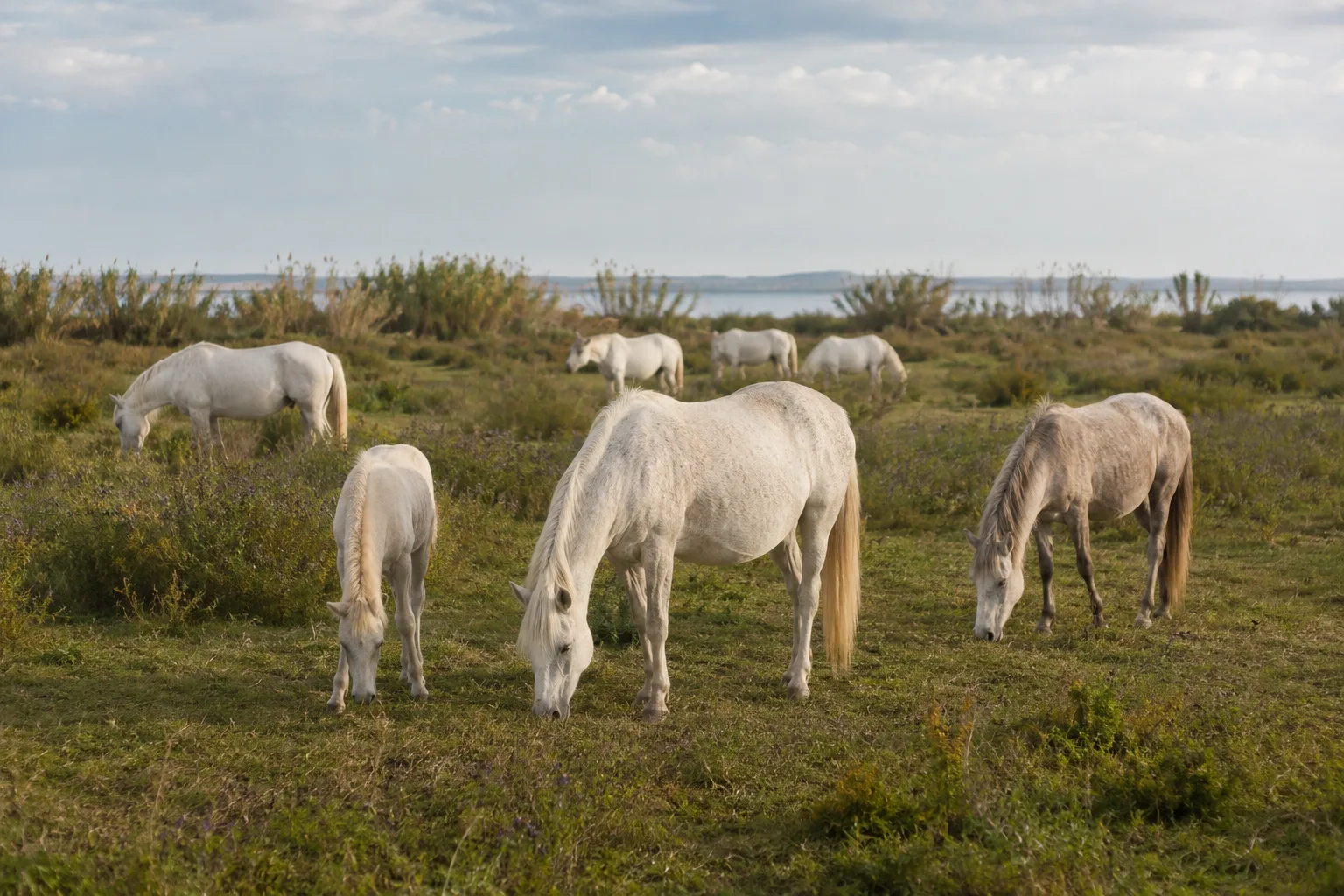
The Camargue is a very ancient breed, descending from the region's prehistoric horses. It evolved in semi-feral conditions in the Camargue marshes, developing a unique adaptation to this harsh environment.

The breed at a glance
The Camargue is a hardy, courageous, and willing horse. It is renowned for its intelligence, liveliness, and composure. Very close to humans when well-trained, it is also independent and possesses a strong character.
- Category
- hardy breed
- Origin
- France · Antiquity / Prehistory (establishment over centuries)
- Height at withers
- 135–145 cm
- Weight
- 300–400 kg
- Lifespan
- 25-30 years
- Common coats
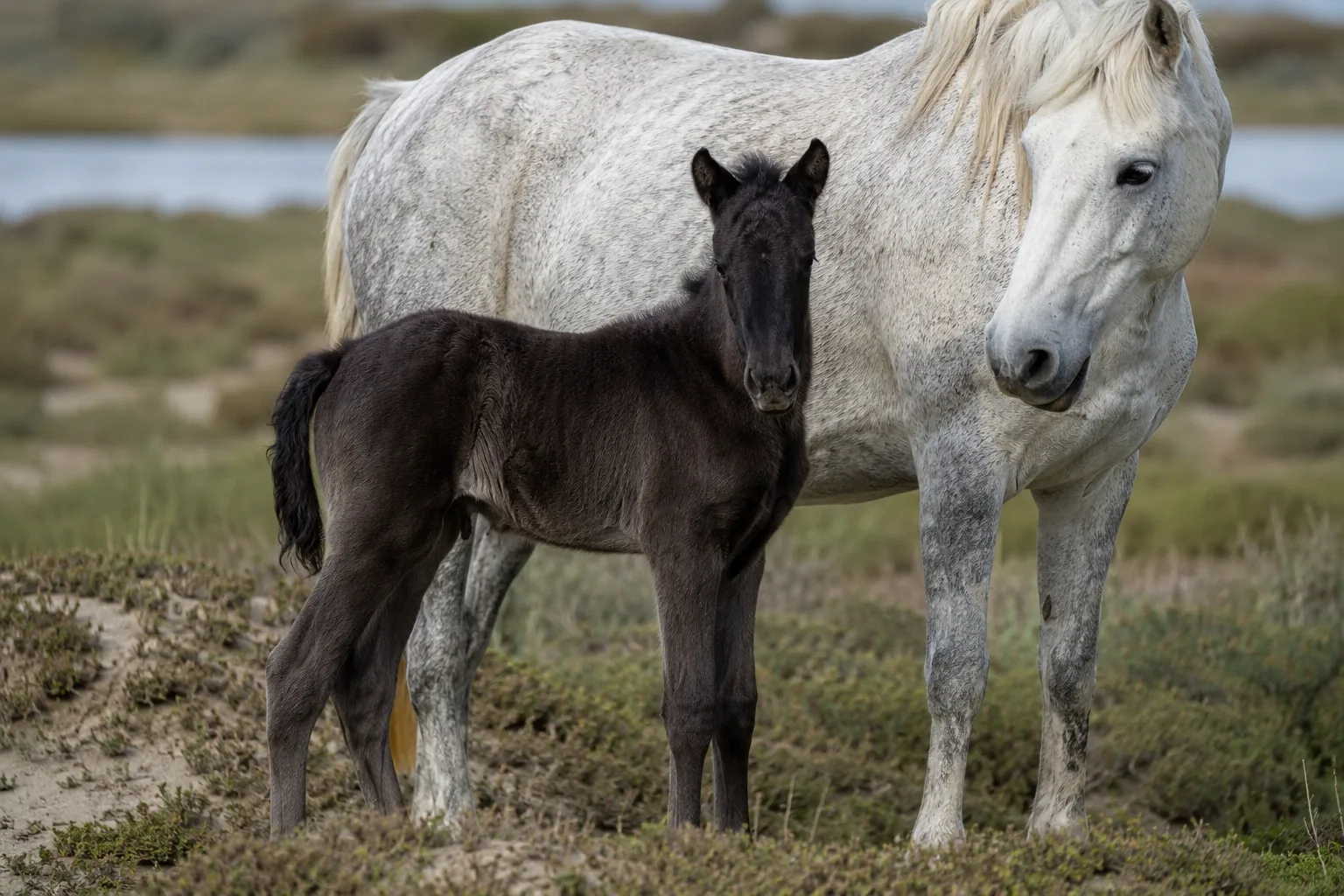
- grey
- Disciplines
- Working equitation, TREC, Trail riding, Driving
- Other names
- Cheval de Camargue
Origin and history
The Camargue is a very ancient breed, descending from the region's prehistoric horses. It evolved in semi-feral conditions in the Camargue marshes, developing a unique adaptation to this harsh environment. Its natural selection was complemented by humans for working with bulls. The breed's studbook was created in 1978, formalizing its standard and recognition.

Conformation and physique
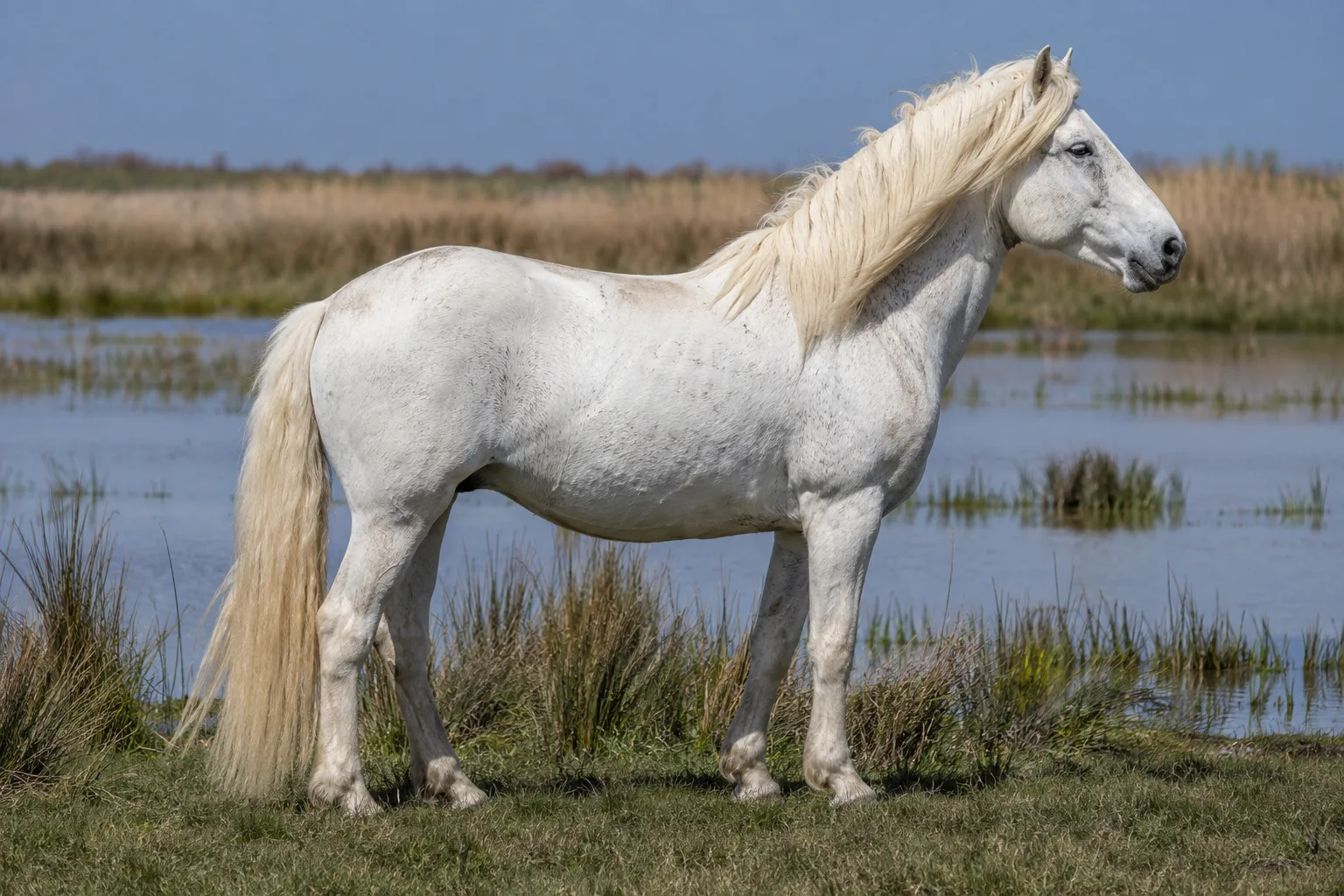
A medium-sized horse, compact and powerful, with solid bone structure and well-developed musculature. It has a well-proportioned mesoline build, adapted to its environment and work.
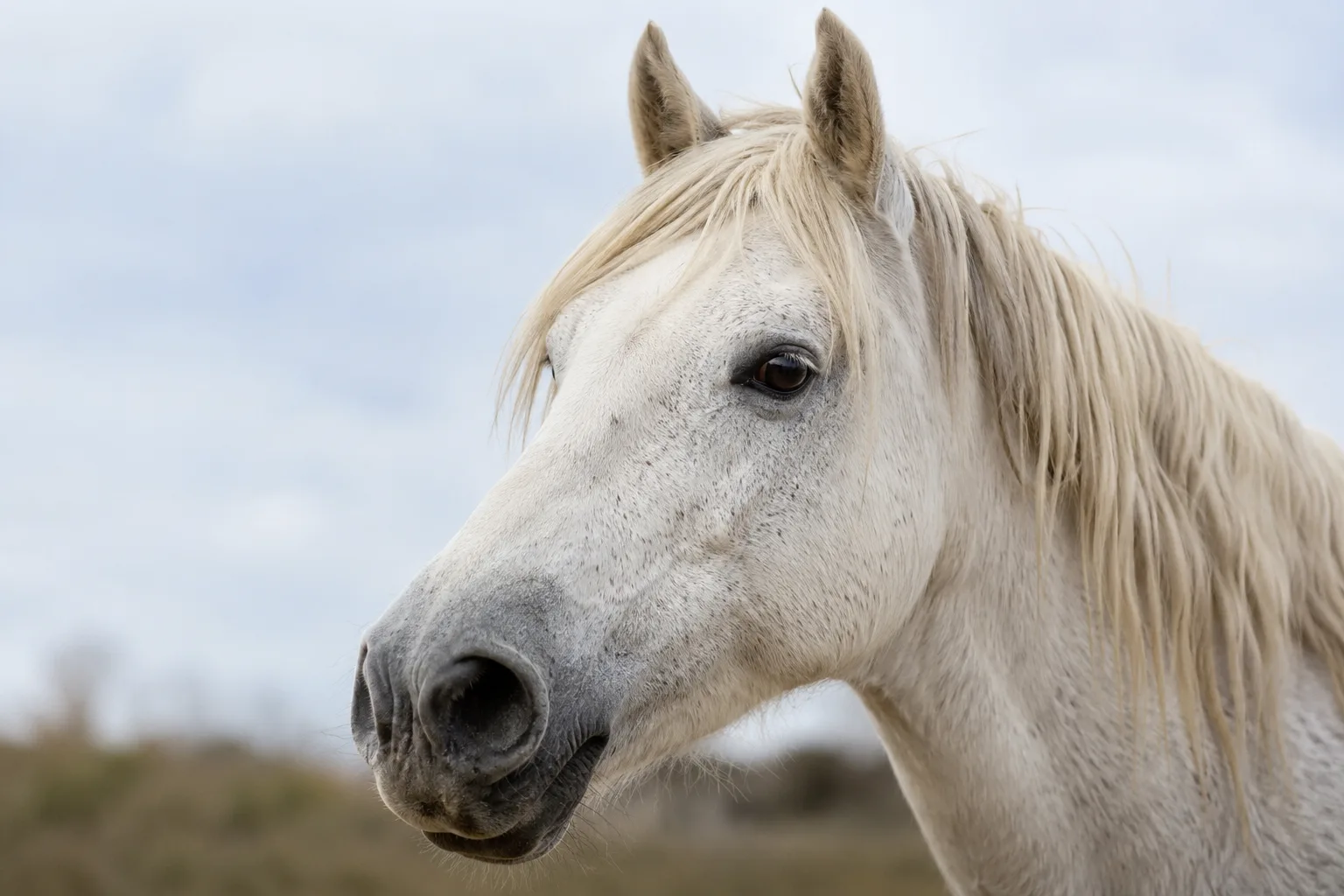
Expressive head, often somewhat strong, with a straight or slightly convex profile. The ears are short and well-set, the eyes lively and expressive, and the nostrils well-opened.
Short, muscular neck, well-set, carrying an abundant mane. The withers are rather low-set, blending smoothly into the topline.
Short, broad back, powerful loin. The chest is deep and ample, a sign of good respiratory capacity. The croup is rounded and muscular, often double.
Strong, short limbs, with broad and well-defined joints. The hooves are broad, round, and very hard, adapted to wet terrain. The feathering is sparse.
- Common coats: grey
Temperament and aptitudes
The Camargue is a hardy, courageous, and willing horse. It is renowned for its intelligence, liveliness, and composure. Very close to humans when well-trained, it is also independent and possesses a strong character.
The gaits are straightforward, supple, and energetic, with good amplitude. The walk is sure-footed, the trot elevated, and the canter balanced, allowing for great agility on varied terrain.
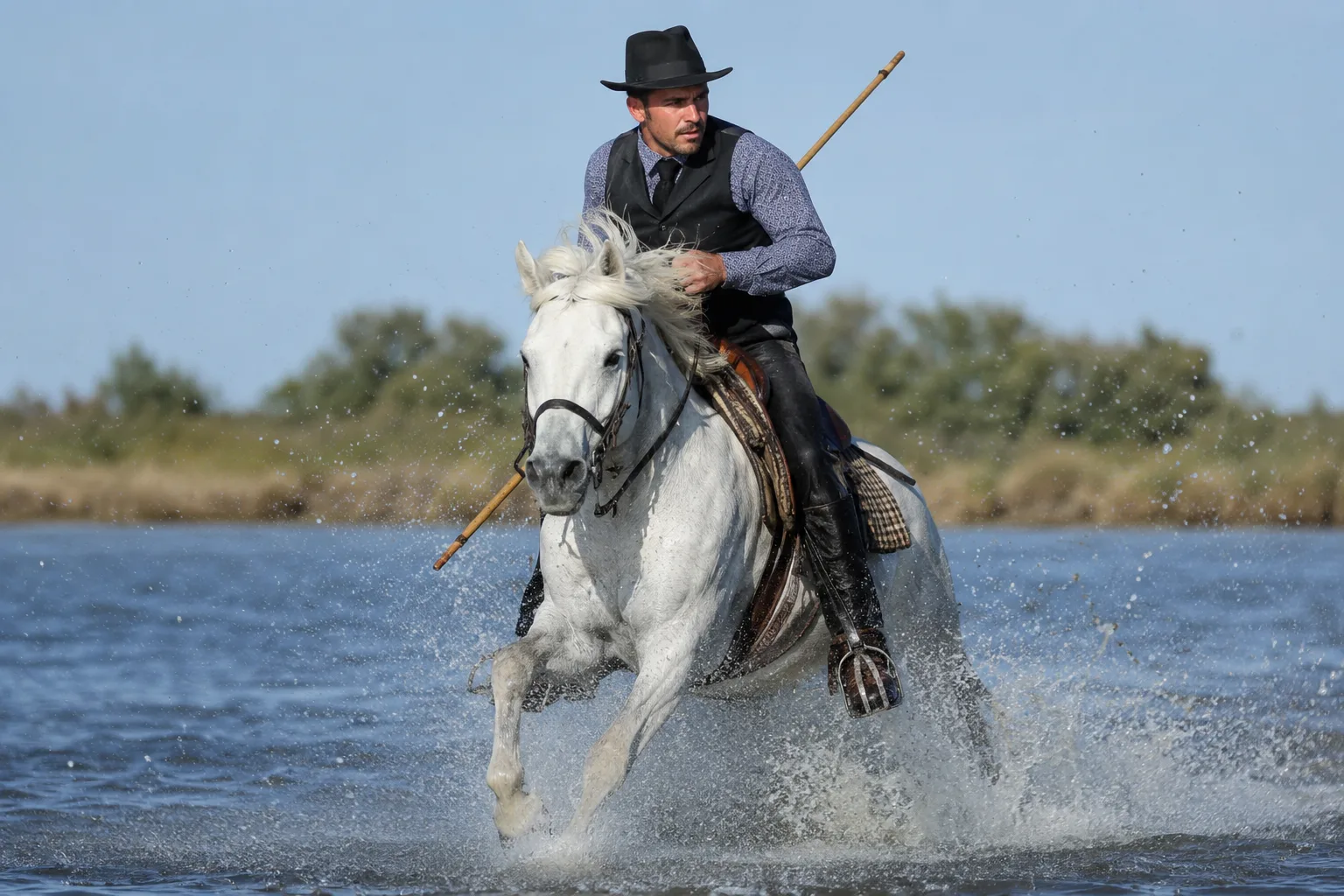
- Uses: Working with bulls (gardians), Equestrian trekking, Equestrian tourism, Light harness driving, Working Equitation
- Disciplines: Working equitation, TREC, Trail riding, Driving
Feeding the Camargue
The Camargue is a very economical horse, accustomed to limited resources. Its metabolism is adapted to utilizing coarse forages. It tends to become overweight if its diet is too rich or if it is sedentary. A supply of good quality hay is sufficient for a horse at rest or in light work, along with mineral and vitamin supplements. Concentrates are only necessary for intense work.
Due to its economical metabolism, the Camargue can be predisposed to laminitis and Equine Metabolic Syndrome (EMS) if overfed or sedentary, especially with diets rich in sugars and starch. It is important to monitor its weight and adapt its diet to its activity level.
With Equio, every feed, supplement or treat is read against the horse's real profile (age, weight, Body Condition Score, conditions) — useful for a Camargue as soon as a metabolic or digestive sensitivity is known.

Health and points to watch
Carefully monitor body condition to avoid obesity. Particular attention should be paid to the hooves, although very resistant, to prevent conditions related to prolonged moisture. Regular dental check-ups are also important.
- More frequent conditions: Laminitis (in case of overfeeding), Joint problems related to age or intense work on difficult terrain
Care and grooming
The Camargue is a hardy horse that requires little specific care. Its very hard hooves need regular trimming but are rarely shod, except for specific uses. Its mane and tail, often very full, can be detangled regularly. Its grey coat does not require special clipping, except for the horse's comfort during intense work or for aesthetic reasons.
Did you know?
- All Camargue foals are born with a dark coat (bay, black, or chestnut) and gradually turn grey as they age.
- The Camargue is the only horse in the world to live in semi-feral conditions in an environment as specific as the salt marshes.
- It is often called the 'horse of the sea' or the 'horse of the gardians'.
The Camargue and how to track it
The Camargue is primarily bred in the Camargue region and surrounding areas, where it is a strong symbol of local culture. It is also present in other regions of France for trail riding and leisure.
Equio lets you build a complete profile for a Camargue: identity, weight, Body Condition Score, feeding, conditions, care reminders (vaccines, worming, trimming) and an exportable health log. The breed sets the identity; everyday decisions still depend on the real horse and your vet's advice.
- Record the activity level: rest, leisure, sport or breeding
- Add known conditions or sensitivities
- Scan feeds, plants and care products
- Keep reminders (vaccines, worming, trimming)
- Prepare a PDF export before a vet appointment
Frequently asked questions
What is the price of a Camargue horse?
The price of a Camargue generally ranges between €2,000 and €8,000, depending on its age, training level, lineage, and potential. Horses intended for working with bulls or for breeding can fetch higher prices.
Is the Camargue a good horse for beginners?
Yes, the Camargue can be an excellent horse for beginners, provided it has been well-trained. Its calm temperament and hardiness make it a reliable companion, but its assertive character requires a patient and consistent rider.
How to care for a Camargue horse?
Caring for a Camargue is relatively simple. It needs shelter, access to fresh water, and a diet suited to its economical metabolism. Regular hoof trimming and routine veterinary care (vaccinations, deworming) are essential.
Can the Camargue live outdoors all year round?
Absolutely. The Camargue is perfectly adapted to living outdoors all year round, even in harsh climatic conditions. Its thick coat and natural hardiness allow it to withstand cold and humidity, provided it has natural or artificial shelter.
What is the average height of a Camargue?
The average height of a Camargue ranges between 1.35 m and 1.45 m at the withers. It is a medium-sized horse, which makes it manageable and agile, ideal for work and trail riding.