
Horse breed
Bashkir
The Bashkir is an ancient breed originating from the Ural steppes, in Bashkiria. Its exact origin is debated, but it is the result of natural selection and crossbreeding with local horses and Mongolian breeds.

The breed at a glance
The Bashkir is known for its calm, docile, and intelligent temperament. It is courageous, resilient, and highly adaptable, making it an excellent working and leisure companion. It is also renowned for its loyalty to its owner.
- Category
- hardy breed
- Origin
- Russia (Bashkiria) · Antiquity / Middle Ages (established in the 17th century)
- Height at withers
- 140–150 cm
- Weight
- 400–500 kg
- Lifespan
- 25-30 years
- Common coats
- bay, chestnut, grey, black, palomino, dun
- Disciplines
- trail riding, endurance riding, leisure driving, working equitation
- Other names
- Bashkir Curly, Cheval Bouclé Bashkir
Origin and history
The Bashkir is an ancient breed originating from the Ural steppes, in Bashkiria. Its exact origin is debated, but it is the result of natural selection and crossbreeding with local horses and Mongolian breeds. It has been used for centuries by the Bashkir people for milk, meat, transport, and agricultural work. The breed was officially recognized in Russia in the 17th century.
Conformation and physique
Medium-sized, compact, and robust horse, with strong bone structure and well-developed musculature. It has a typical steppe horse silhouette, adapted to survival in harsh conditions.
Medium-sized head, often a little heavy, with a straight or slightly convex profile. The eyes are expressive and the ears are medium-sized.
Short, thick, and muscular neck, well-set. The withers are not very pronounced, blending into the topline.
Short and broad back, straight and strong topline. Deep and broad chest, well-sprung ribs. Muscular croup, often slightly sloping.
Short, strong, and clean limbs, with robust joints and well-defined tendons. The hooves are hard and resistant. Feathering is generally sparse, except for curly-coated varieties.
- Common coats: bay, chestnut, grey, black, palomino, dun
Temperament and aptitudes
The Bashkir is known for its calm, docile, and intelligent temperament. It is courageous, resilient, and highly adaptable, making it an excellent working and leisure companion. It is also renowned for its loyalty to its owner.
Its gaits are energetic, expansive, and regular, with good impulsion. The Bashkir is renowned for its endurance and ability to cover long distances over difficult terrain.
- Uses: light draft horse, saddle horse, pack horse, milk production (koumiss), meat production, driving, equestrian trail riding, recreational riding
- Disciplines: trail riding, endurance riding, leisure driving, working equitation
Feeding the Bashkir
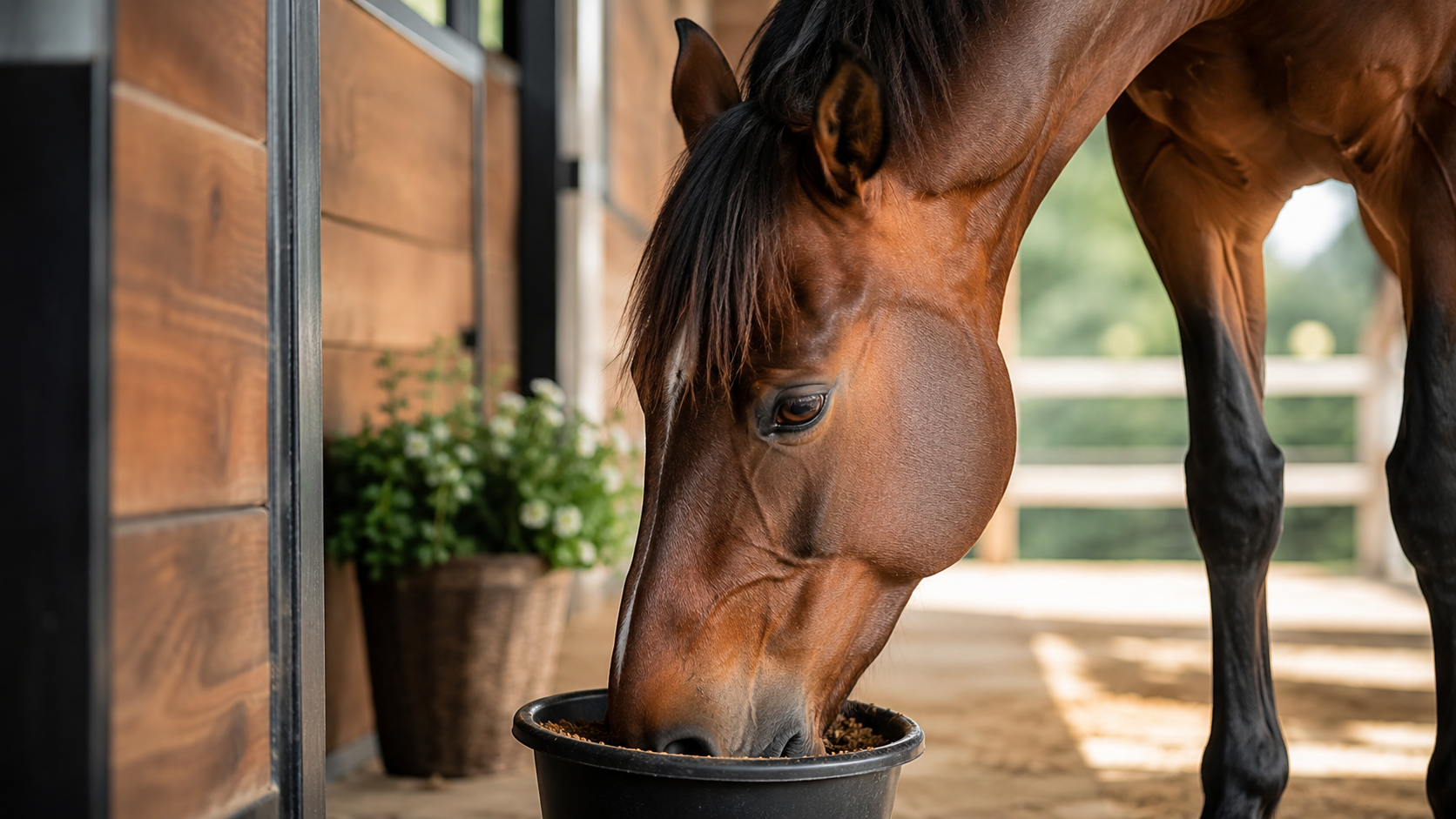
The Bashkir is a very thrifty horse, accustomed to harsh living conditions and a frugal diet. It has an efficient metabolism and is able to utilize poor quality forage. It is prone to being overweight if its diet is not adapted to its activity level. A diet based on good quality hay and grass is generally sufficient. Concentrates are only necessary in cases of intense work or specific needs (gestation, lactation).
Due to its thrifty metabolism, the Bashkir can be predisposed to Equine Metabolic Syndrome (EMS) and laminitis if overfed or given unlimited access to rich pastures. It is important to monitor its weight and manage its sugar and starch intake.
With Equio, every feed, supplement or treat is read against the horse's real profile (age, weight, Body Condition Score, conditions) — useful for a Bashkir as soon as a metabolic or digestive sensitivity is known.
Health and points to watch
Particular attention should be paid to weight management and the prevention of metabolic disorders. The robustness of its hooves requires regular trimming but can tolerate longer intervals than other breeds. Monitor the condition of its curly coat, especially during shedding season, to prevent skin problems.
- More frequent conditions: laminitis, Equine Metabolic Syndrome (EMS)
Care and grooming
The Bashkir's hooves are naturally hard and resilient, requiring regular trimming but often able to go barefoot. The curly coat, characteristic of certain lines, requires regular brushing to prevent tangles and maintain cleanliness, especially during shedding. The mane and tail are often thick and may require frequent detangling. Its skin is generally robust.
Did you know?
- Some Bashkirs have a unique curly coat, particularly visible in winter, which is hypoallergenic for many people.
- Bashkir mare's milk is traditionally used to produce koumiss, a fermented beverage highly valued in Central Asia.
- The Bashkir is capable of surviving extreme temperatures, ranging from -40°C in winter to +40°C in summer, thanks to its physiological adaptation and thick coat.
The Bashkir and how to track it
The Bashkir breed is very rare in France, with a few individuals imported mainly for leisure riding or due to curiosity about its curly coat. There is no significant breeding or dedicated French studbook.
Equio lets you build a complete profile for a Bashkir: identity, weight, Body Condition Score, feeding, conditions, care reminders (vaccines, worming, trimming) and an exportable health log. The breed sets the identity; everyday decisions still depend on the real horse and your vet's advice.
- Record the activity level: rest, leisure, sport or breeding
- Add known conditions or sensitivities
- Scan feeds, plants and care products
- Keep reminders (vaccines, worming, trimming)
- Prepare a PDF export before a vet appointment
Frequently asked questions
Is the Bashkir Curly truly hypoallergenic?
Yes, many people allergic to horses can tolerate the Bashkir Curly. This is due to the unique structure of its hair, which contains less of the Fel d 1 protein, responsible for allergic reactions in humans. However, the reaction can vary from person to person.
What is unique about the Bashkir's coat?
The Bashkir can have a curly coat, particularly dense and frizzy in winter, which sheds in summer to reveal a shorter, smoother coat. This curly coat is a unique genetic characteristic and offers excellent thermal insulation.
Is the Bashkir a good horse for beginners?
Yes, thanks to its calm, docile, and intelligent temperament, the Bashkir is often considered an excellent horse for beginners and riders of all levels. Its robustness and versatility make it a reliable companion.
Can Bashkirs be found outside of Russia?
Yes, although the majority of the population is found in Russia, Bashkirs have been exported and are bred in other countries, notably in the United States where the breed is known as the American Bashkir Curly Horse, although its direct genetic link with the Russian Bashkir is debated.
Is the Bashkir an endangered breed?
The Bashkir population in Russia is stable and not considered endangered. However, purebred lines and horses with the curly coat gene may be fewer in number and subject to conservation programs.