
Horse breed
Auvergne Horse
The Auvergne horse is an ancient breed, descended from the working and saddle horses of the Auvergne mountains. Its origin dates back to the Middle Ages, where it was valued for its robustness and versatility.
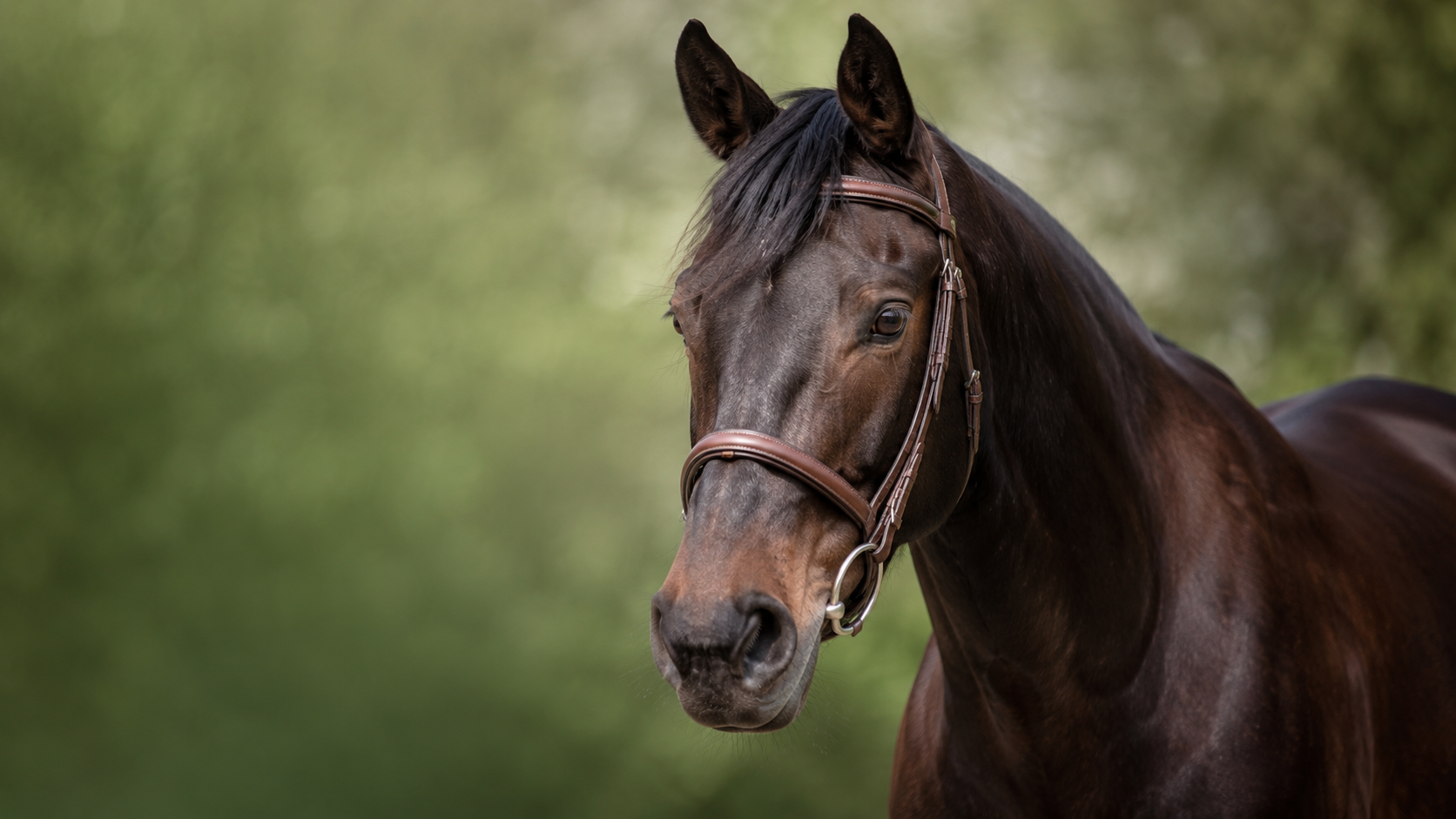
The breed at a glance
The Auvergne horse is renowned for its calm, gentle, and willing temperament. It is a courageous, enduring, and very people-oriented horse, making it an excellent companion. It is intelligent and learns quickly, demonstrating great versatility in work.
- Category
- hardy breed
- Origin
- France · Middle Ages
- Height at withers
- 143–157 cm
- Weight
- 400–550 kg
- Lifespan
- 25-30 years
- Common coats
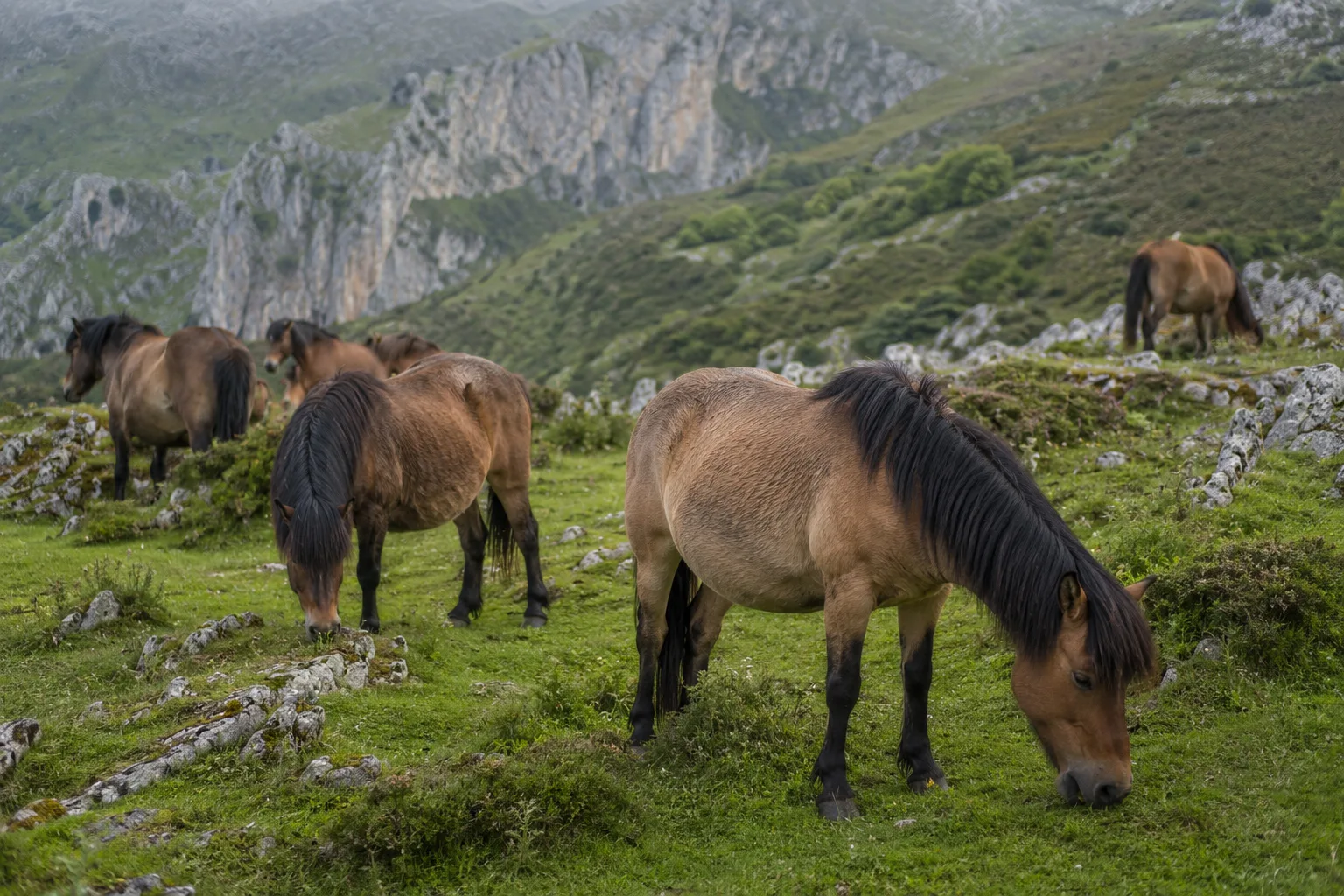
- bay, black pangaré
- Disciplines
- equestrian trail riding, TREC, leisure driving, working equitation
Origin and history
The Auvergne horse is an ancient breed, descended from the working and saddle horses of the Auvergne mountains. Its origin dates back to the Middle Ages, where it was valued for its robustness and versatility. Long used by farmers and peddlers, it nearly disappeared in the 20th century with mechanization. The breed was officially recognized in 1997, and a conservation program is in place to preserve this equine heritage.

Conformation and physique
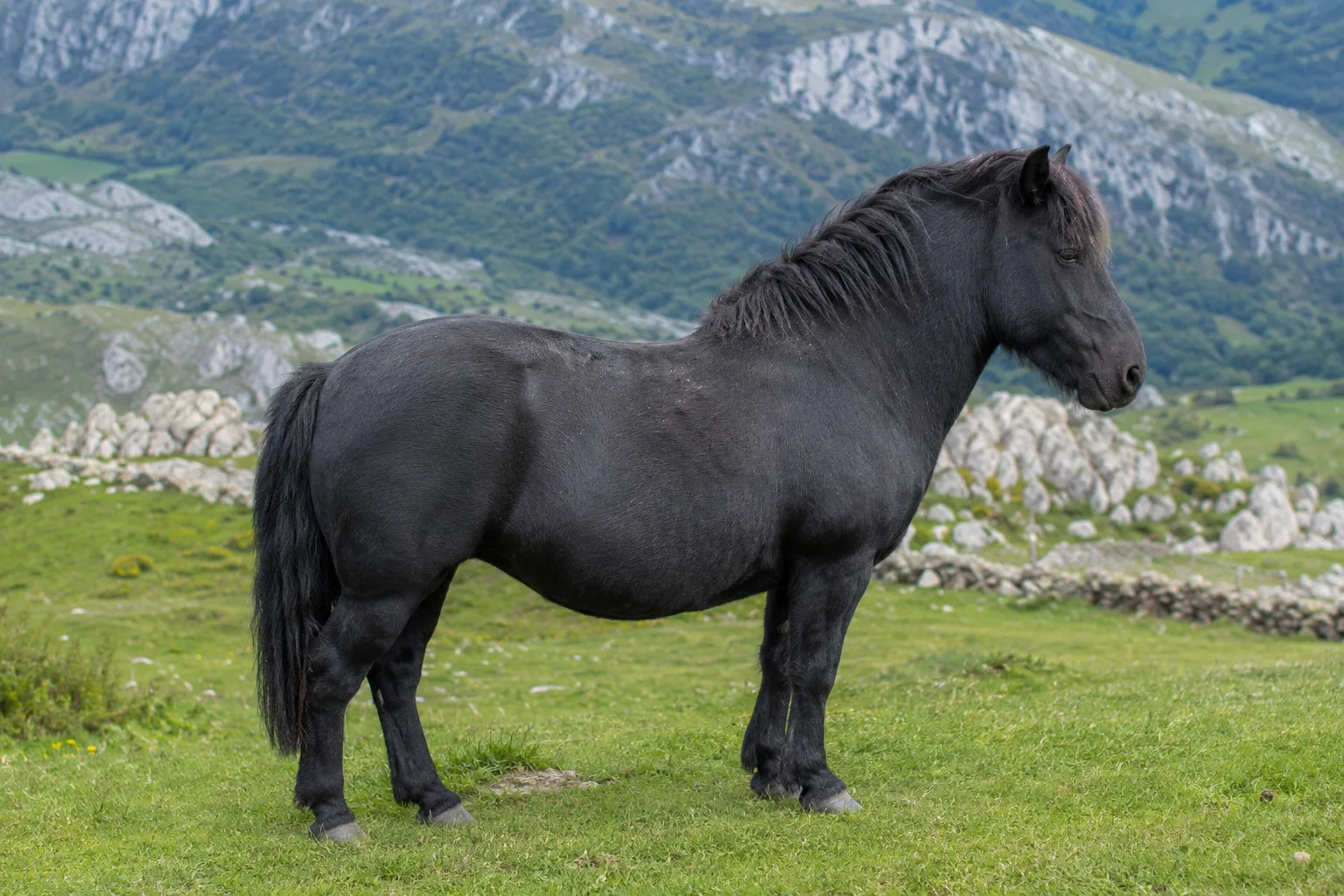
It is a medium-sized horse, compact and well-proportioned, with solid bone structure and well-developed musculature, typical of mountain horses. It has a rustic yet elegant build, suited for work in difficult terrain.
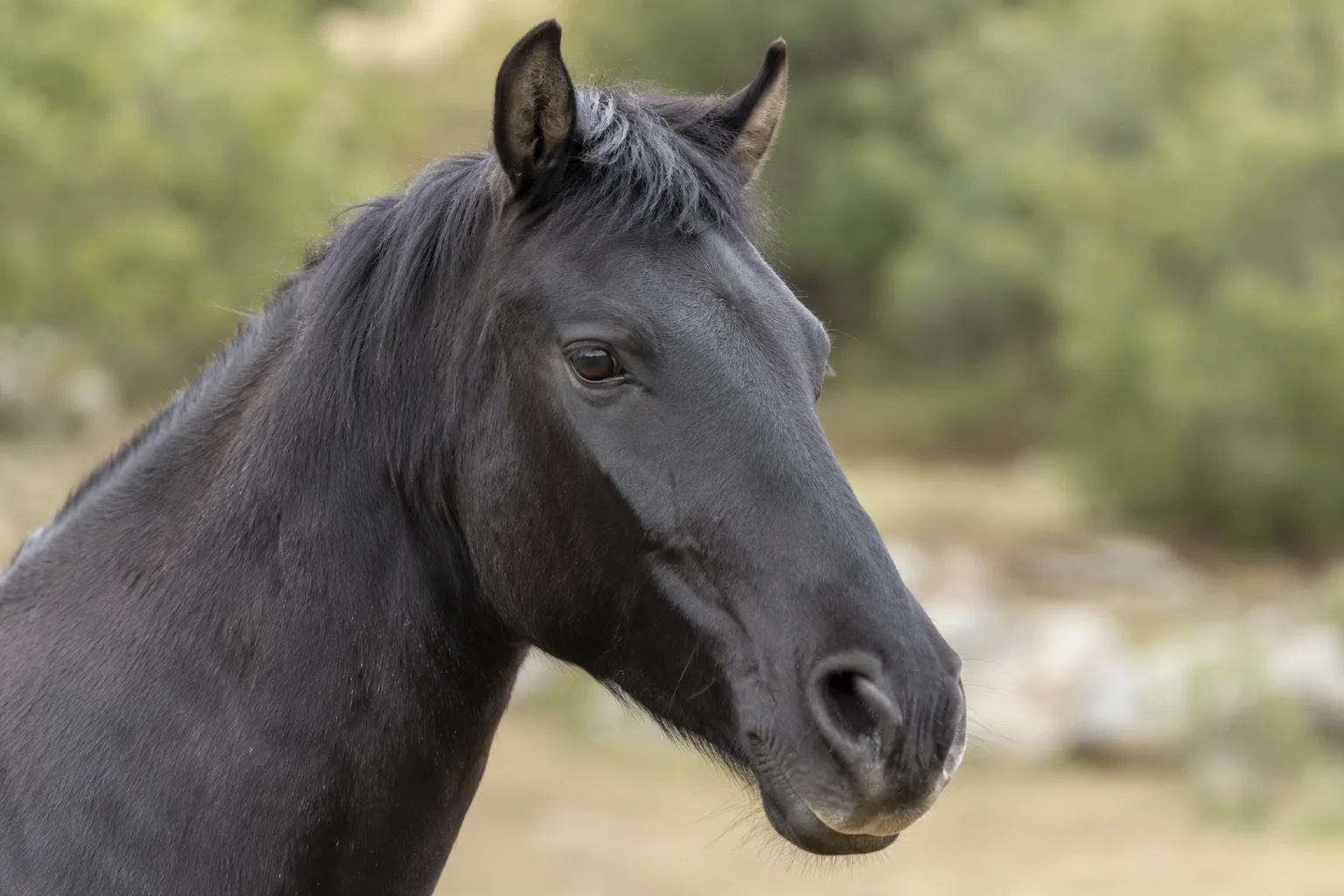
The head is expressive, medium-sized, with a straight or slightly concave profile. The forehead is broad, the eyes lively and expressive, the ears short and well-set. The nasal bone is broad and the nostrils are well-open.
The neck is well-set, muscular and of medium length, blending harmoniously into a rather flat but well-defined wither. It is carried elegantly.
The back is short and strong, the topline is taut and muscular. The chest is deep and broad, indicative of good respiratory capacity. The croup is rounded and muscular, often double, with a well-set tail.
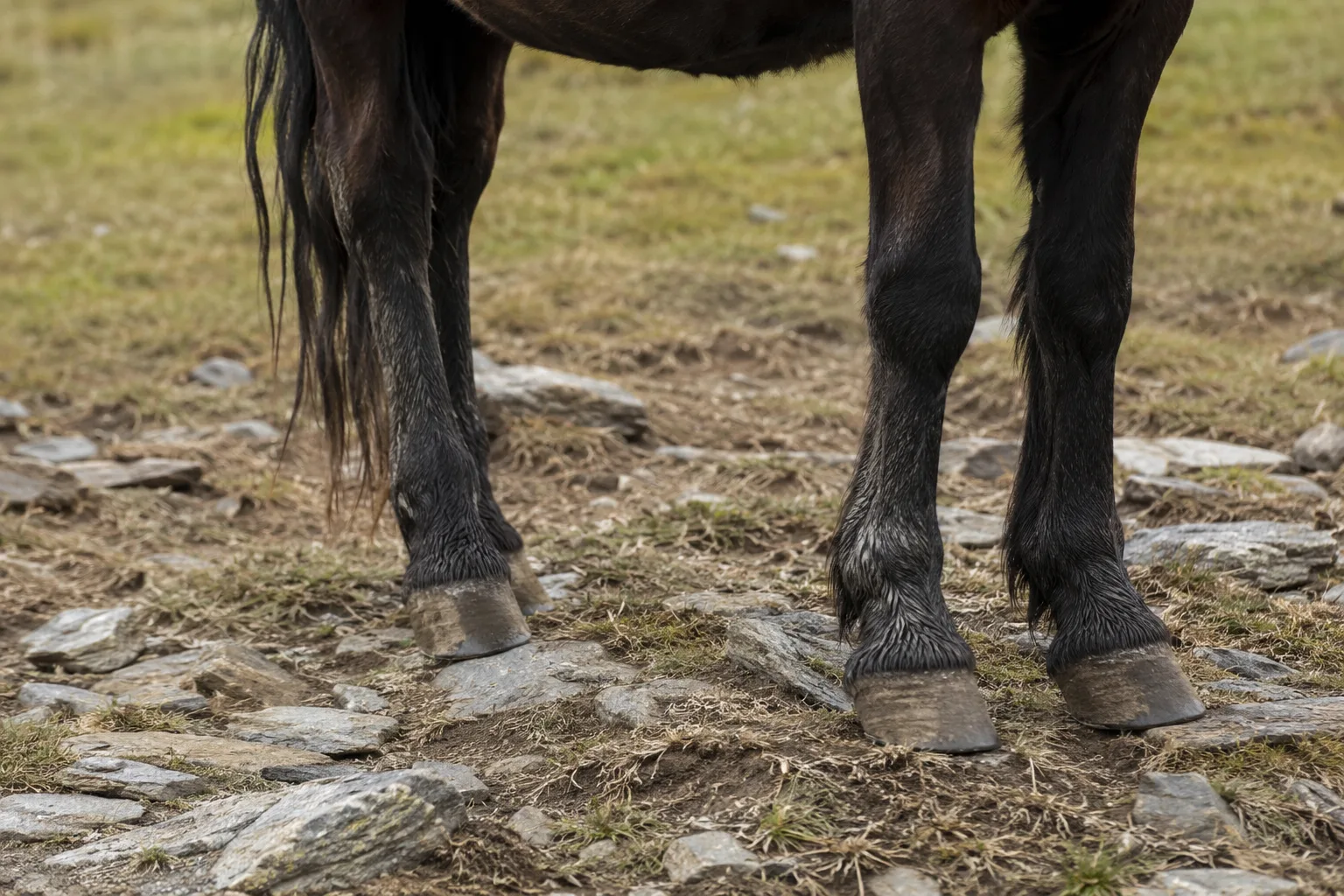
The limbs are strong, with clean joints and correct conformation. The cannons are short and clean, the pasterns are of medium length. The feet are small, hard, and well-formed, suited for stony terrain. The feathers are sparse.
- Common coats: bay, black pangaré
Temperament and aptitudes
The Auvergne horse is renowned for its calm, gentle, and willing temperament. It is a courageous, enduring, and very people-oriented horse, making it an excellent companion. It is intelligent and learns quickly, demonstrating great versatility in work.
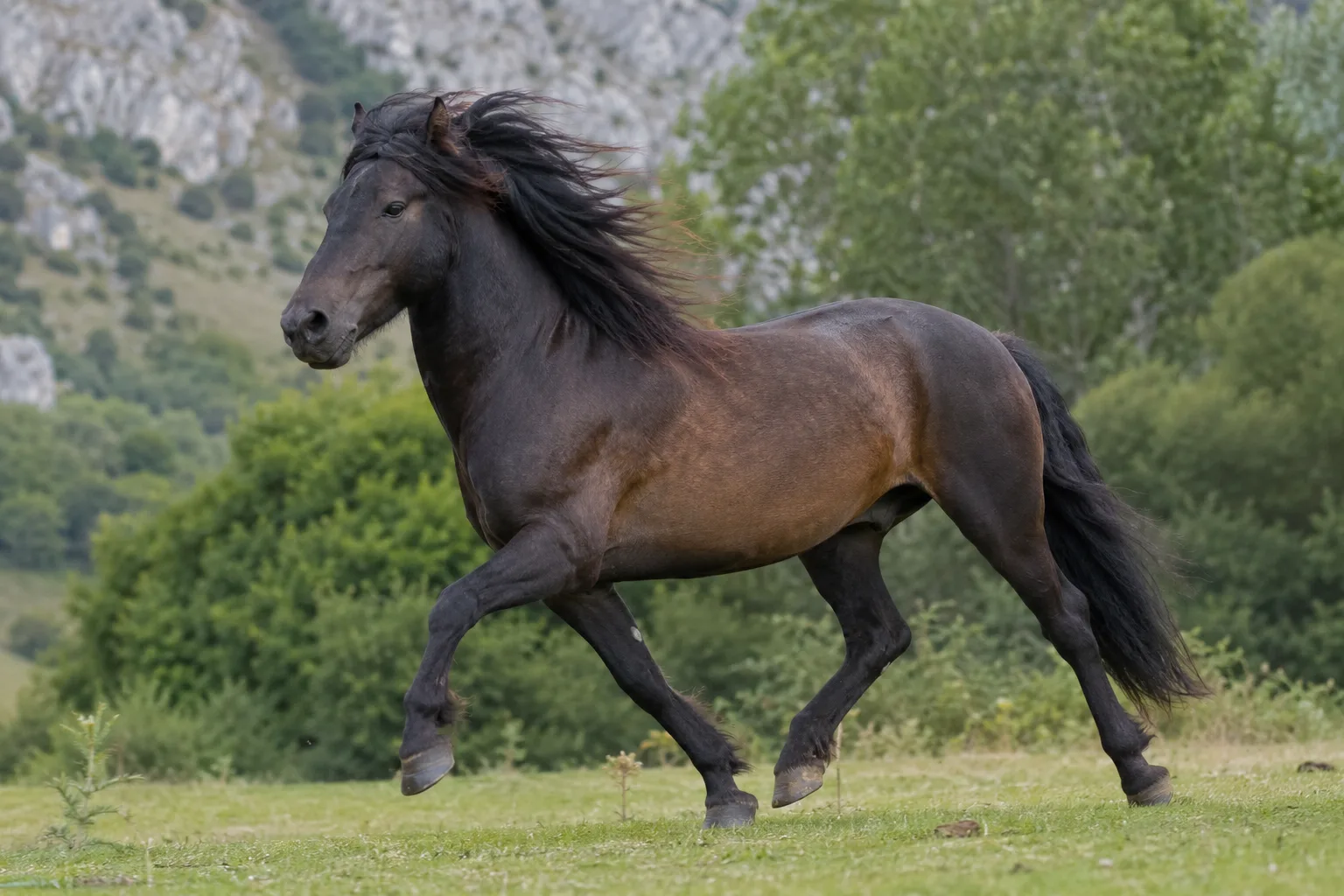
The gaits are supple, expansive, and energetic, with good balance. The walk is sure-footed and free, the trot is active, and the canter is round and balanced, allowing for good progress on varied terrain.
- Uses: pack horse, light draft horse, saddle horse, equestrian trail riding, leisure driving, light agricultural work, gentle logging
- Disciplines: equestrian trail riding, TREC, leisure driving, working equitation
Feeding the Auvergne Horse
The Auvergne horse is a hardy breed with an efficient metabolism, capable of utilizing medium-quality forage. It tends to gain weight if overfed or sedentary. A diet based primarily on good quality hay is sufficient for most individuals. Concentrates are only necessary for intense work or specific needs (growth, lactation), and should be adjusted sparingly.
Due to its efficient metabolism, the Auvergne horse can be predisposed to laminitis and Equine Metabolic Syndrome (EMS) if fed diets too rich in sugars and starch, or if it is overweight. It is important to monitor its weight and adjust its diet accordingly.
With Equio, every feed, supplement or treat is read against the horse's real profile (age, weight, Body Condition Score, conditions) — useful for a Auvergne Horse as soon as a metabolic or digestive sensitivity is known.
Health and points to watch
Particular attention must be paid to weight management to prevent metabolic risks. The quality of its feet, although excellent, requires regular trimming adapted to its mountain lifestyle. Annual dental check-ups are recommended.
- More frequent conditions: laminitis, Equine Metabolic Syndrome (EMS)
Care and grooming
Care is relatively simple for this hardy breed. The hooves, hard and resistant, require regular trimming but can often go without shoeing if the work is not too intense. The mane and tail are generally full and require regular brushing. The dense coat does not require special care, and clipping is rarely necessary except for sport horses or those in intense work during winter.
Did you know?
- The Auvergne horse is sometimes nicknamed the 'horse of kindness' due to its particularly gentle and affectionate nature.
- It has been used for centuries by peddlers and itinerant merchants to transport goods across the Auvergne mountains.
- The black pangaré coat, with its reddish highlights on the muzzle and belly, is a distinctive and highly valued characteristic of the breed.
The Auvergne Horse and how to track it
The breed is primarily raised in Auvergne, its region of origin. The population remains small but stable thanks to conservation efforts. It is used for equestrian tourism, driving, and light agricultural work, contributing to the development of rural areas.
Equio lets you build a complete profile for a Auvergne Horse: identity, weight, Body Condition Score, feeding, conditions, care reminders (vaccines, worming, trimming) and an exportable health log. The breed sets the identity; everyday decisions still depend on the real horse and your vet's advice.
- Record the activity level: rest, leisure, sport or breeding
- Add known conditions or sensitivities
- Scan feeds, plants and care products
- Keep reminders (vaccines, worming, trimming)
- Prepare a PDF export before a vet appointment
Frequently asked questions
Is the Auvergne horse suitable for beginners?
Yes, thanks to its calm, gentle, and cooperative temperament, the Auvergne horse is an excellent mount for beginners and less experienced riders. Its robustness and straightforwardness make it a reliable partner.
What is the average price of an Auvergne horse?
The price of an Auvergne horse varies depending on age, training level, lineage, and sex. You can generally expect to pay between €2,500 and €6,000 for a well-schooled horse, but prices can be higher for breeding or competition prospects.
Can the Auvergne horse live outdoors all year round?
Absolutely. Its hardiness and adaptation to mountain climates allow it to live outdoors all year round, provided it has natural or artificial shelter to protect it from the elements and a diet adapted to the season.
Is it a breed suitable for children?
Yes, its gentle, patient nature and reasonable size make it a very suitable breed for children, whether for learning to ride or for leisure activities. Its robustness is an additional asset.
What are the main qualities of the Auvergne horse for trekking?
For trekking, the Auvergne horse excels with its sure-footedness, endurance, ability to navigate difficult terrain, and its calm and willing temperament. It is also very weight-bearing and comfortable over long distances.