
Horse breed
Altai
The Altai horse is an ancient breed originating from the Altai Mountains in Siberia. It is the result of natural selection and crossbreeding with Mongolian and Kazakh horses over the centuries.

The breed at a glance
The Altai horse is renowned for its calm, docile, and courageous temperament. It is very hardy, enduring, and possesses an excellent sense of direction, making it a reliable partner for work and mountain trekking.
- Category
- hardy breed
- Origin
- Russia (Siberia, Altai Mountains) · Antiquity, breed established in the 20th century
- Height at withers
- 135–145 cm
- Weight
- 350–400 kg
- Lifespan
- 25-30 years
- Common coats
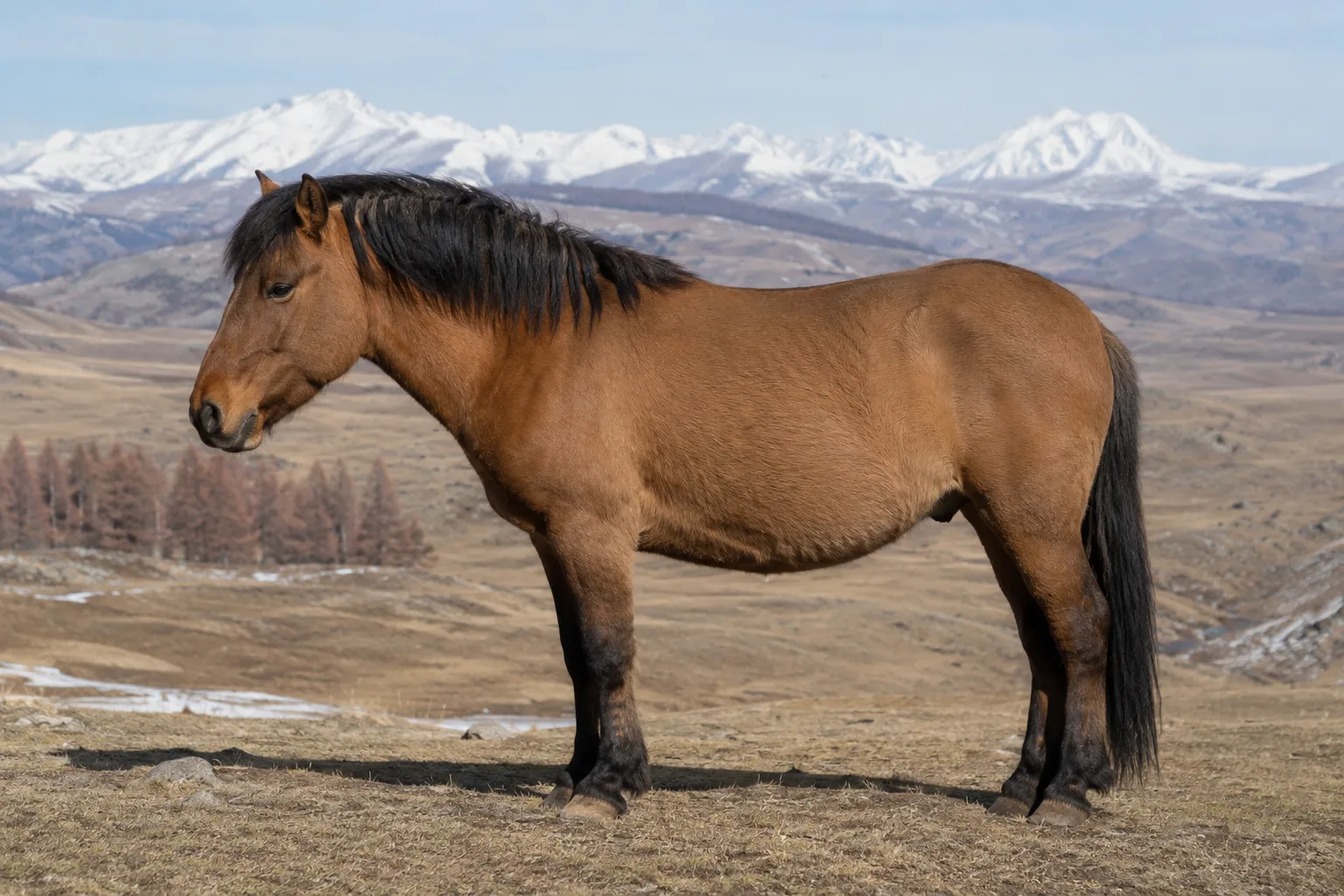
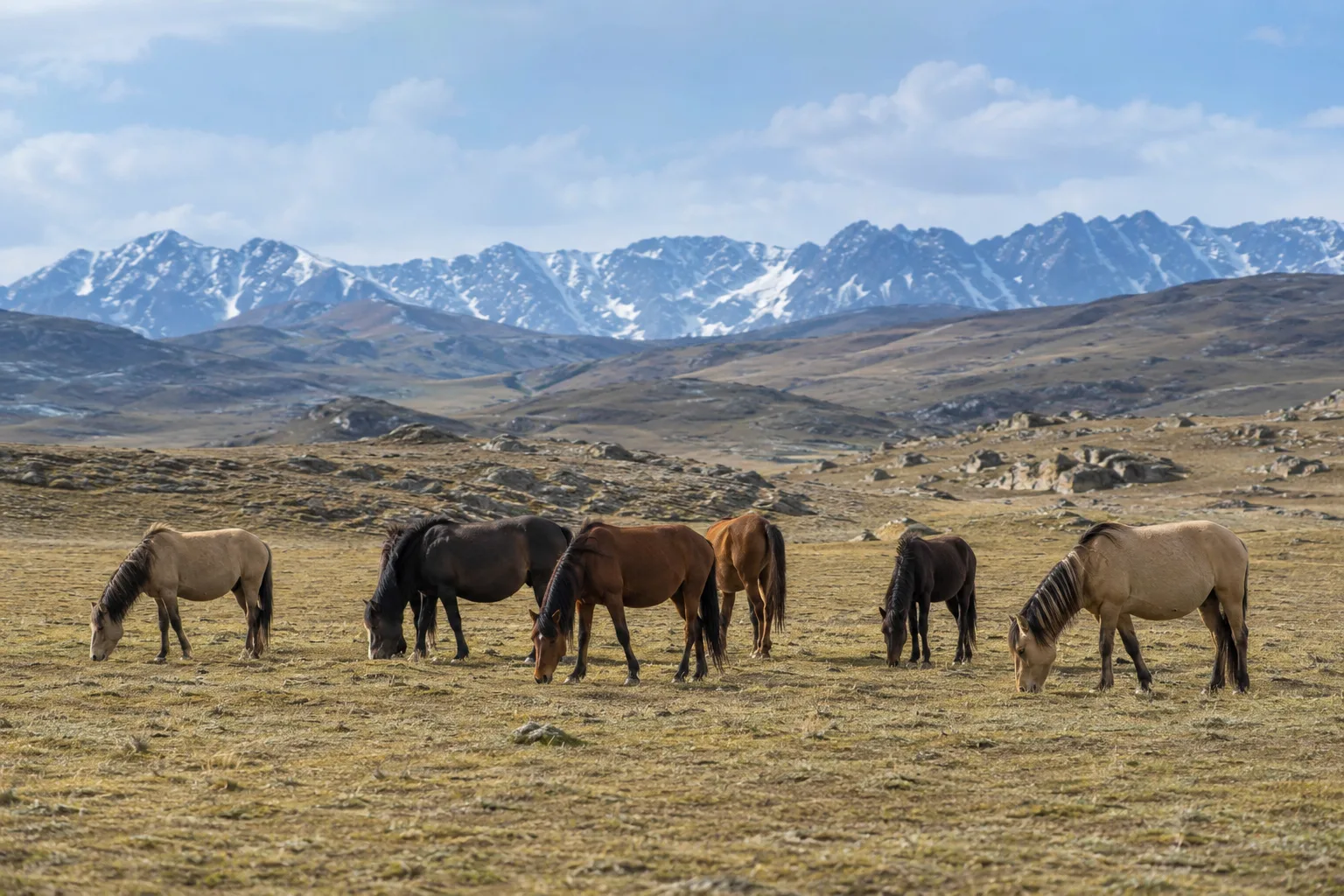
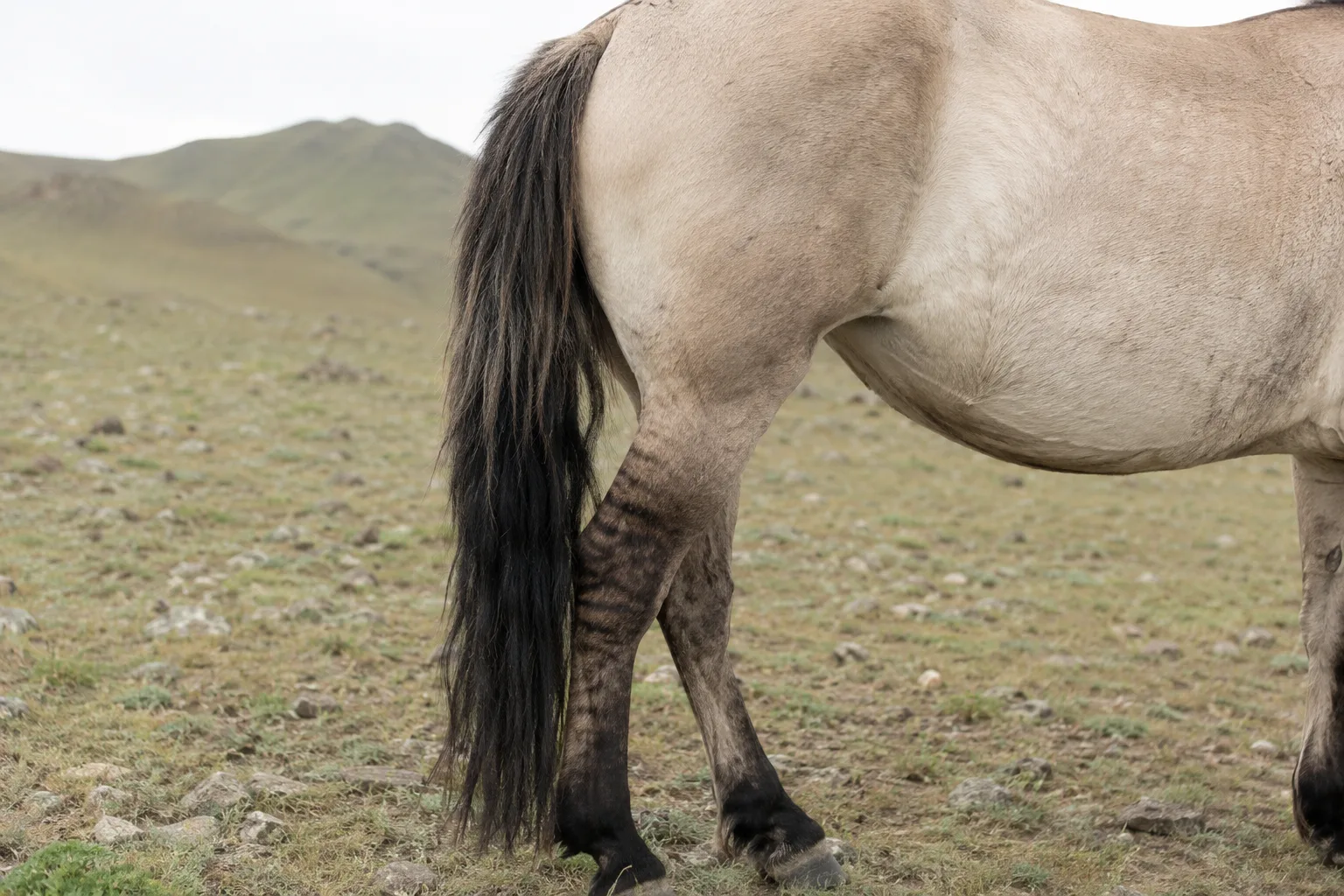
- bay, chestnut, black, grey, grullo, palomino, dun, all coat colors with the Dun gene (grullo, bay dun, red dun)
- Disciplines
- equestrian trail riding, endurance (leisure), working equitation
- Other names
- Cheval de l'Altaï
Origin and history
The Altai horse is an ancient breed originating from the Altai Mountains in Siberia. It is the result of natural selection and crossbreeding with Mongolian and Kazakh horses over the centuries. In the 20th century, efforts were made to improve the breed by crossing it with Russian draft and saddle horses, but the pure strain remains predominant. The breed is officially recognized in Russia and is essential to the life of the indigenous peoples of the region.
Conformation and physique
It is a small-sized horse, compact and robust, with a solid bone structure and well-developed musculature. Its silhouette is typical of mountain horses, adapted to a harsh environment.
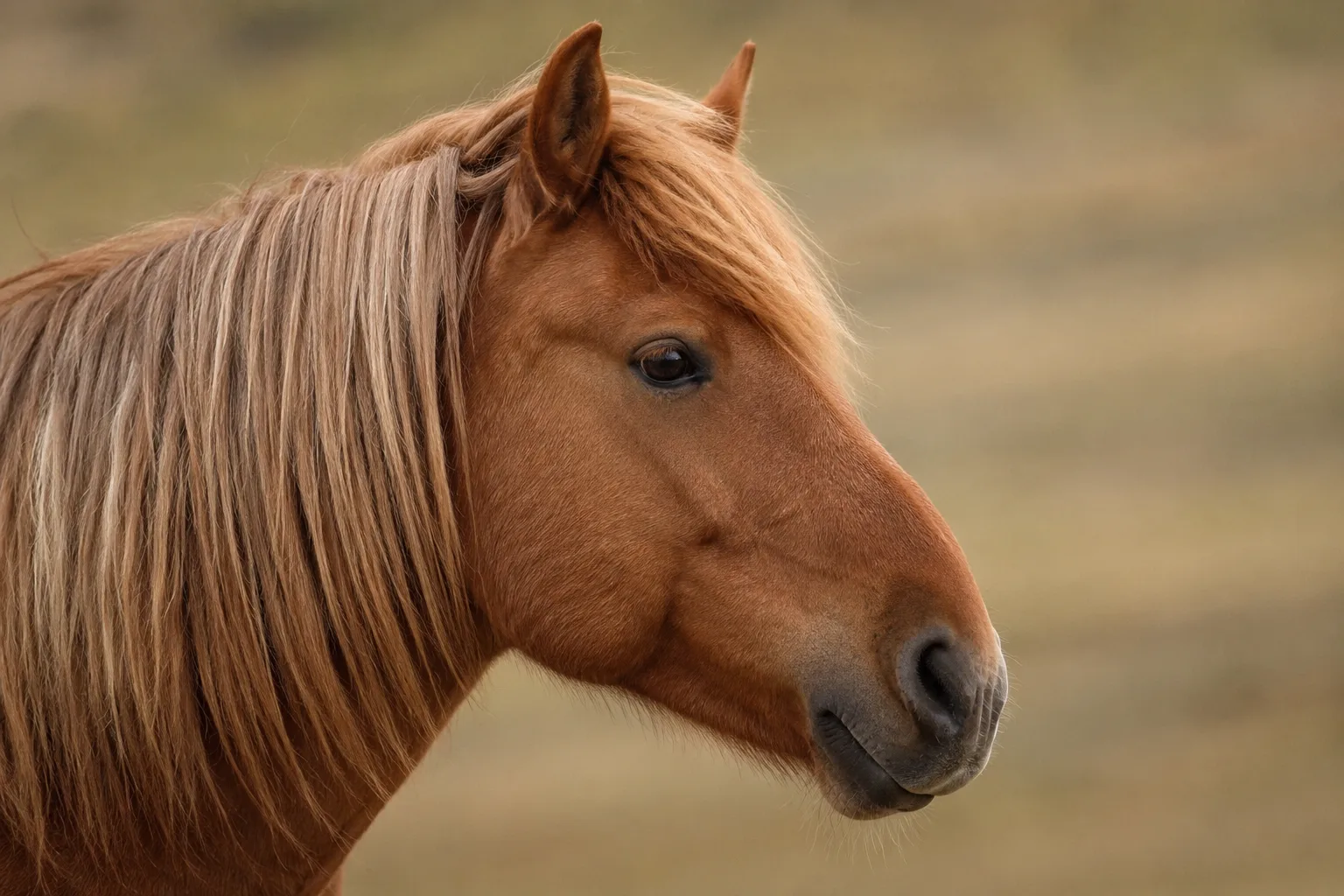
The head is medium-sized, with a straight or slightly convex profile, a broad forehead, and expressive eyes. The ears are medium-sized and well-set.
The neck is short, thick, and muscular, well-set into the shoulders. The Withers are not very pronounced, blending into the topline.
The back is short and straight, the topline is strong. The chest is broad and deep, ensuring good lung capacity. The croup is muscular and slightly sloped.
The limbs are short, strong, and clean, with solid joints and well-defined tendons. The hooves are hard and resistant, adapted to mountainous terrain. Feathering is generally sparse.
- Common coats: bay, chestnut, black, grey, grullo, palomino, dun, all coat colors with the Dun gene (grullo, bay dun, red dun)
Temperament and aptitudes
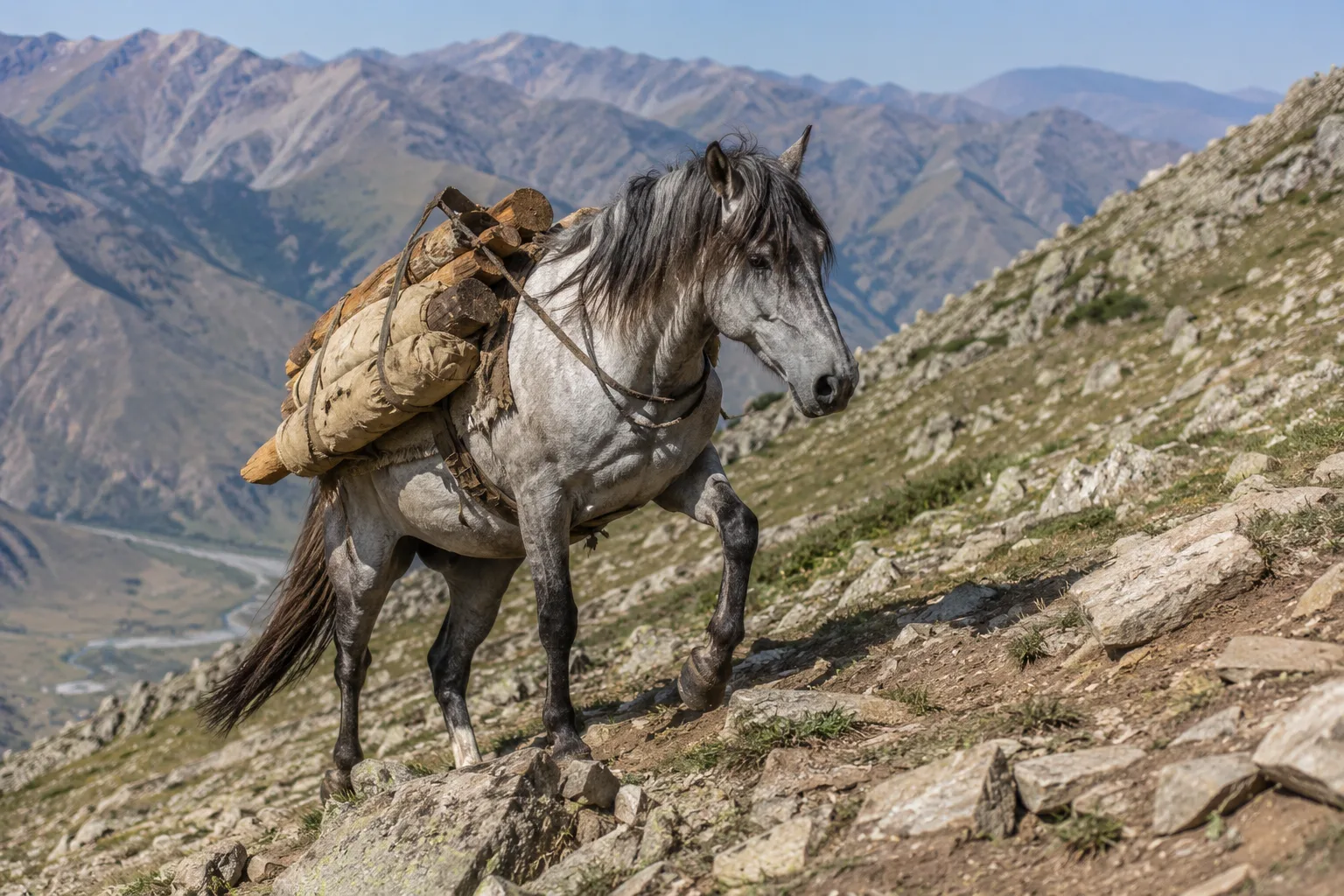
The Altai horse is renowned for its calm, docile, and courageous temperament. It is very hardy, enduring, and possesses an excellent sense of direction, making it a reliable partner for work and mountain trekking.
The gaits are free, sure-footed, and energetic, with a good aptitude for walking on difficult terrain. The walk is sure, the trot and canter are balanced and enduring.
- Uses: pack horse, saddle horse for transport and trekking, light draft horse, meat and milk production (koumiss), agricultural work horse
- Disciplines: equestrian trail riding, endurance (leisure), working equitation
Feeding the Altai
The Altai is a very thrifty horse, accustomed to harsh living conditions and a frugal diet. Its metabolism is adapted to make the most of poor-quality forage. It tends to become overweight if its diet is too rich or if it is sedentary. Good quality forage in sufficient quantity is usually enough, along with mineral and vitamin supplements. Concentrates are only necessary in cases of intense work or specific needs.
Due to its thrifty metabolism, the Altai can be predisposed to laminitis and Equine Metabolic Syndrome (EMS) if overfed or if it has unlimited access to rich pastures, especially in spring. It is important to monitor its weight and manage its sugar and starch intake.
With Equio, every feed, supplement or treat is read against the horse's real profile (age, weight, Body Condition Score, conditions) — useful for a Altai as soon as a metabolic or digestive sensitivity is known.

Health and points to watch
It is important to regularly monitor the Altai's body condition to prevent obesity, especially if it lives in a pasture. Particular attention should be paid to hoof care, which, although robust, requires regular trimming. Proper deworming and vaccination are essential, as for any horse.
- More frequent conditions: laminitis (if overfed), age-related dental problems, osteoarthritis (in older horses or those that have worked extensively)
Care and grooming
The Altai is a hardy breed that requires little specific care. Its hooves are very hard and require regular trimming, but shoeing is often unnecessary except for intense work on abrasive terrain. Its mane and tail are thick and can be brushed regularly. Its dense coat protects it well from cold and humidity, and clipping is generally not required.
Did you know?
- The Altai is one of the rare equine breeds that frequently exhibits the Dun gene, responsible for the dorsal stripe and leg barring.
- Altai horses are known for their ability to survive harsh winters with extreme temperatures, thanks to their thick coat and hardiness.
- Koumiss, a fermented drink made from mare's milk, is an important traditional product in the Altai region, using the milk of these mares.
The Altai and how to track it
The Altai breed is very rare in France and is not significantly bred there. A few individuals may be present with private owners passionate about hardy or exotic breeds, but there is no French studbook or organized breeding program.
Equio lets you build a complete profile for a Altai: identity, weight, Body Condition Score, feeding, conditions, care reminders (vaccines, worming, trimming) and an exportable health log. The breed sets the identity; everyday decisions still depend on the real horse and your vet's advice.
- Record the activity level: rest, leisure, sport or breeding
- Add known conditions or sensitivities
- Scan feeds, plants and care products
- Keep reminders (vaccines, worming, trimming)
- Prepare a PDF export before a vet appointment
Frequently asked questions
Is the Altai horse suitable for beginners?
Yes, thanks to its calm and docile temperament, the Altai horse can be an excellent companion for beginners and less experienced riders. Its small size and hardiness also make it very safe.
What is the price of an Altai horse?
The price of an Altai horse is difficult to estimate in France because the breed is very rare there. In Russia, their price is generally moderate, reflecting their status as a hardy working horse rather than a high-level sport horse. Importing one would add significant costs.
Can the Altai live outdoors all year round?
Absolutely. The Altai is perfectly adapted to living outdoors all year round, even in cold climates. Its thick coat and robust constitution allow it to withstand harsh weather, provided it has natural or artificial shelter to protect itself from strong winds and extreme precipitation.
What are the distinctive coat colors of the Altai?
The Altai exhibits a wide variety of coat colors, but it is particularly known for the frequency of Dun coats (grullo, bay dun, red dun) characterized by a dorsal stripe and often leg barring. Classic coat colors such as bay, chestnut, and black are also very common.
Is it a good trail horse?
Yes, the Altai is an excellent trail horse. Its endurance, hardiness, surefootedness on difficult terrain, and reliable temperament make it an ideal partner for long excursions in the mountains or in the wilderness.