
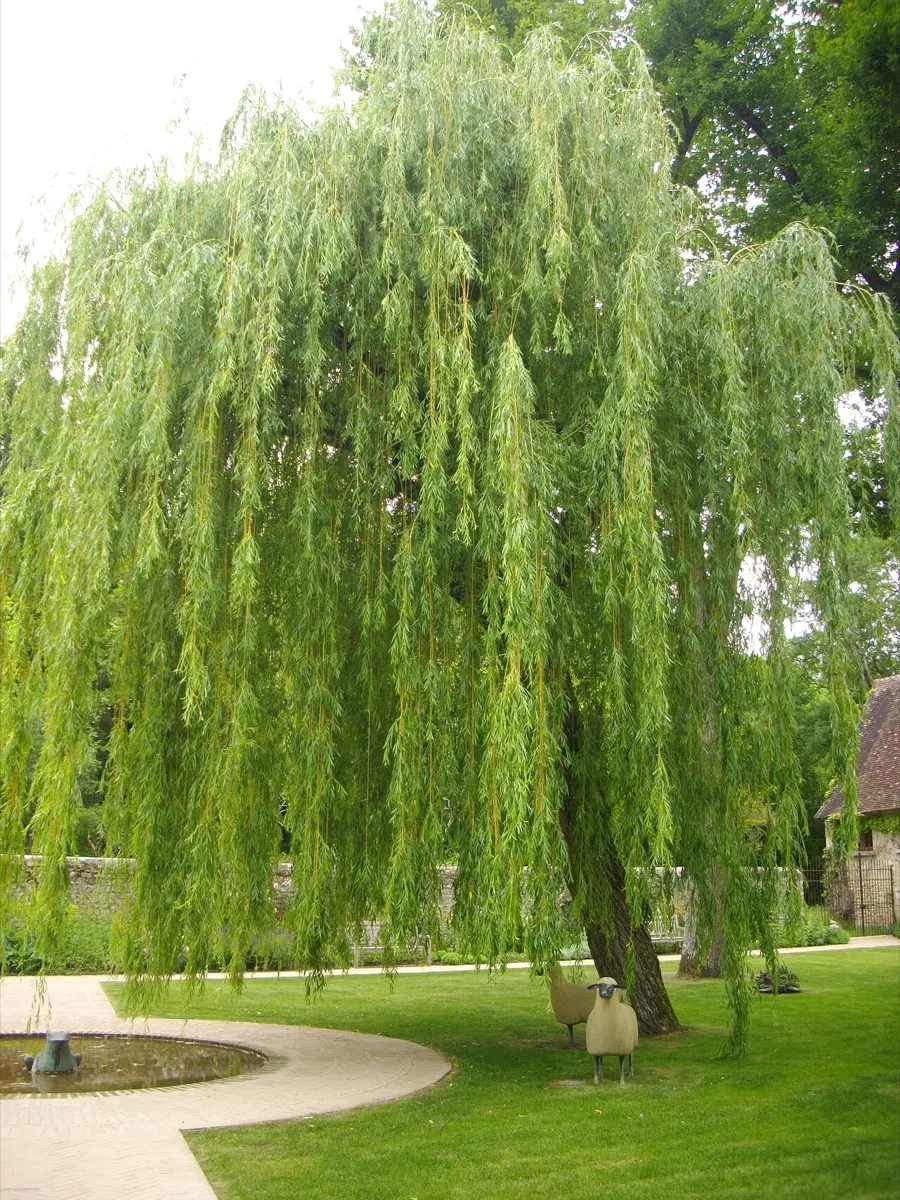
Weeping Willow
Salix babylonica
Horse
No known risk
Remove access and monitor the horse; call at the first sign. Not applicable
No parts are considered toxic to horsestoxic parts
Not reportedtoxic in hay
Equio informs, it does not diagnose. When in doubt, call your vet.
What to do now
- Antidote
- Not applicable
- Time to signs
- Not applicable
- Prognosis
- Excellent
Its ID card
- Height
- 10-15 meters
- Flowering
- Spring (April-May)
- Toxic parts
- No parts are considered toxic to horses.
- Toxin
- None
- Habitat
- Often planted in parks, gardens, along rivers, lakes, and ponds. Can establish spontaneously near watercourses.
- Soil indicator
- Prefers moist, well-drained soils, often near water.
- Regions
- Europe, North Africa, North America
- In hay
- Not reported
- Palatability
- Moderate. Horses may chew bark and young shoots, but this is generally harmless.
When the risk rises
None
Spotting it in the field
Do not confuse with
Other willow species (Salix spp.) may resemble it, but the weeping form is distinctive. — smell : slight herbaceous odor.
- Large tree with long, pendulous branches that often touch the ground.
- Narrow, lance-shaped leaves, light green, with finely toothed margins.
- Gray-brown bark, deeply fissured on mature trees.
- Fast-growing.
Who is affected
Other species : None
In pregnant mares : none
Horses
Getting rid of it
Method : Not necessary for toxicity reasons.
- Monitor plant consumption by horses, although weeping willow poses no risk.
- Provide adequate forage.
Frequently asked questions
Can Equio identify Weeping Willow from a photo?
It can help organize visual clues, but plant identification must remain cautious when horse health is at stake.
Is Weeping Willow dangerous in hay?
Hay risk is not always reported for this entry, but suspicious forage should still be isolated until checked.
Veterinary priority
This page is informational. If ingestion is likely, if signs appear, or if the horse is fragile, contact a veterinarian immediately.
Related pages
Weeping Willow and foal and young horseProfile-specific horse risk page.Weeping Willow and pregnant mareProfile-specific horse risk page.Weeping Willow and lactating mareProfile-specific horse risk page.Weeping Willow and non-pregnant mareProfile-specific horse risk page.Weeping Willow and senior horseProfile-specific horse risk page.Weeping Willow and horse in recoveryProfile-specific horse risk page.Poisonous plants for horsesEnglish Equio plant catalogue and risk pages.Sensitive profilesFoals, pregnancy, lactation, senior horses and recovery.Photo methodHow to document a plant without relying on one image only.Equio AppScan feed, plants and care products — keep your horse's history.Equio FAQAnswers about scans, profiles, subscriptions and AI limits.