
Rape / Forage Rape
Brassica rapa / Brassica napus
Horse
Severe
Any suspected ingestion is an immediate veterinary emergency. A ration composed mainly of fresh rape for several days/weeks.
Equio informs, it does not diagnose. When in doubt, call your vet.
What to do now
- Antidote
- No specific antidote. Intensive supportive care (blood transfusions, oxygen therapy, symptomatic treatment).
- Time to signs
- A few days to one week after ingestion
- Prognosis
- Guarded. Fulminant hemolytic anemia or pulmonary emphysema can be fatal.
- Immediate stall confinement away from sunlight.
- Blood draw to assess anemia.
- Symptomatic treatment for gas colic.
- Close monitoring of respiratory and thyroid functions.
Its ID card
- Height
- 30 cm – 1.5 m
- Flowering
- Late winter to late spring (depending on climate and variety).
- Toxic parts
- Entire fresh plant.
- Toxin
- SMCO (S-methylcysteine sulfoxide, anemia agent), Glucosinolates, and Nitrates.
- Habitat
- Cultivated fields (large yellow expanses in spring), winter forage catch crops.
- Soil indicator
- Deep agricultural soils, rich in nitrogen.
- Regions
- Entire Europe (Cultivated fields)
- In hay
- Not reported
- Palatability
- Very good in winter when nothing else is available, leading to massive poisonings.
When the risk rises
Winter and early Spring (when the plant is grazed).
Spotting it in the field
Wild mustard (which has green, hairy leaves). — smell : strong, acrid cruciferous (cabbage-like) odor when crushed.
- Large cultivated plant.
- Bluish-green (glaucous), smooth, and fleshy leaves.
- Abundant bright yellow flowers (cruciform).
- Characteristic cabbage-like odor when crushed.
Signs to watch for
Both acute and chronic (cumulative) toxicity
Dose : Difficult to quantify precisely, depends on toxin content and duration of exposure. Significant ingestion over several days is dangerous.
- Dark red to black urine (hemoglobinuria)
- Very pale or yellow mucous membranes (jaundice)
- Severe sunburns on light-skinned areas (photosensitization)
- Significant gas colic (horse is bloated)
- Severe respiratory distress (acute pulmonary emphysema) in some cases
Who is affected
Other species : Anemia and pulmonary emphysema are well-documented in cattle ('rape disease').
In pregnant mares : major risk of abortion due to anoxia and thyroid toxicity for the fetus.
Getting rid of it
Method : Pull the plant before flowering if necessary, wearing gloves. Prevent seed spread. Deep plowing is an agricultural eradication method.
- Never allow grazing on rape or turnip rape fields.
- Avoid distributing rape or turnip rape as forage, even in mixes.
- Prioritize safe alternative forages in winter.
Frequently asked questions
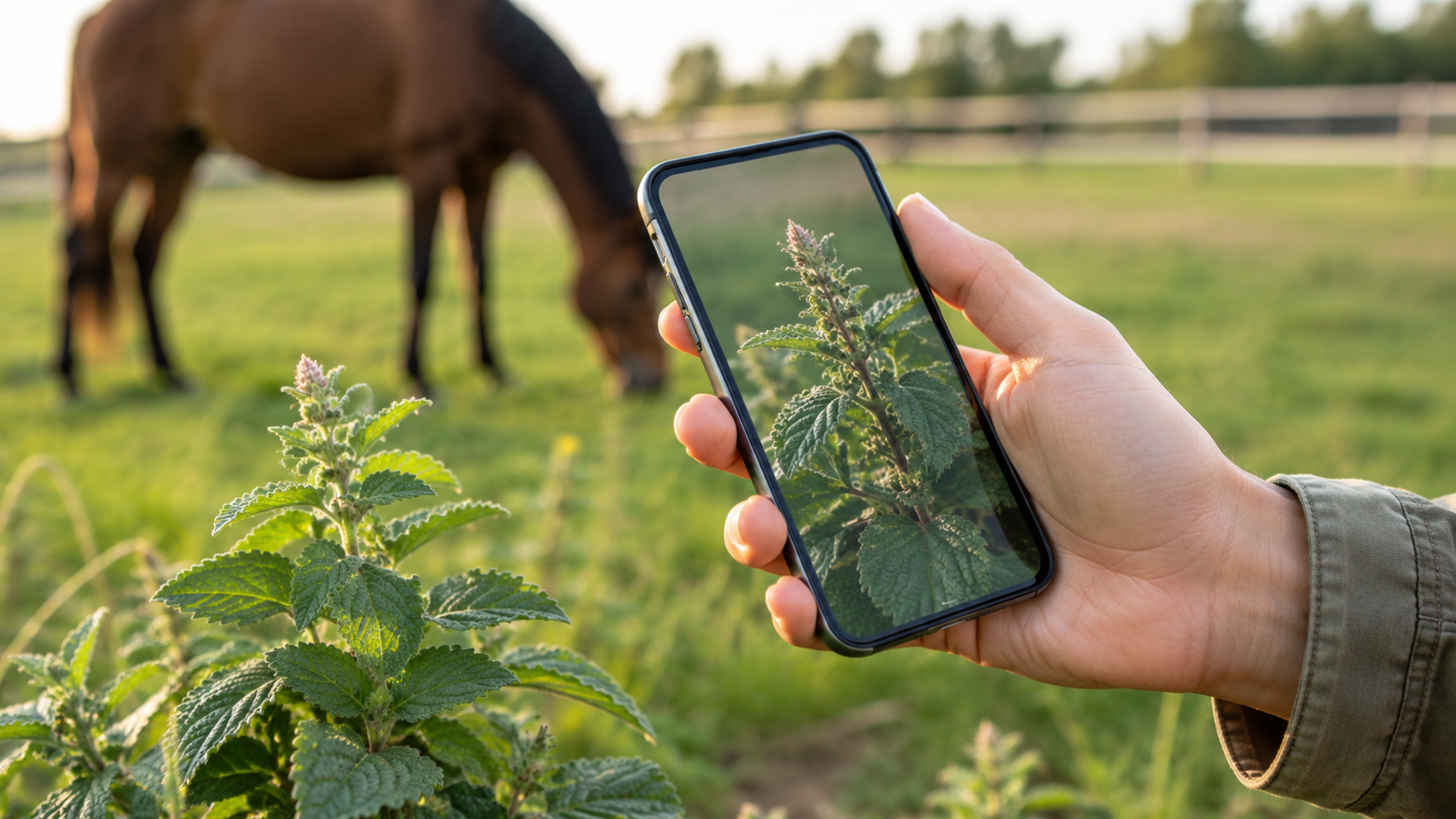
Can Equio identify Rape / Forage Rape from a photo?
It can help organize visual clues, but plant identification must remain cautious when horse health is at stake.
Is Rape / Forage Rape dangerous in hay?
Hay risk is not always reported for this entry, but suspicious forage should still be isolated until checked.
This page is informational. If ingestion is likely, if signs appear, or if the horse is fragile, contact a veterinarian immediately.