
Plant article by horse profile
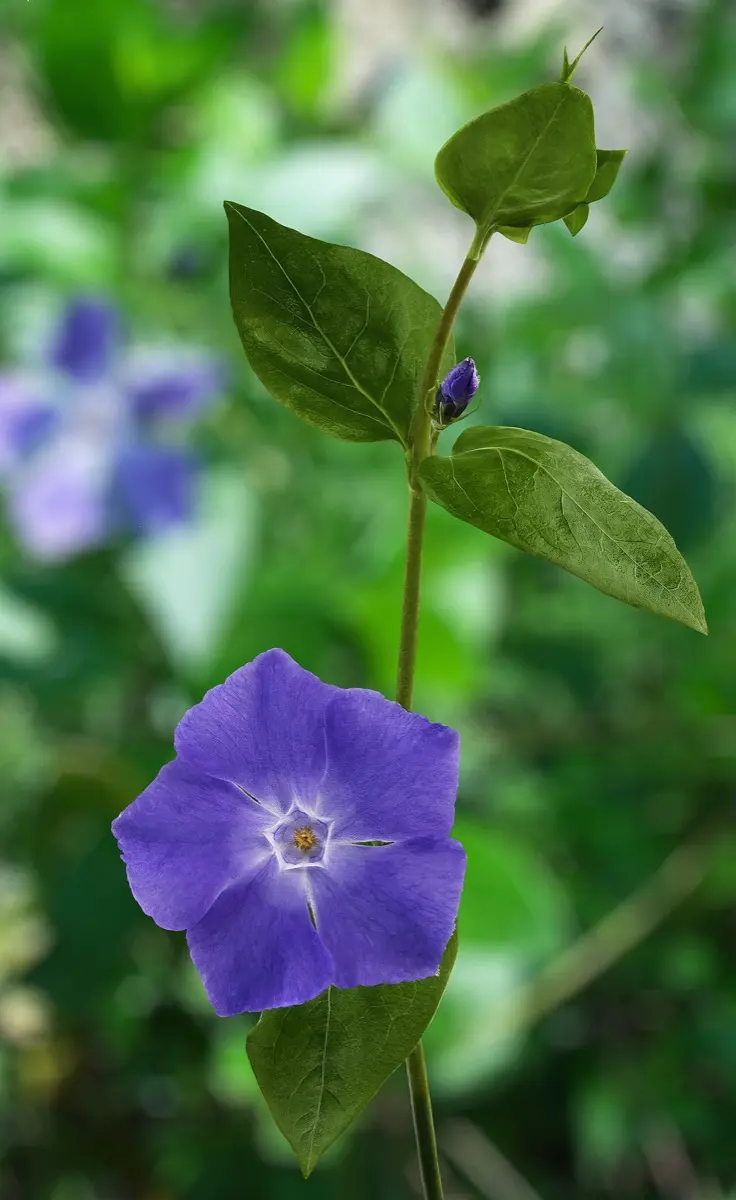
Periwinkle (Greater and Lesser): vigilance for lactating mare
This page focuses on lactating mare. It adds profile-specific context to the Periwinkle (Greater and Lesser) plant entry: lactation, hydration, appetite, milk safety and the foal depending on the mare. The goal is to turn a suspicion into useful information: photos, location, possible amount, delay, signs observed and whether veterinary contact is needed.
If the horse has eaten the plant, shows signs or belongs to a fragile profile, veterinary advice must come before any AI analysis.
Why lactating mare needs a specific reading
With Periwinkle (Greater and Lesser), the reference risk level is moderate and the urgency note is: veterinary advice within 24 hours.
The horse profile changes interpretation: lactation, hydration, appetite, milk safety and the foal depending on the mare. Equio helps document the exposure; it does not diagnose the horse.
For lactating mare, the question is not only whether Periwinkle (Greater and Lesser) is toxic. It is also whether the plant was accessible, fresh or dry, isolated or abundant, mixed into hay, consumed once or repeatedly, and whether the horse already behaves differently.
Signs to monitor
Signs can be partial, delayed or caused by another problem. Keep the record descriptive: what you see, when it began, intensity, context and change over time.
For lactating mare, also note appetite, water intake, manure, attitude at rest, response to movement, breathing, temperature if known and comparison with the horse's usual state.
- Sudden drop in blood pressure (hypotension)
- Extreme weakness, staggering or recumbent horse
- Spasmodic colic and diarrhea
- Slowing of heart rate
- Muscle tremors
Hay, pasture and possible amount
Toxic parts: Entire plant (stems, leaves, flowers). Risk quantity: A significant consumption (several handfuls of vines and leaves).
Hay note: this entry flags a hay risk, so forage control is a priority.
Real risk depends heavily on access. A plant behind a fence, a plant in garden waste, a plant dried in hay and a plant spread through a poor pasture do not describe the same situation.
Pregnancy, foal or recovery context
Equio note: Can cause abortion due to a sudden drop in blood pressure (fetal hypoxia).
For lactating mare, record the time, area, possible amount, photos and signs before contacting the veterinarian.
The page is deliberately cautious. It preserves information and helps avoid forgetting details between the discovery of a suspicious plant and professional advice.
First aid information to prepare
First steps should stay simple and documented: restrict access, keep visual proof, monitor the horse and contact a veterinarian when exposure is plausible or signs appear.
In Equio, Periwinkle (Greater and Lesser) can be linked to the lactating mare profile, pasture notes, photos and actions already taken. This continuity is useful if the same plant appears again.
- Call a veterinarian if the horse shows signs of severe weakness (low blood pressure).
- Absolute rest.
- Rehydration.
Sharing with a professional
When Periwinkle (Greater and Lesser) has to be discussed with a vet, a nutritionist, a farrier, an equine dentist or a yard manager, the quality of the information shared changes the exchange a great deal. A sharp photo, a date, a quantity, a ration history or a short behaviour note let everyone move faster than a general description ever could.
An export or summary does not need to look impressive. It should be clear, short, dated and tied to the right horse. If some information is missing, it is better to say so than to guess. That honesty makes the file more credible and limits wrong interpretations when time matters.
Updating after a decision
After a decision linked to Periwinkle (Greater and Lesser), the follow-up does not stop. Note what was done: product stopped, feed introduced, routine changed, vet contacted, care applied, photo kept or ration adjusted. Without this final step, the history keeps the initial doubt but not the answer that was actually given.
This update brings continuity. It shows what really worked, what was dropped, what needs reviewing and what a professional confirmed. In a yard, this shared memory also prevents two people from repeating the same check without knowing it.
Coming back to this page after a few days
A page like this one about Periwinkle (Greater and Lesser) is often more useful after a few days. In the moment of doubt you mostly want a quick answer; afterwards you can reread with more distance, complete the notes, add a missing photo, correct an approximate quantity or clarify what really changed in the horse's routine.
This second reading keeps the history from freezing on the first impression. It turns a question or a hesitation into a clean record. For an owner as much as for a livery yard, it is a valuable habit: you do not only keep the problem, you also keep the way it was handled.
Keeping a margin of caution
Even with a detailed page about Periwinkle (Greater and Lesser), keep a margin of uncertainty. Information can be incomplete, a photo can mislead, a label can lack precision, a sign can have several causes and one horse can react differently from another. This uncertainty is not a failure: it is part of a responsible approach.
So the right conclusion is not always an immediate action. Sometimes you watch, ask for advice, compare, take another photo or wait for more reliable information. Long-form content is there to open these options, not to hand out an artificial certainty about the horse.
Linking information together
Periwinkle (Greater and Lesser) rarely stays useful in isolation. It connects to other parts of Equio: feeding, plants, care products, body condition, the sensitive-profile view, history, photos and exports. Reading one page and closing the file is rarely enough; a piece of information becomes stronger once it is tied to the other observations about the horse.
For example, a ration makes sense alongside the weight and the workload, a care product alongside the state of the skin, and a sign alongside recent changes. This cross-reading takes a little more attention, but it produces a record and a follow-up that are far more credible than scattered notes.
Using the profile day to day
A good profile around Periwinkle (Greater and Lesser) helps with the small, repeated decisions: should you scan this supplement, keep this product as a favourite, compare two feeds, note a plant in the field or prepare a question about a ration? These choices look isolated, but together they build the horse's history.
The horse profile is the thread that holds it together: age, weight, activity, body condition, ration, allergies, conditions and restrictions. The more reliable it is, the more each scan and each note can be read in context rather than as a one-off, especially when several people look after the same horse.
What the app does and does not do
Around Periwinkle (Greater and Lesser), it helps to stay clear about limits. Equio organises information, structures a history and prepares better questions, but it does not diagnose, prescribe or replace a professional who can see and examine the horse. This boundary does not weaken the tool; it makes it more trustworthy.
A strong sign, rapid worsening, pain, loss of appetite, breathing difficulty or any unusual behaviour should lead to a vet rather than to another search. The app then becomes a way to prepare the call with photos, dates and context, not a reason to delay it.
Reading the plant in its environment
Identifying Periwinkle (Greater and Lesser) is never only about the plant itself; it is also about where it grows. The soil, a hedge, a ditch, a wet corner, a pile of garden clippings, the edge of a track or a recently mown strip all change how the risk should be read. The same species can be harmless behind a solid fence and a real concern in the middle of a grazed paddock.
This is why a single close-up is rarely enough. A wide photo showing the plant and its surroundings, the gate, the feeding area, the shelter and the fence line tells a far more useful story. It shows whether the horse can truly reach the plant, how abundant it is, and whether other horses share the same exposure.
Hay, cutting and seasonal change
The risk linked to Periwinkle (Greater and Lesser) can change once the plant is cut, dried or mixed into forage. Some species lose their warning taste or smell when dried, so a horse that would avoid them fresh may eat them in hay. A plant pulled and left in a heap of green waste can also become accessible in a way it was not while rooted.
Seasons matter as much as location. Growth stage, flowering, fruiting and regrowth after mowing all alter both appearance and exposure. Keeping a note of the month, the parcel and the hay batch makes it far easier to see whether a plant is a one-off observation or a pattern that returns at the same time each year.
Foals, broodmares and fragile horses
Vigilance around Periwinkle (Greater and Lesser) depends on the horse exposed. A foal explores more and has less margin, a pregnant or lactating mare leaves less room for improvisation, and a senior or recovering horse can decline faster. For these profiles, a possible exposure deserves a quicker reaction and a more careful record than it might for a robust adult.
Recording which horse was concerned is therefore not a detail. It lets you link the plant, the parcel, the date and any sign to the real animal, and it helps a professional judge urgency. A clear profile turns a vague worry into information that can actually guide a calm, proportionate decision.
How to read this page
To use this page about Periwinkle (Greater and Lesser) well, start from the real horse rather than from a ready-made answer. The horse involved, its age, weight, activity, body condition, usual diet, environment and history all change how a piece of information should be read. A profile detail, a label, a photo or a sign should never be judged on its own, away from the rest of the story.
The useful approach is to separate what is certain, what is likely and what is still unknown. That sorting keeps the decision calm: keep the evidence, note the quantities, photograph what may change, check the dates and prepare a clear question for a qualified professional whenever the horse's health is at stake.
Information worth keeping over time
Content about Periwinkle (Greater and Lesser) should also be useful several weeks later. If a question comes back, if a product is reused, if a ration changes or if a sign returns, a written record helps you understand what actually happened. Without notes, dates, doses and observations quickly blur together.
In Equio, this history can become a decision log: scans, photos, notes, favourites, the horse profile and exports. It does not replace the advice of a vet or an equine professional, but it saves you from restarting the investigation at every doubt. It is this steady follow-up that gives the information its value.
Practical summary for the field
For Periwinkle (Greater and Lesser), the priority is to connect identification with real exposure. A plant seen in a photo does not tell the whole story: you need to know where it grows, whether the horse can reach it, whether it is present in quantity, whether it could be cut, dried or mixed into the hay, and whether any sign appeared after access to the area.
Good field practice means securing the area before concluding. Closing a doubtful zone, keeping photos, noting the parcel, checking the hay and asking for advice when ingestion is possible are all worth more than a fragile certainty. Plants change their appearance with the seasons, so a record lets you follow that change without starting over.
Equio is meant to act as a careful memory: a wide photo, a leaf or flower detail, the horse exposed, the date, the action taken and the advice received. This matters for a single owner, but also for a livery yard where several people may look at the same area a few days apart.
Frequently asked questions
Should I scan Periwinkle (Greater and Lesser) if the horse is lactating mare?
Yes, to organize information, but AI analysis must not delay a veterinarian if exposure is likely.
What should the Equio history contain?
Photos, location, possible amount, time, horse profile, signs, actions taken and veterinary advice received.