
Larkspur
Delphinium spp.
Horse
Critical
Any suspected ingestion is an immediate veterinary emergency. Very low (on the order of a few tens of grams of young shoots or seeds).
Equio informs, it does not diagnose. When in doubt, call your vet.
What to do now
- Antidote
- No specific antidote. Symptomatic and supportive treatment (physostigmine may be attempted).
- Time to signs
- 15 to 60 minutes
- Prognosis
- Grave. Death by suffocation can occur within 1 to 4 hours.
- Absolute veterinary emergency.
- Keep the animal calm.
- Avoid unnecessary exertion.
- Contact a veterinarian immediately.
Its ID card
- Height
- 0.3 m – 1.5 m
- Flowering
- June to September
- Toxic parts
- Entire plant, especially young spring shoots and autumn seeds.
- Toxin
- Polycyclic diterpenoid alkaloids (Delphinine)
- Habitat
- Garden beds, mid-mountain rockeries, cool woodland edges.
- Soil indicator
- Rich, moist, calcareous or loamy soils.
- Regions
- Entire Europe (Wild in high altitudes, cultivated in lowlands)
- In hay
- Yes — stays toxic once dried
- Palatability
- Low in adult plants, but young spring shoots, highly concentrated in toxins, sometimes attract horses eager for fresh greenery.
When the risk rises
April-May (young shoots) and September (seeds).
Spotting it in the field
Monkshood (very similar and equally deadly, but monkshood has helmet-shaped flowers, not a pointed spur). — smell : odorless or slight herbaceous smell.
- Long flower stalk (up to 1.5m).
- Deeply cut (palmate) leaves.
- Large, irregular flowers with a long 'spur' at the back.
- Typical colors: electric blue, violet, white, pink.
Signs to watch for
Acute toxicity
Dose : A few tens of grams of young shoots or seeds for a horse.
- Fulminant muscle weakness, horse collapses
- Intense tremors and limb stiffness
- Heavy drooling, inability to swallow
- Stubborn constipation
- Respiratory arrest while remaining conscious
Who is affected
Other species : Historical cause of massive cattle mortality in high-altitude pastures in the USA and Europe (known as 'larkspur poisoning').
In pregnant mares : lethal for the mother and therefore the fetus.
Getting rid of it
Method : Uproot the entire plant before flowering, wearing gloves. Destroy uprooted parts by burning to prevent dissemination.
- Rigorously inspect pastures and remove any larkspur plants.
- Avoid planting larkspur in areas accessible to animals.
- Closely monitor horses, especially in spring and autumn.
- When in doubt, consult a veterinarian.
Frequently asked questions
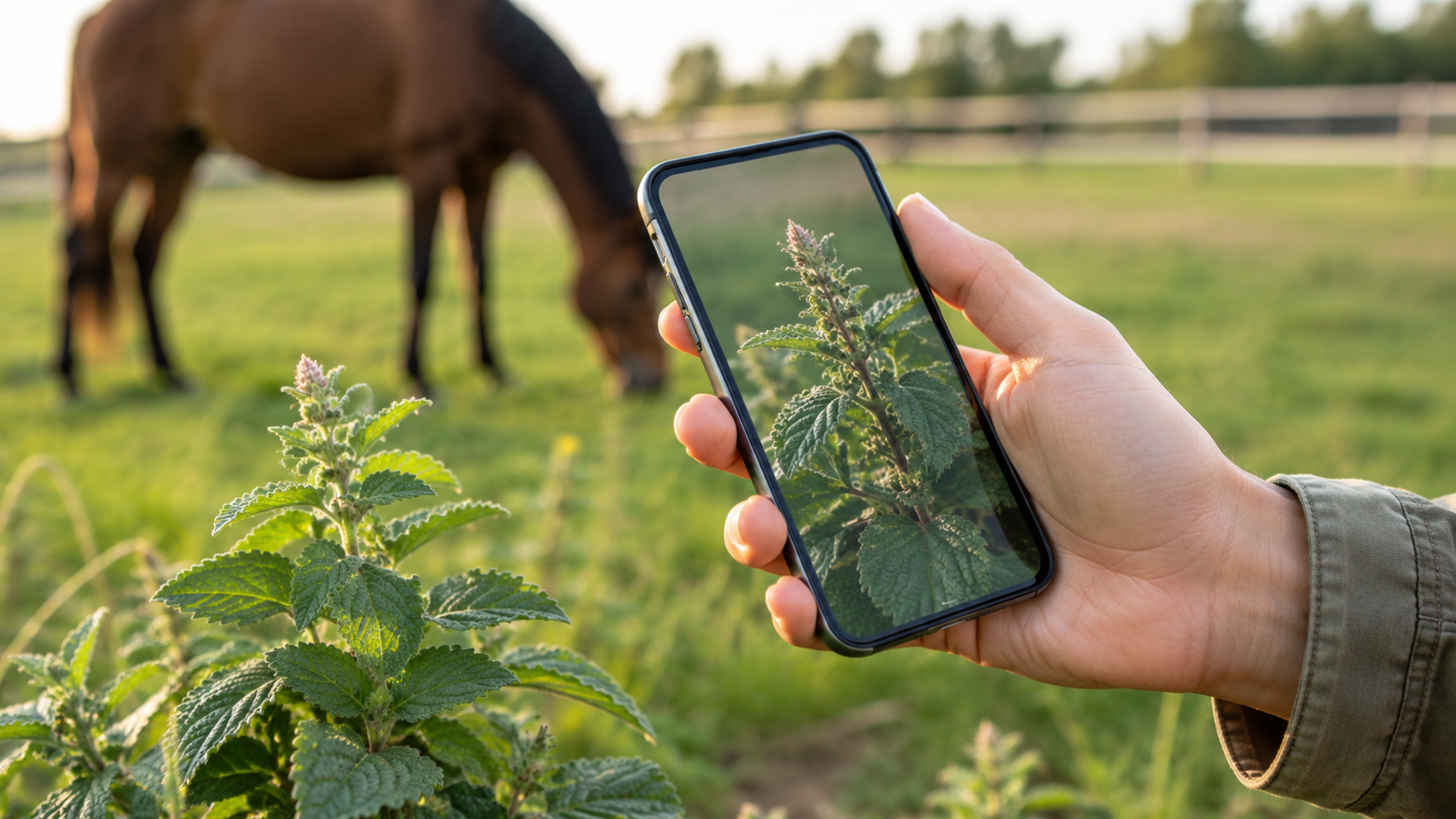
Can Equio identify Larkspur from a photo?
It can help organize visual clues, but plant identification must remain cautious when horse health is at stake.
Is Larkspur dangerous in hay?
This entry flags hay vigilance. Isolate suspicious forage and ask for professional advice if exposure is possible.
This page is informational. If ingestion is likely, if signs appear, or if the horse is fragile, contact a veterinarian immediately.