
Giant Hogweed
Heracleum mantegazzianum
Horse
Severe
Any suspected ingestion is an immediate veterinary emergency. A single drop of sap on the skin followed by sun exposure triggers the burn.
Equio informs, it does not diagnose. When in doubt, call your vet.
What to do now
- Antidote
- No specific antidote. Intensive symptomatic care (anti-inflammatories, antibiotics, sun protection).
- Time to signs
- A few hours to 2 days after sun exposure
- Prognosis
- Good for survival, but the burns can leave lifelong pigmentary scars and require months of painful treatment.
- Immediately place the horse in total darkness (closed stable) to stop the UV reaction.
- Gently rinse affected areas with soapy water (without rubbing).
- Contact a veterinarian without delay.
Its ID card
- Height
- 1.5 m – 4 m
- Flowering
- June to September
- Toxic parts
- The entire plant (especially the sap from broken stems and leaves).
- Toxin
- Furanocoumarins (Phototoxins acting on contact with UV rays)
- Habitat
- Riverbanks, embankments, forest edges, vacant lots, damp wastelands.
- Soil indicator
- Rich, moist, deep soils, often near water.
- Regions
- Entire Europe (Invasive)
- In hay
- Yes — stays toxic once dried
- Palatability
- Often ignored because it is very rough, but horses get burned by brushing against it while grazing nearby, or by trying to push through it.
When the risk rises
May to August (peak growth and strong sunlight).
Spotting it in the field
Common Hogweed (Much smaller, maximum 1.5m, irritating but significantly less dangerous). — smell : acrid and penetrating smell when crushed or cut.
- Giant plant (up to 4 meters tall).
- Thick hollow stem, blotched with purple-red and covered in stiff hairs.
- Giant, deeply lobed leaves (up to 1m).
- Enormous white flower umbels (up to 50 cm in diameter).
Signs to watch for
Acute toxicity via phototoxic contact.
Dose : Not applicable for dermal toxicity. Ingestion is rare and less documented for systemic toxicity in horses.
- Giant burns, blisters, and necrosis on the muzzle, mouth, and limbs
- Extreme pain to the touch
- Massive facial edema if grazed
- Severe eye damage (possible blindness) if contact with sap
- Fever and depression linked to pain
Who is affected
Other species : Major human public health hazard (burns sometimes requiring skin grafts). Dogs are also severely affected (muzzle).
In pregnant mares : no chemical abortifacient effect, but the traumatic stress from extreme pain is a risk.
Getting rid of it
Method : Uproot the entire plant (with roots) while wearing full protective gear. Destroy cut parts by burning or deep burial. Chemical treatment possible by professionals.
- Identify and remove the plant from pastures and surrounding areas.
- Prevent horses from grazing in infested areas, even if they do not eat the plant.
- Monitor for redness or blistering after turnout in a potentially contaminated area.
Frequently asked questions
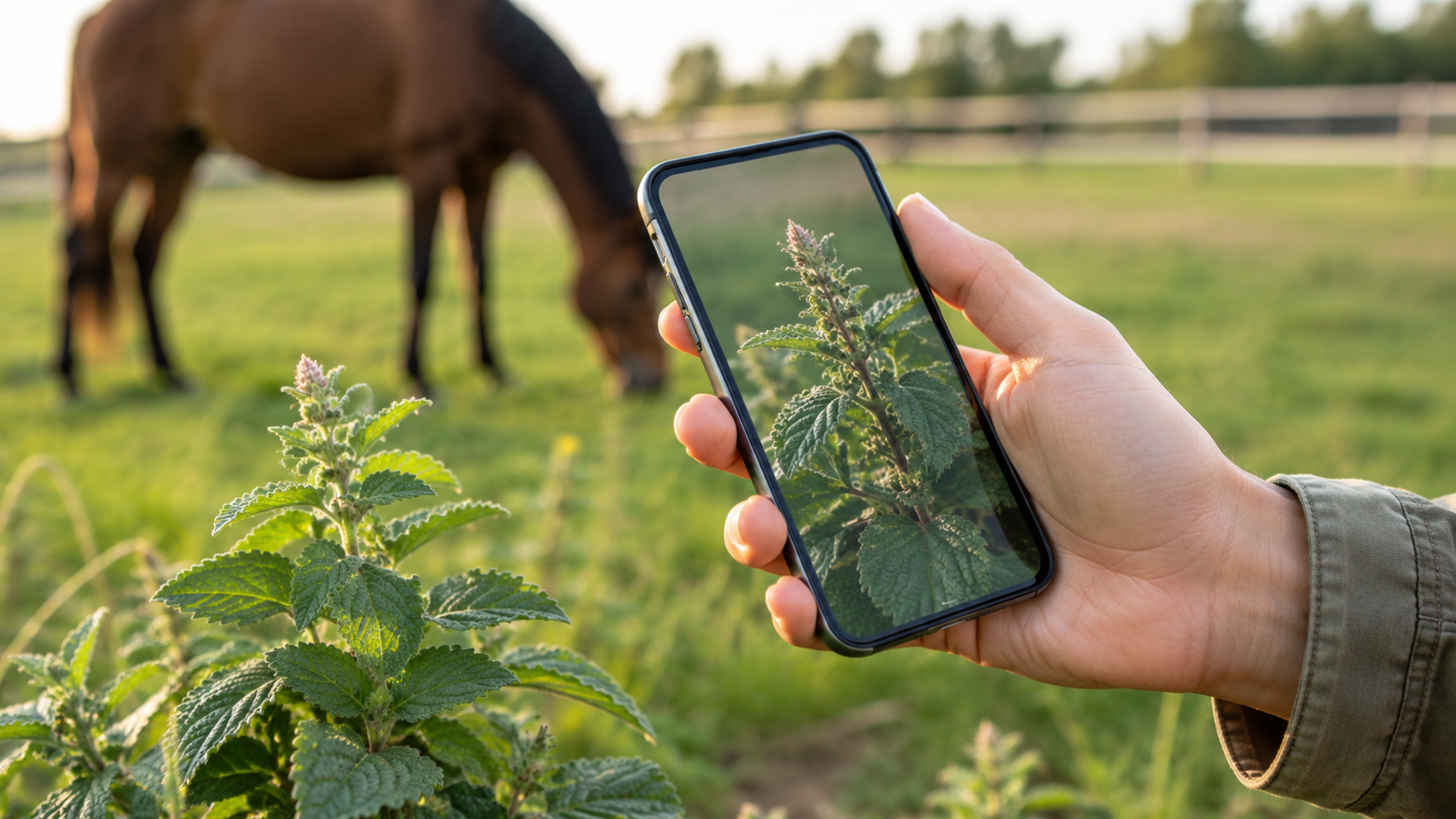
Can Equio identify Giant Hogweed from a photo?
It can help organize visual clues, but plant identification must remain cautious when horse health is at stake.
Is Giant Hogweed dangerous in hay?
This entry flags hay vigilance. Isolate suspicious forage and ask for professional advice if exposure is possible.
This page is informational. If ingestion is likely, if signs appear, or if the horse is fragile, contact a veterinarian immediately.