
Foxglove
Digitalis purpurea
Horse
Critical
Any suspected ingestion is an immediate veterinary emergency. 100 to 200 grams of fresh leaves (or 25g of dried leaves).
Equio informs, it does not diagnose. When in doubt, call your vet.
What to do now
- Antidote
- No specific antidote. Symptomatic and supportive treatment (activated charcoal, fluid therapy, anti-arrhythmics if needed).
- Time to signs
- 30 minutes to a few hours
- Prognosis
- Grave in case of massive ingestion.
- Immediate veterinary call.
- Administration of activated charcoal.
- Atropine on veterinary advice.
Its ID card
- Height
- 30 cm – 1.5 m
- Flowering
- June to September
- Toxic parts
- The entire plant, including vase water if it has been cut.
- Toxin
- Cardiotonic glycosides (Digitalin, digitoxin)
- Habitat
- Clearings, forest edges, acidic and siliceous soils, recent forest clear-cuts.
- Soil indicator
- Indicates acidic soil (low pH), rich in silica, or recently disturbed (deforestation).
- Regions
- Europe, North America
- In hay
- Yes — stays toxic once dried
- Palatability
- Avoided when growing, but very dangerous if accidentally mown and dried in hay.
When the risk rises
June to September (flowering), year-round in hay.
Spotting it in the field
Comfrey (before flowering), Mullein. — smell : odorless or slight herbaceous smell.
- Tall flower stalk (up to 1.5m).
- Foxglove-shaped flowers (hanging bells) in purple-pink.
- White/black spots inside the flowers.
- Hairy leaves.
Signs to watch for
Acute toxicity and potentially cumulative if small amounts are ingested over a prolonged period.
Dose : A small amount of fresh leaves (around 100-200g) can be lethal for a horse.
- Bloody diarrhea
- Severe cardiac arrhythmia (slow then irregular pulse)
- Dizziness and staggering
- Hypersalivation
- Cardiac arrest
Who is affected
Other species : Highly toxic to humans, dogs, and other mammals.
In pregnant mares : probable abortion if the mother survives.
Getting rid of it
Method : Manual uprooting of the entire plant, including roots, before flowering. Wear impermeable gloves. Destroy the plant by incineration or deep burial.
- Inspect pastures and mowing areas for foxglove and remove it manually.
- Avoid mowing and storing potentially contaminated hay.
- Educate equine owners about the dangers of this plant.
Frequently asked questions
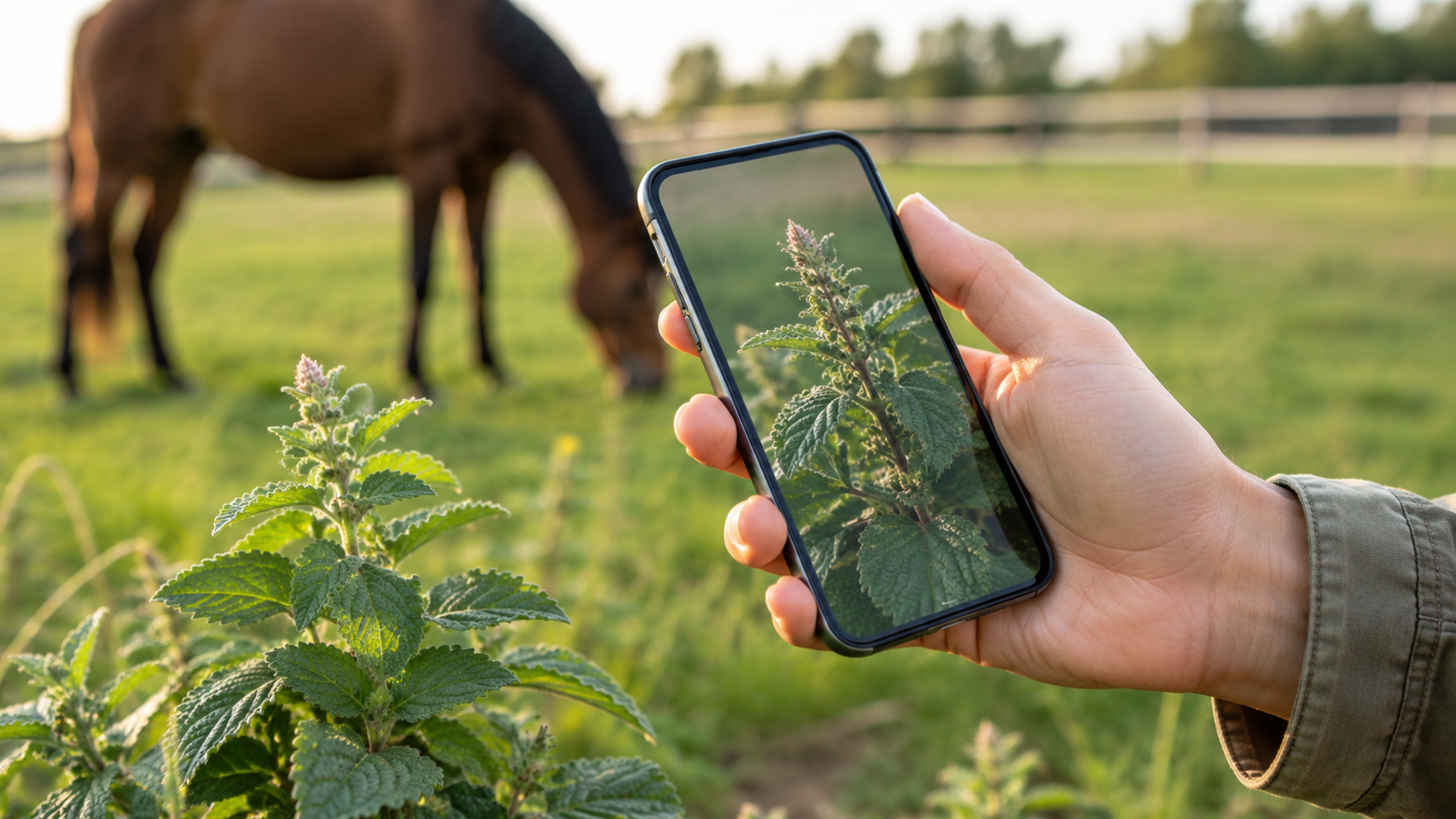
Can Equio identify Foxglove from a photo?
It can help organize visual clues, but plant identification must remain cautious when horse health is at stake.
Is Foxglove dangerous in hay?
This entry flags hay vigilance. Isolate suspicious forage and ask for professional advice if exposure is possible.
This page is informational. If ingestion is likely, if signs appear, or if the horse is fragile, contact a veterinarian immediately.