
European Spindle
Euonymus europaeus
Horse
Severe
Any suspected ingestion is an immediate veterinary emergency. A large quantity of leaves or about thirty fruits.
Equio informs, it does not diagnose. When in doubt, call your vet.
What to do now
- Antidote
- No specific antidote. Intensive symptomatic treatment: IV fluids, antispasmodics, cardiac support.
- Time to signs
- 12 hours or more
- Prognosis
- Grave if the intoxication is massive; cardiac involvement can be fatal within 2 to 3 days.
- Contact a veterinarian urgently.
- Do not induce vomiting if more than 12 hours post-ingestion.
- Prepare for transport to a veterinary clinic.
- Closely monitor vital signs.
Its ID card
- Height
- 3m – 5m
- Flowering
- May to June.
- Toxic parts
- Primarily the bark and autumn fruits, but the leaves are also toxic.
- Toxin
- Cardiotonic glycosides (Evosides) and alkaloids (Evonine).
- Habitat
- Hedgerows, woodland edges, thickets, calcareous undergrowth.
- Soil indicator
- Basic (calcareous) soils, rich in nutrients.
- Regions
- Entire Europe
- In hay
- Yes — stays toxic once dried
- Palatability
- Moderate. Eaten along with other hedgerow leaves, especially in autumn when grass loses its appeal.
When the risk rises
September to November (presence of highly toxic fruits).
Spotting it in the field
None, due to its very specific fruit. — smell : odorless.
- Bushy shrub reaching 3-5m in height.
- Small oval leaves turning bright red in autumn.
- Highly distinctive autumn fruits: bright pink 4-lobed capsule opening to reveal fluorescent orange seeds.
Signs to watch for
Acute toxicity.
Dose : Approximately 30 fruits or a large quantity of leaves for a horse.
- Violent spasmodic colic (appearing 12h to 15h after ingestion)
- Profuse and watery diarrhea, sometimes bloody
- Heart rhythm disorders (arrhythmia)
- Extreme weakness, syncope (fainting)
- Convulsions in terminal cases
Who is affected
Other species : Lethal to sheep, goats, and humans (especially children attracted by the pink fruits).
In pregnant mares : probable abortion due to shock.
Getting rid of it
Method : Uproot the entire plant, including roots, wearing gloves. Destroy the plant by burning to prevent seed dispersal.
- Avoid planting European spindle in pastures or areas accessible to horses.
- Regularly inspect fences and grazing areas for the presence of European spindle.
- Teach horses to avoid this plant if possible (difficult given its moderate palatability).
Frequently asked questions
Can Equio identify European Spindle from a photo?
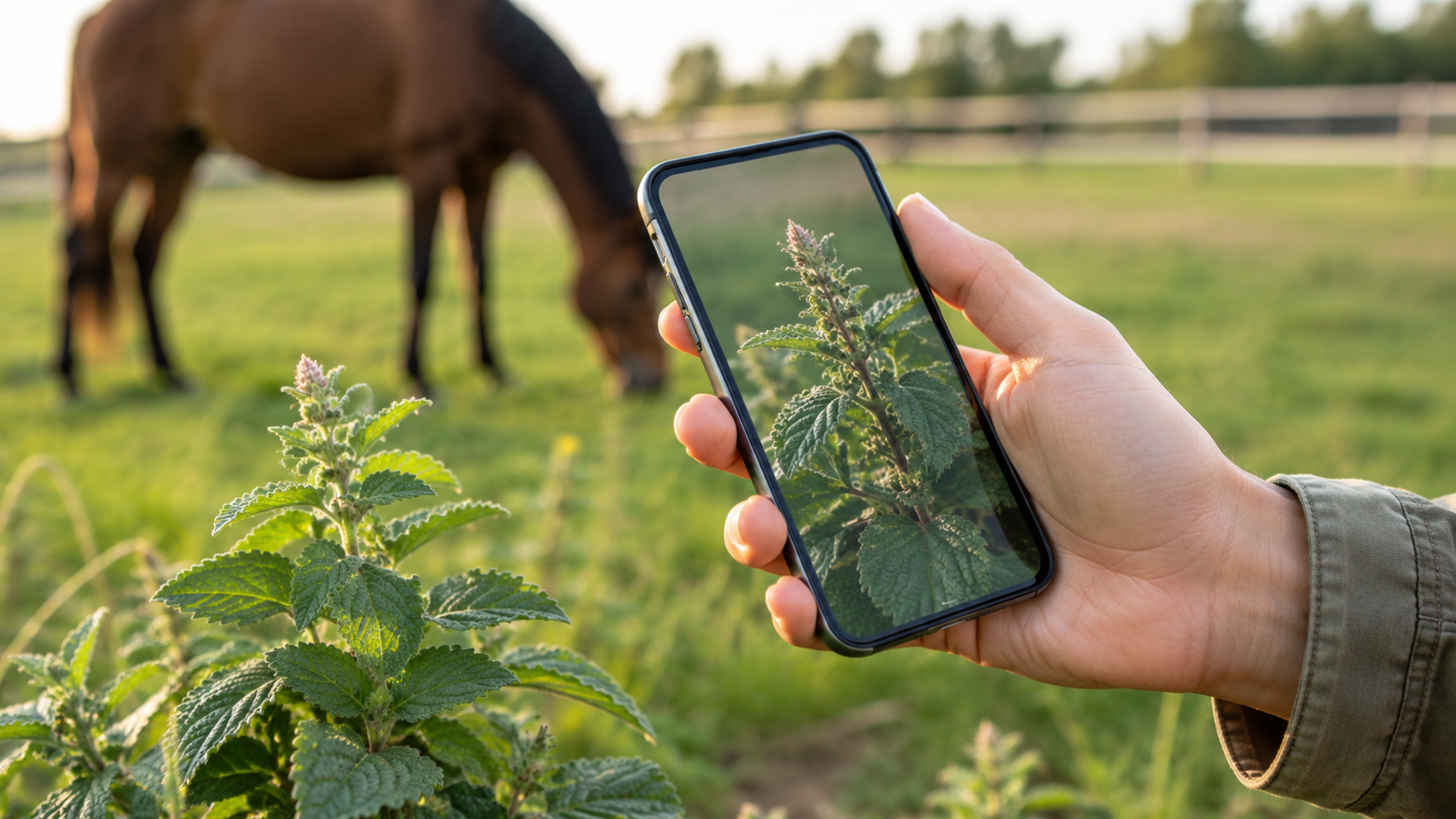
It can help organize visual clues, but plant identification must remain cautious when horse health is at stake.
Is European Spindle dangerous in hay?
This entry flags hay vigilance. Isolate suspicious forage and ask for professional advice if exposure is possible.
This page is informational. If ingestion is likely, if signs appear, or if the horse is fragile, contact a veterinarian immediately.