
Corncockle
Agrostemma githago
Horse
Moderate
Any suspected ingestion is an immediate veterinary emergency. 2 to 3 grams of seeds per kilogram of body weight (approximately 1 to 1.5 kg for a horse).
Equio informs, it does not diagnose. When in doubt, call your vet.
What to do now
- Antidote
- No specific antidote. Intensive symptomatic and supportive treatment.
- Time to signs
- A few hours to 24 hours
- Prognosis
- Good with rapid management of digestive issues. Rarely fatal in adult horses.
- Immediate veterinary call.
- Administer activated charcoal and paraffin oil to evacuate seeds.
- Symptomatic treatment for colic.
Its ID card
- Height
- 30 cm – 1.2 m
- Flowering
- June to August
- Toxic parts
- Primarily the seeds (which are large, black, and rough). Other parts are toxic but less so.
- Toxin
- Triterpene saponins (Githagin)
- Habitat
- Cereal fields, wastelands, field margins, sometimes intentionally sown in wildflower mixes or 'wildflower meadows'.
- Soil indicator
- Cultivated cereal soils, rather calcareous.
- Regions
- Entire Europe
- In hay
- Yes — stays toxic once dried
- Palatability
- Low (bitter taste), but seeds can be hidden in hay, poorly sorted oats, or improperly processed pellets.
When the risk rises
June-July when growing, year-round in stored grains/hay.
Spotting it in the field
Little confusion possible, a very characteristic flower. — smell : slightly acrid smell when crushed.
- Hairy, erect stem.
- Long, slender, opposite, greyish-green leaves.
- Large solitary purple or violet-pink flowers (5 petals).
- Long green teeth protruding from the flower.
Signs to watch for
Acute toxicity
Dose : Approximately 1 to 1.5 kg of seeds for a 500 kg horse.
- Hypersalivation (abundant foam)
- Spasmodic colic and gagging/vomiting efforts
- Severe and exhausting diarrhea
- Heart weakness
- In extreme cases: convulsions and respiratory paralysis
Who is affected
Other species : Highly toxic to poultry (chickens), pigs, dogs, and humans (corncockle bread).
In pregnant mares : risk of abortion following severe enteritis.
Getting rid of it
Method : Pull up the plant before seed formation, wearing gloves. Destroy uprooted parts to prevent dissemination.
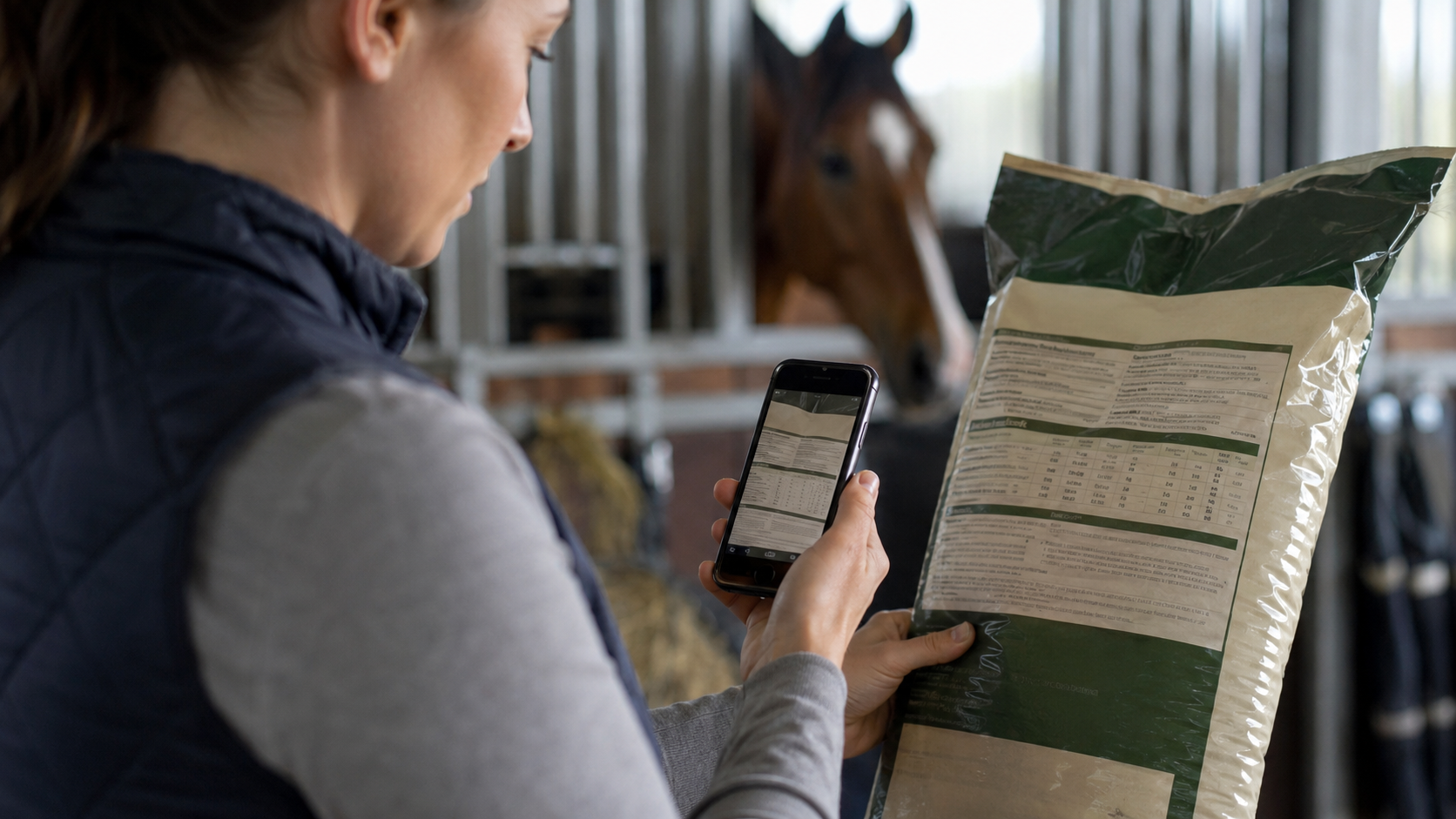
- Carefully inspect hay and grains before feeding.
- Avoid sowing potentially contaminated wildflower mixes near pastures.
- Monitor the edges of cereal fields and wastelands.
Frequently asked questions
Can Equio identify Corncockle from a photo?
It can help organize visual clues, but plant identification must remain cautious when horse health is at stake.
Is Corncockle dangerous in hay?
This entry flags hay vigilance. Isolate suspicious forage and ask for professional advice if exposure is possible.
This page is informational. If ingestion is likely, if signs appear, or if the horse is fragile, contact a veterinarian immediately.