
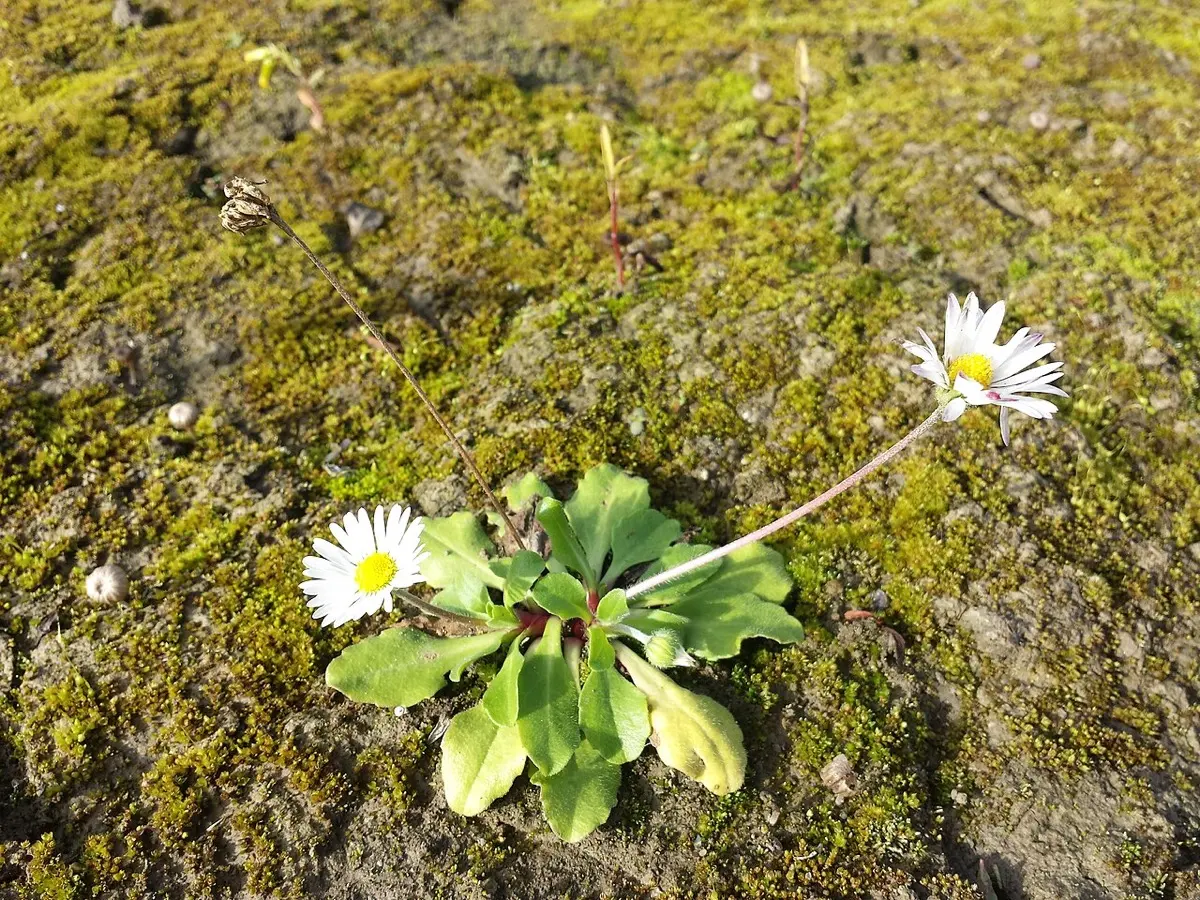
Common Daisy
Bellis perennis
Horse
No known risk
Remove access and monitor the horse; call at the first sign. Not applicable.
Equio informs, it does not diagnose. When in doubt, call your vet.
What to do now
- Antidote
- Not applicable.
- Time to signs
- Not applicable.
- Prognosis
- Excellent; no illness is expected.
Its ID card
- Height
- 5-20 cm
- Flowering
- Primarily spring to autumn (March to October).
- Toxic parts
- No toxic parts.
- Toxin
- No known toxins.
- Habitat
- Meadows, lawns, gardens, roadsides, pastures.
- Soil indicator
- Prefers well-drained soils; can grow in various soil types.
- Regions
- Europe, North Africa, North America, New Zealand, Australia
- In hay
- Not reported
- Palatability
- Moderately palatable; horses may graze on it occasionally.
When the risk rises
No critical months for toxicity.
Spotting it in the field
May be confused with other small daisies, but its small size and basal leaf rosette are distinctive. — smell : slightly aromatic when crushed.
- Small daisy-like flowers with white petals and a yellow center.
- Leaves arranged in a basal rosette.
- Single, leafless flower stalk.
- Typically small, ranging from 5 to 20 cm in height.
Who is affected
Other species : None.
In pregnant mares : no known risks.
Getting rid of it
Method : Eradication is generally not necessary due to its low toxicity. Regular mowing can help control its spread in lawns.
- Maintain good pasture management to encourage desirable grasses.
- Monitor areas where the plant is abundant if excessive consumption is suspected (though unlikely due to low toxicity).
Frequently asked questions
Can Equio identify Common Daisy from a photo?
It can help organize visual clues, but plant identification must remain cautious when horse health is at stake.
Is Common Daisy dangerous in hay?
Hay risk is not always reported for this entry, but suspicious forage should still be isolated until checked.
This page is informational. If ingestion is likely, if signs appear, or if the horse is fragile, contact a veterinarian immediately.