
Cherry Laurel
Prunus laurocerasus
Horse
Critical
Any suspected ingestion is an immediate veterinary emergency. 400 to 500 grams of fresh leaves.
Equio informs, it does not diagnose. When in doubt, call your vet.
What to do now
- Antidote
- Intravenous sodium thiosulfate, inhaled amyl nitrite (if available and under veterinary supervision).
- Time to signs
- A few minutes to 1 hour
- Prognosis
- Extremely poor if the antidote is not administered within minutes of the first symptoms.
- Immediate veterinary emergency.
- Do not induce vomiting.
- Administer oxygen if possible.
- Prepare for antidote administration by the veterinarian.
Its ID card
- Height
- 2 m – 6 m
- Flowering
- March to May
- Toxic parts
- Leaves and seeds (the fleshy red/black fruit is toxic to horses).
- Toxin
- Cyanogenic glycosides (Prunasine, Amygdalin).
- Habitat
- Ornamental hedges, gardens, property borders.
- Soil indicator
- Tolerates most soils, even acidic ones.
- Regions
- All of Europe (cultivated)
- In hay
- Yes — stays toxic once dried
- Palatability
- Unattractive bitter almond smell. Intoxication is almost always due to garden waste offered by ignorant neighbors.
When the risk rises
All year round (evergreen foliage).
Spotting it in the field
Bay Laurel (aromatic leaves), Ficus. — smell : characteristic bitter almond smell when leaves are crushed.
- Dense, evergreen shrub.
- Large, oval, leathery, dark green, and glossy leaves.
- Erect clusters of white flowers.
- Black berries.
Signs to watch for
Acute toxicity
Dose : Approximately 400-500g of fresh leaves for an adult horse.
- Bright red mucous membranes (classic sign of cyanide)
- Sudden respiratory distress (panting)
- Dilated pupils
- Convulsions and spasms
- Sudden death
Who is affected
Other species : Lethal to all herbivores and companion animals.
In pregnant mares : abortion / Maternal death.
Getting rid of it
Method : Uproot the entire plant, including the roots. Destroy waste by incineration to prevent cyanide release. Wear gloves when handling.
- Remove all Cherry Laurel plants from pastures and paddock perimeters.
- Never discard hedge trimmings containing Cherry Laurel into areas accessible to horses.
- Monitor horses closely, especially if they have access to areas where this plant is present.
Frequently asked questions
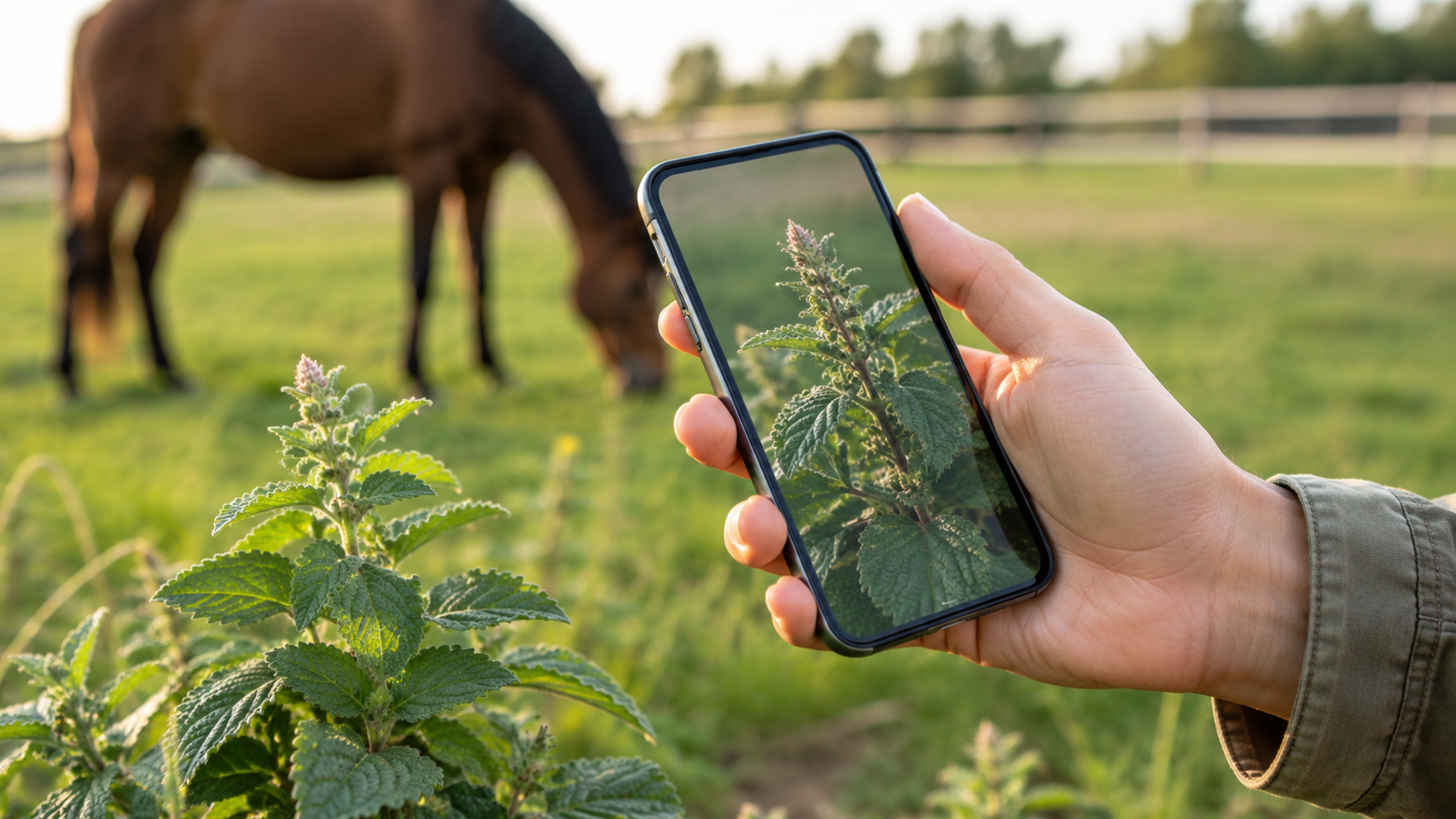
Can Equio identify Cherry Laurel from a photo?
It can help organize visual clues, but plant identification must remain cautious when horse health is at stake.
Is Cherry Laurel dangerous in hay?
This entry flags hay vigilance. Isolate suspicious forage and ask for professional advice if exposure is possible.
This page is informational. If ingestion is likely, if signs appear, or if the horse is fragile, contact a veterinarian immediately.