
Ingredient and feeding
Alfalfa: a horse nutrition read
Alfalfa is classed in Equio as a beneficial ingredient, and its main role is Fibre and protein. To read it well you have to look at where it sits in the composition, the daily dose, the rest of the ration and the horse's profile, because the value of an ingredient changes a great deal between a sport horse, a senior, a foal, a pregnant mare and a metabolic horse.
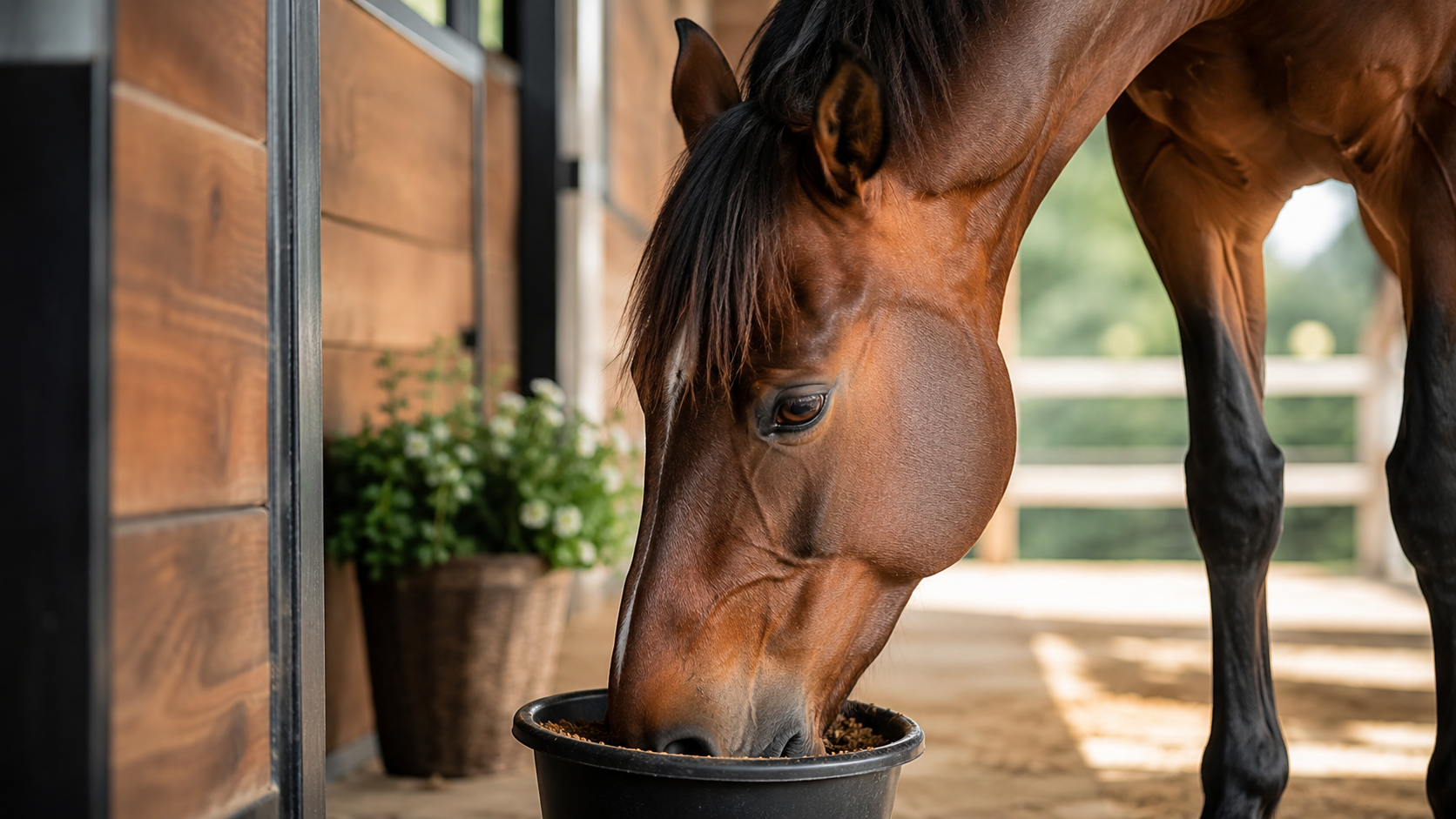
Its role in a formula
A legume rich in quality fibre, protein and calcium. It is excellent for gut and bone health, but it should be used carefully for horses with a history of laminitis as it can be high in fructans. Alfalfa should be read within the complete composition of the feed.
The role listed in the glossary is Fibre and protein. This information needs to be cross-checked against the quantity fed, the forage and the goal of the ration.
A feed containing Alfalfa should not be judged on the ingredient name alone. You have to check whether it is a main or a minor ingredient, whether it already overlaps with another feed or supplement, and whether the analytical values confirm the stated goal. The context of use matters: maintenance, work, weight gain, growth, sensitive digestion, laminitis risk or a low-starch ration.
Horse profiles to check
An ingredient can be unremarkable for a working horse yet less suitable for a metabolic horse, a pregnant mare, a foal or a senior.
Equio lets you keep the horse profile saved and connect the label read to the sensitivities you already know about.
For Alfalfa, the most useful question is therefore not whether it is good or bad, but which horse it suits, at what dose and within which ration. This approach avoids dismissing a useful ingredient out of hand, and also avoids accepting a formula simply because its marketing feels reassuring.
- horses prone to laminitis or EMS: sugar, starch, body weight and insulin sensitivity
- growing foals: energy, protein, minerals, the calcium to phosphorus ratio and over-feeding
- pregnant mares: pregnancy safety, protein, minerals and ingredients to avoid
- lactating mares: lactation, water, energy, fibre and maintaining body condition
- senior horses: chewing ability, muscle loss, PPID, digestion and palatability
Questions to ask before buying
Before buying or introducing a product, it helps to prepare a few concrete reference points. The brand, the look of the bag or a marketing promise are not enough: it is the full composition, the analytical values, the recommended dose and the horse's condition that should guide the decision.
This method is also useful for comparing two similar products. Two feeds can claim the same goal yet differ widely in their energy sources, fibre, minerals, additives or in the ingredients that matter for certain profiles.
- How much will actually be fed per day?
- Does the formula contain several similar sources?
- Do the analytical values back up the marketing claim?
- Has the vet or nutritionist given a specific restriction?
Follow-up after introduction
If Alfalfa appears in a new feed or supplement, the introduction should be tracked over time. Note the start date, the dose, any other ration changes, body condition, appetite, droppings, behaviour at work and any unusual reaction.
Keeping this information in Equio lets you look back without rebuilding the history from memory. This is especially important when the horse has a known condition, receives several products, or changes hay, pasture or workload at the same time.
Frequently asked questions
Is Alfalfa always best avoided?
No. Its value depends on the horse, the dose, the complete ration and the health context.
Why create a page for each profile?
Because the same ingredient does not raise the same questions for a foal, a lactating mare, a senior or a laminitic horse.