
Horse care composition
Alcohol: reading the composition of a horse care product
Alcohol belongs to the solvent and carrier family. It is found mainly in sprays, lotions and disinfectants. To read it correctly, you have to look at the full formula, the application area, the planned frequency, the horse's state and any reactions already observed.
This page helps you read a composition. It does not replace the manufacturer's instructions, veterinary advice or the farrier, depending on the area concerned.
What the term means in a composition
Alcohol should not be read as a guarantee of safety nor as an automatic danger. Its place in the list, its concentration, its carrier, the presence of other actives and the type of product all change the interpretation.
In horse care, this family is generally linked to: sprays, lotions and disinfectants. The main point of vigilance is: drying, stinging, wounds, mucous membranes and repeated application. It is this context that makes the reading more useful than a plain definition.
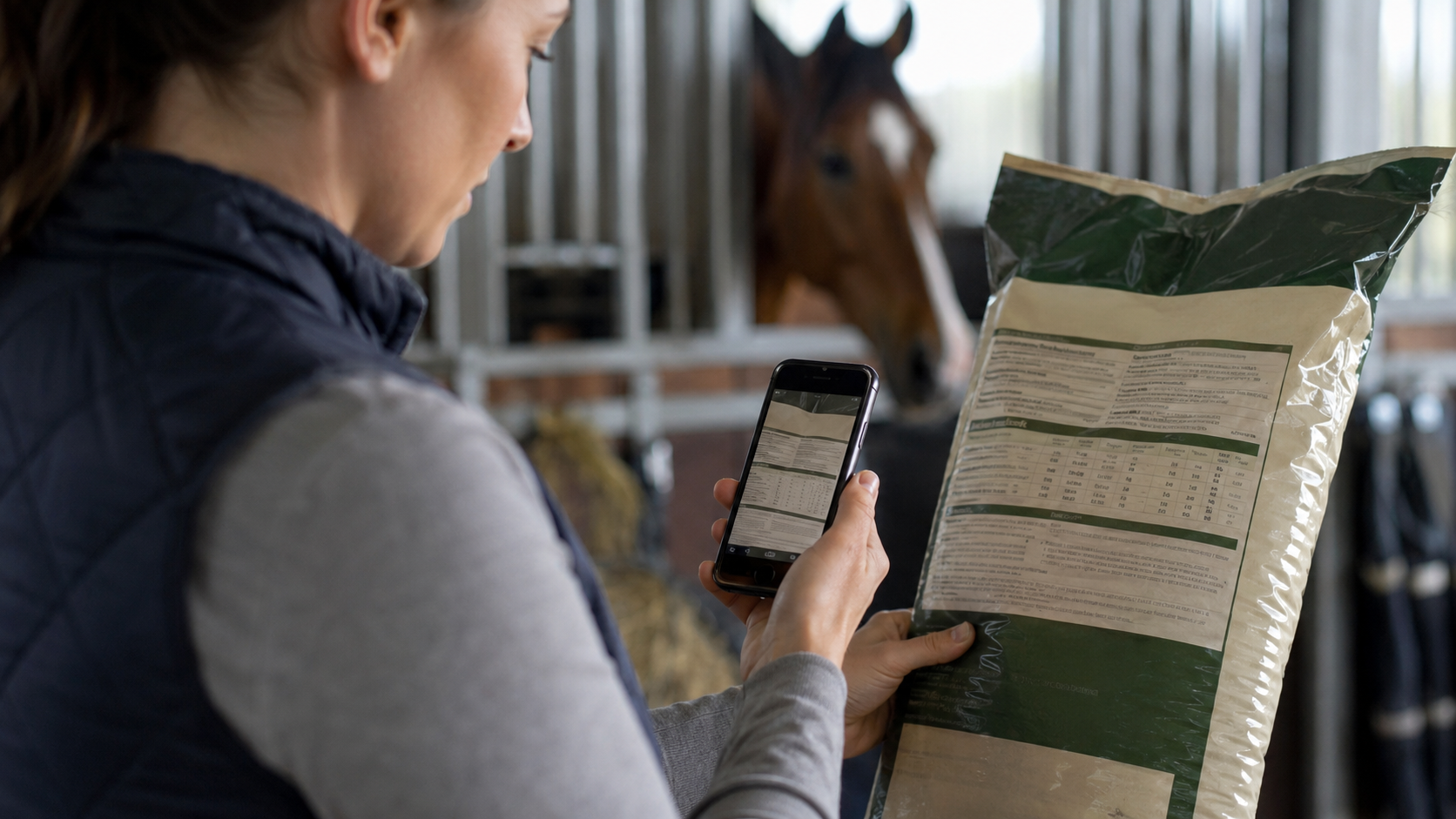
A care composition is often less familiar than a feed label. You will find technical names, carriers, texture agents, preservatives and sometimes very strongly scented actives. Good practice is to photograph the full label and keep the leaflet if it states the dilution, the rinsing or the areas to avoid.
Questions before application
Before applying a product containing this ingredient or family, check whether the horse has sensitive skin, a wound, an irritation, photosensitivity, a known condition or a treatment in progress. A product tolerated well by one horse may not suit another.
The area matters as much as the composition. Mucous membranes, the eyes, the sheath, the udder, the pasterns, skin folds, the frog, the limbs after work and areas under a rug call for different margins of caution.
- Is the product to be rinsed off or left in place?
- Is the area healthy, irritated, damp, painful or near a mucous membrane?
- Has the horse already reacted to a fragranced, greasy, washing or antiseptic product?
- Is the application frequency clear on the leaflet?
- Could a before/after photo help track tolerance?

Tracking tolerance
After using a product containing alcohol, note the date, the area, the rough quantity, any rinsing, the other products applied and how it changes. This trace helps tell apart a real improvement, a lack of effect, an irritation or a reaction linked to another factor.
In Equio, this follow-up becomes useful if the product is bought again, recommended to someone else, used on another horse or compared with a similar formula. The product memory saves you from starting over with every bottle.
Frequently asked questions
Is alcohol necessarily dangerous?
No. It all depends on the full product, the concentration, the area, the frequency and the horse concerned.
Why read the whole composition?
Because a highlighted active may be accompanied by fragrances, solvents, preservatives, fatty substances or washing agents that change tolerance.