
Horse breed
Riwoche
The Riwoche horse is an equine breed discovered in 1995 in an isolated valley in the Riwoche district, in the autonomous region of Tibet. It was identified by a team of explorers led by Michel Peissel.
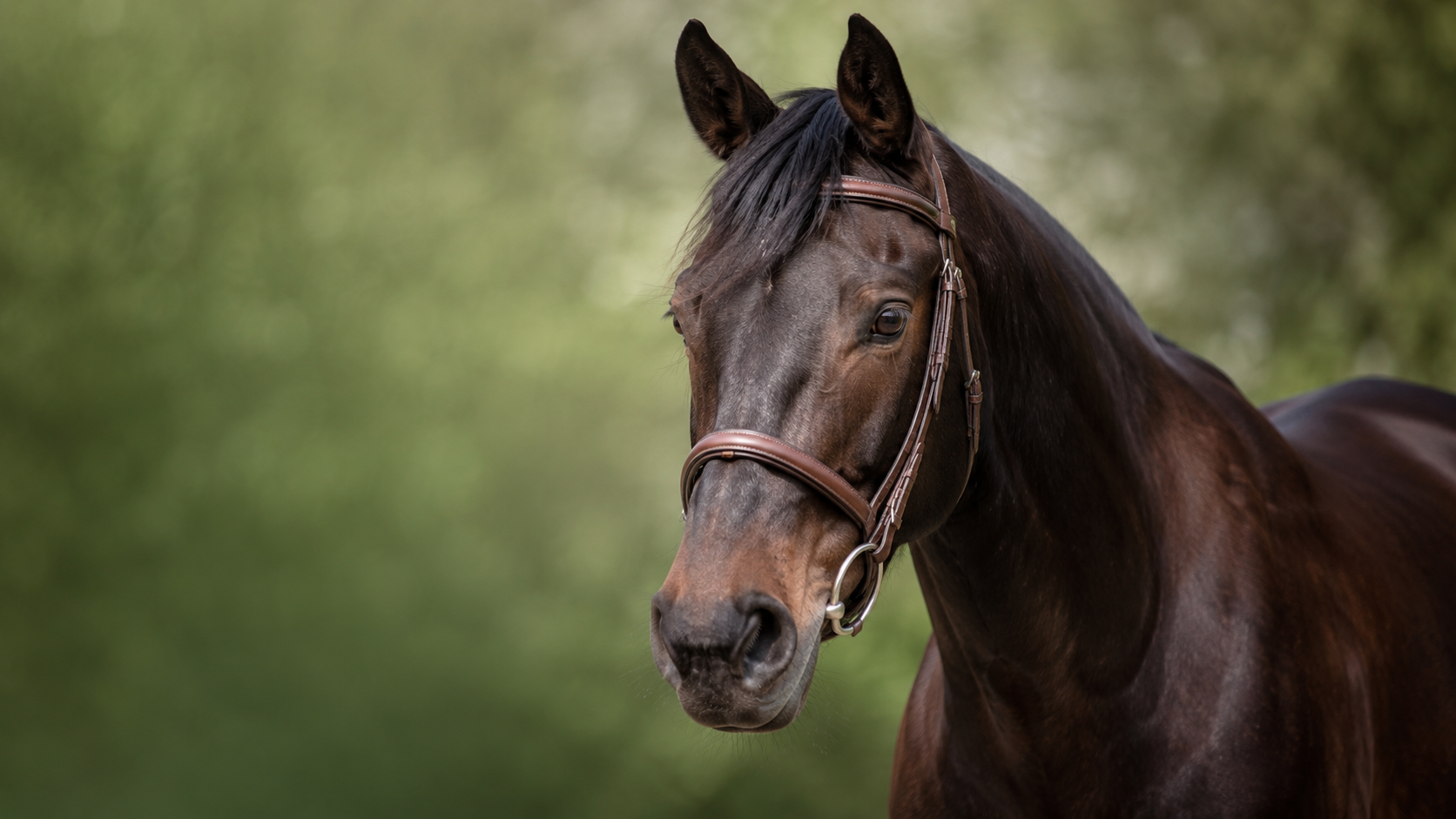
The breed at a glance
Its temperament is known to be hardy, resilient, and self-sufficient. It is accustomed to living in semi-feral conditions in difficult environments. Its character is likely wary but adaptable once tamed.
- Category
- hardy breed
- Origin
- Tibet (China) · Antiquity / Middle Ages
- Height at withers
- 120–125 cm
- Lifespan
- unknown, likely high (25-30 years)
- Common coats
- bay, black, grullo
Origin and history
The Riwoche horse is an equine breed discovered in 1995 in an isolated valley in the Riwoche district, in the autonomous region of Tibet. It was identified by a team of explorers led by Michel Peissel. Its primitive morphology has led some scientists to consider it a possible direct descendant of Equus ferus caballus, the original wild horse, or at least a very ancient breed little modified by humans. There is no official recognition of the breed by international organizations.

Conformation and physique
It is a small, pony-type horse, compact and stocky, with robust bone structure. Its silhouette is primitive, reminiscent of prehistoric horses.
The head is relatively large in proportion to the body, with a straight or slightly convex profile. The eyes are small and the ears are short.
The neck is short, thick, and straight, well-set. The withers are not very pronounced.
The back is short and strong, the topline is straight. The chest is deep and the croup is short and sloping.
The limbs are short, clean, and very strong, with well-developed joints. The hooves are small, round, and extremely hard. Feathering is sparse.
- Common coats: bay, black, grullo
Temperament and aptitudes
Its temperament is known to be hardy, resilient, and self-sufficient. It is accustomed to living in semi-feral conditions in difficult environments. Its character is likely wary but adaptable once tamed.
The gaits are short, energetic, and sure-footed, adapted to mountainous and rugged terrain. The walk is particularly agile.
- Uses: mountain pack animal, mount for local populations, meat (historically)
Feeding the Riwoche
As a hardy breed living in harsh environments, the Riwoche is a very economical horse. Its metabolism is adapted to a poor and fibrous diet, primarily consisting of coarse forages found in high-altitude pastures. It has a great capacity to utilize limited resources and is prone to obesity if its diet is too rich. Concentrate requirements are minimal, if not non-existent, except in cases of intense work or extreme conditions.
Given its economical metabolism and adaptation to a poor diet, the Riwoche is likely very sensitive to diets rich in sugars and starch. It carries a high risk of developing metabolic pathologies such as laminitis or Equine Metabolic Syndrome (EMS) if fed concentrates or overly rich pastures, as is the case for many hardy breeds and ponies.
With Equio, every feed, supplement or treat is read against the horse's real profile (age, weight, Body Condition Score, conditions) — useful for a Riwoche as soon as a metabolic or digestive sensitivity is known.

Health and points to watch
The primary concern is its diet, which must remain close to its natural, low-nutrient regimen. Body condition should be monitored to prevent obesity. Its naturally hard hooves require regular but minimal trimming, adapted to their slow growth and resilience.
- More frequent conditions: laminitis (in case of unsuitable diet), Equine Metabolic Syndrome (EMS) (in case of unsuitable diet)
Care and grooming
Care requirements are generally low due to its great hardiness. Its very resilient hooves require minimal trimming. Its mane, tail, and thick coat protect it from the elements and do not require special maintenance, other than occasional brushing. It is well-adapted to cold and humid climates.
Did you know?
- The discovery of the Riwoche horse in 1995 sparked keen scientific interest, with some considering it a 'living fossil' or a breed very close to the original wild horse.
- Its geographical isolation has allowed this breed to retain primitive characteristics, protecting it from crossbreeding with other breeds.
- Genetic analyses are still limited, but they could provide major insights into the history of horse domestication.
The Riwoche and how to track it
The Riwoche horse is not present in France. There is no breeding or use of this breed in French territory, as its population is highly localized in Tibet.
Equio lets you build a complete profile for a Riwoche: identity, weight, Body Condition Score, feeding, conditions, care reminders (vaccines, worming, trimming) and an exportable health log. The breed sets the identity; everyday decisions still depend on the real horse and your vet's advice.
- Record the activity level: rest, leisure, sport or breeding
- Add known conditions or sensitivities
- Scan feeds, plants and care products
- Keep reminders (vaccines, worming, trimming)
- Prepare a PDF export before a vet appointment
Frequently asked questions
Is the Riwoche horse a wild horse breed?
No, although it exhibits primitive characteristics and was discovered in a semi-feral state, the Riwoche horse is considered a domestic breed, even if it has been very little influenced by humans. It is not a wild horse in the strict sense, like Przewalski's horse.
Can a Riwoche horse be purchased outside of Tibet?
It is extremely unlikely, if not impossible, to purchase a Riwoche horse outside of its region of origin in Tibet. The breed is highly localized, small in number, and not exported. It is primarily a local resource for the Tibetan populations.
What is the most striking characteristic of the Riwoche?
Its most striking characteristic is its primitive morphology, which has led to speculation about its direct link to prehistoric wild horses. Its genetic isolation makes it a unique subject of study for understanding horse evolution.
Is the Riwoche endangered?
The exact population of the Riwoche is unknown, but it is considered very limited and localized. Although not officially classified as endangered, its small numbers and restricted habitat make it vulnerable to environmental or cultural changes.
Is the Riwoche a pony or a horse?
With an average height of 120-125 cm at the withers, the Riwoche is technically classified as a pony according to Western standards. However, in its original context, it is simply called 'horse' by local populations, without distinction of size.