
Horse breed
Thoroughbred
The Thoroughbred originated from the crossing of native English mares with three imported Oriental foundation sires: the Darley Arabian, the Godolphin Arabian, and the Byerley Turk. These crosses were made with the aim of creating a fast and enduring horse for racing.
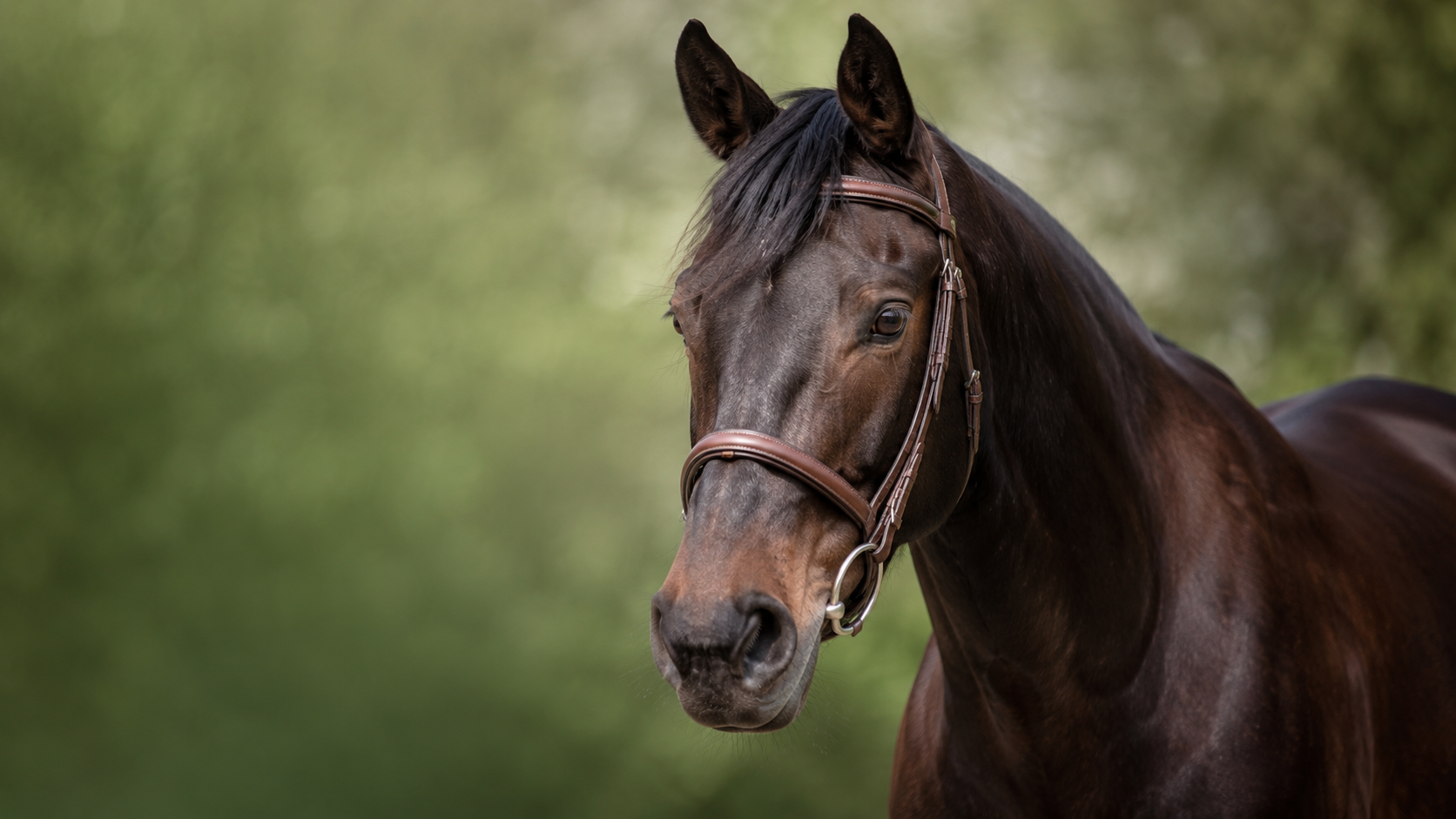
The breed at a glance
The Thoroughbred is a horse with a lively, energetic, and sensitive temperament. It is courageous, willing, and highly reactive, making it a high-level athlete. It requires gentle but firm handling and regular work.
- Category
- hot-blooded horse
- Origin
- England · 17th - 18th Century
- Height at withers
- 155–170 cm
- Weight
- 450–550 kg
- Lifespan
- 20-25 years
- Common coats
- bay, chestnut, grey, black
- Disciplines
- Horse racing (flat and jump racing), Eventing (CCE), Show jumping (CSO), Dressage
- Other names
- Thoroughbred
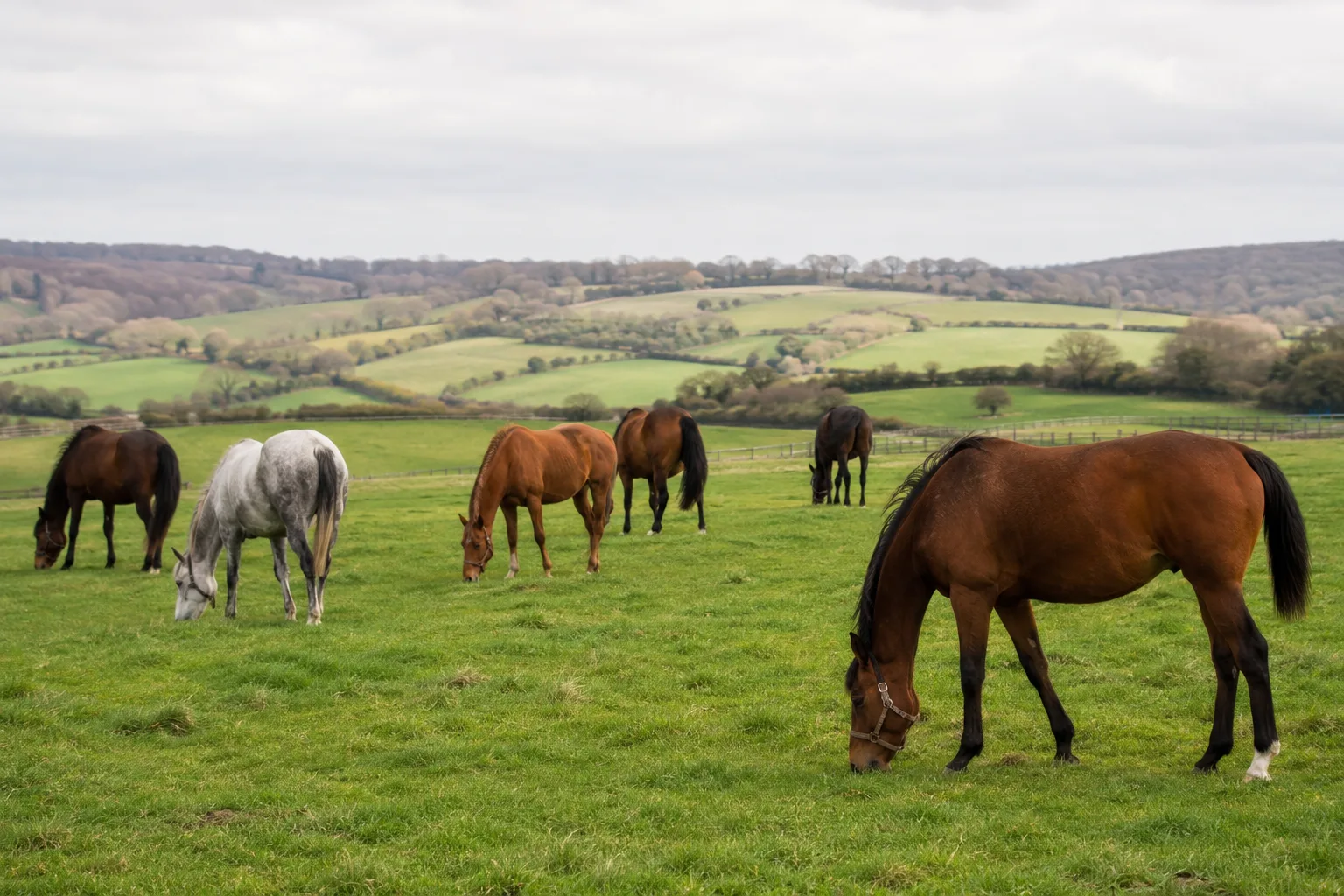
Origin and history
The Thoroughbred originated from the crossing of native English mares with three imported Oriental foundation sires: the Darley Arabian, the Godolphin Arabian, and the Byerley Turk. These crosses were made with the aim of creating a fast and enduring horse for racing. The breed was officially recognized with the publication of the General Stud Book in 1791, which lists purebred lineages. Today, it is the most influential breed in the world of horse racing.

Conformation and physique
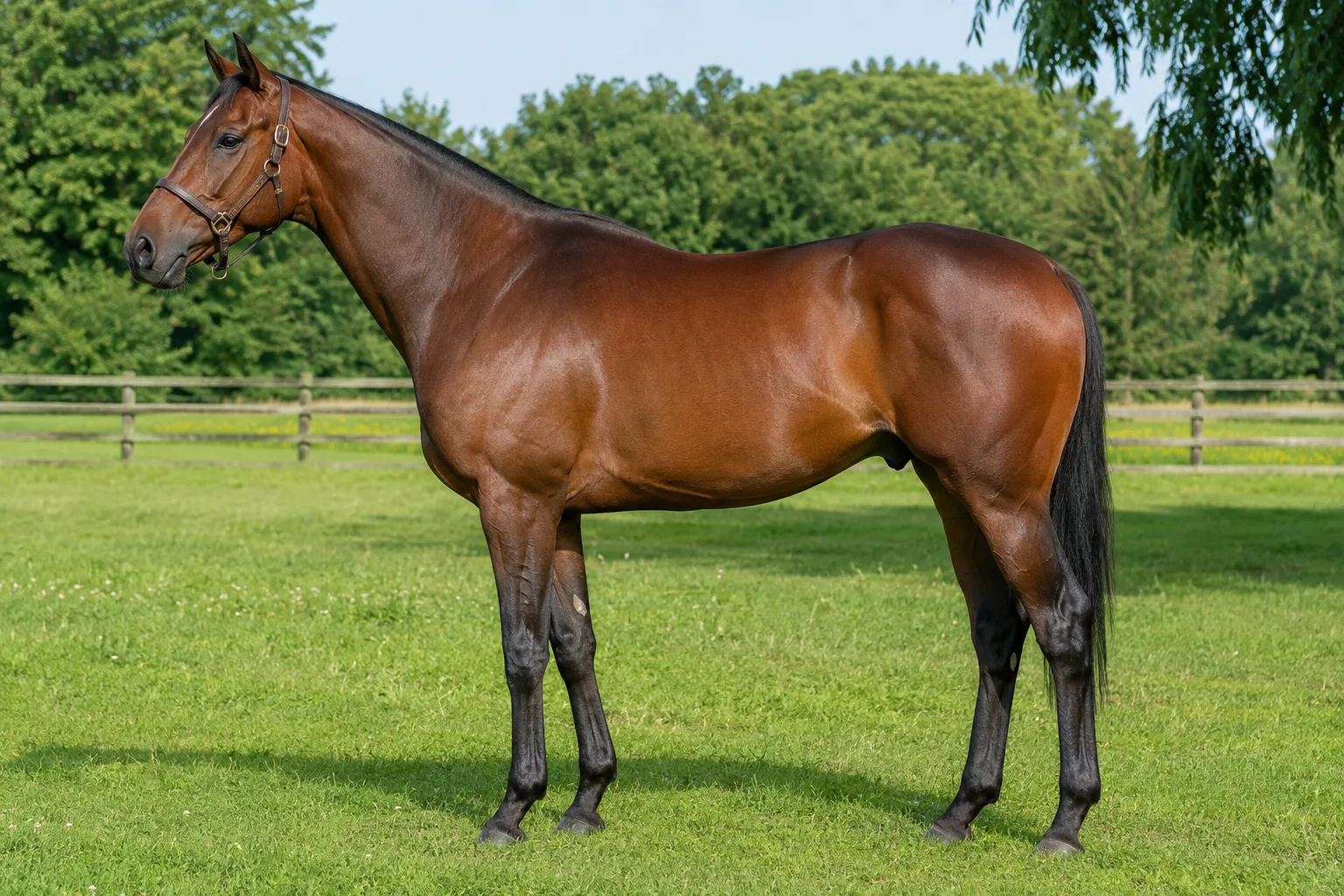
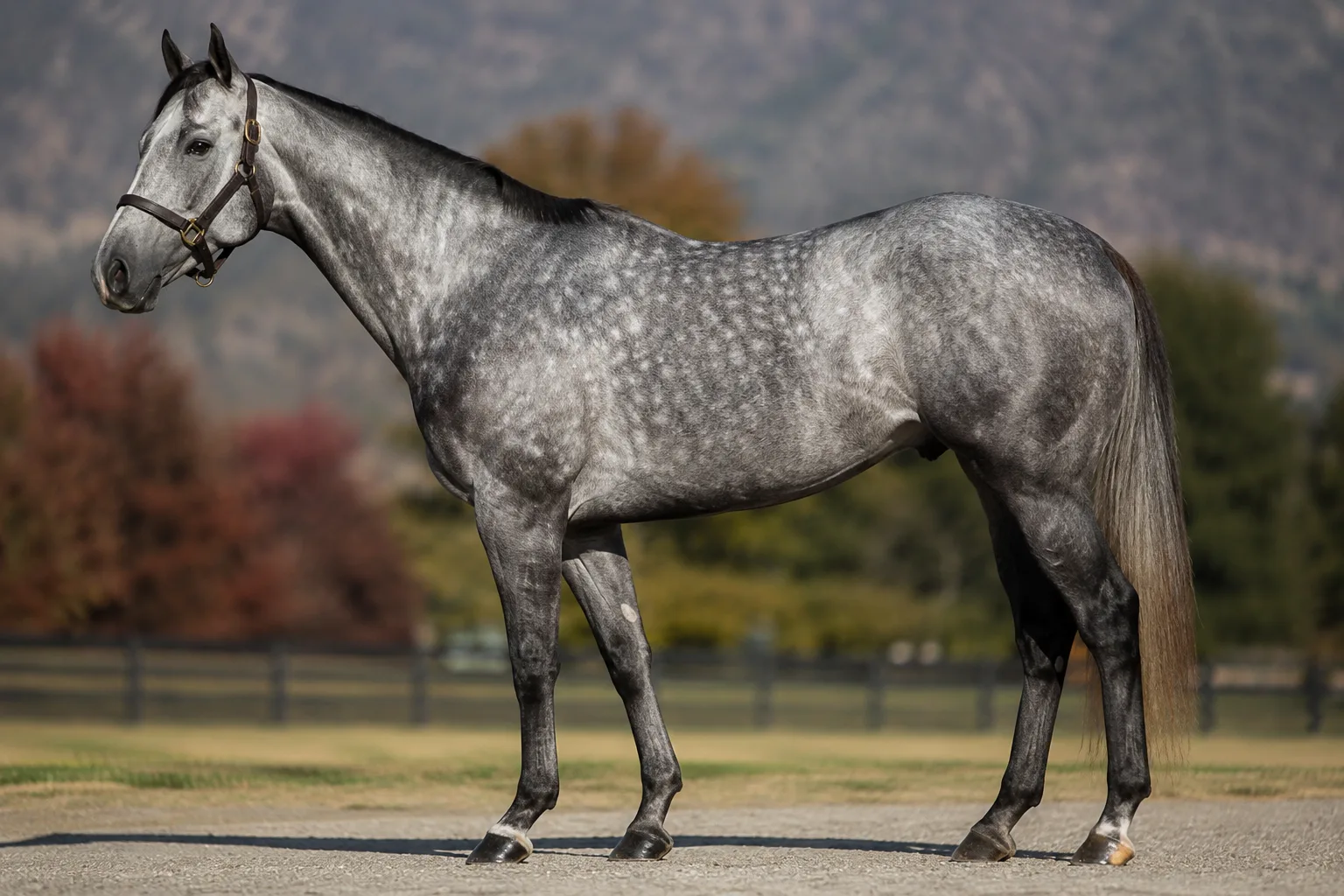
The quintessential sport horse, the Thoroughbred presents a slender and athletic build, with a long-lined frame and fine but strong bone structure. It exudes an impression of power and speed.
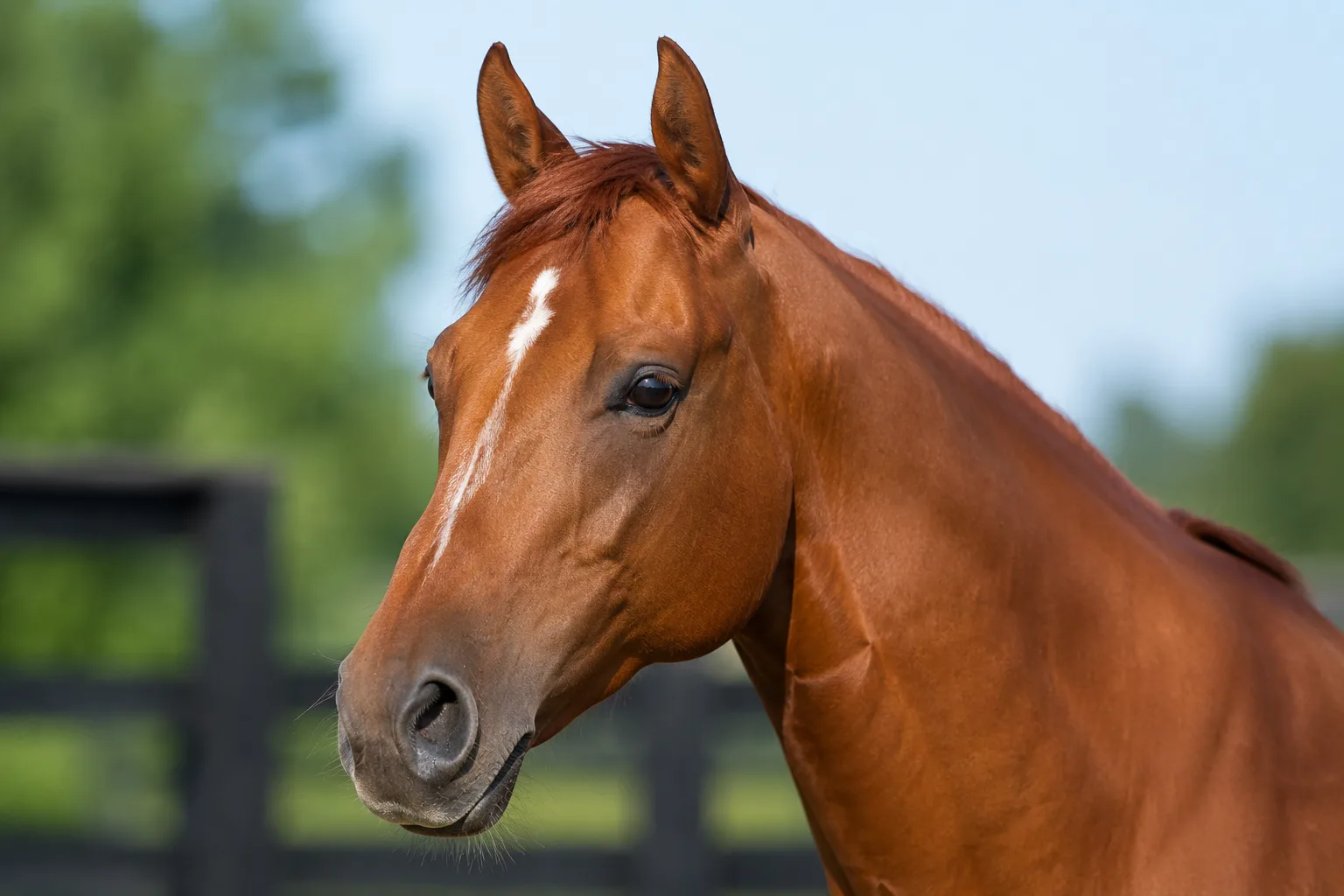
Fine and expressive head, often with a straight or slightly concave profile. The eyes are large and lively, the nostrils wide, and the ears well-shaped and mobile.
Long, fine, and well-muscled neck, harmoniously set into high and prominent withers, characteristic of the breed.
Relatively short and taut back, muscular topline. Deep and well-sprung chest, providing ample lung capacity. Long and muscular croup, often slightly sloped, conducive to propulsion.
Long, fine, and clean limbs, with well-defined joints and clean tendons. The cannons are short and the pasterns of medium length. The feet are generally small and hard. No feathering.
- Common coats: bay, chestnut, grey, black
Temperament and aptitudes
The Thoroughbred is a horse with a lively, energetic, and sensitive temperament. It is courageous, willing, and highly reactive, making it a high-level athlete. It requires gentle but firm handling and regular work.
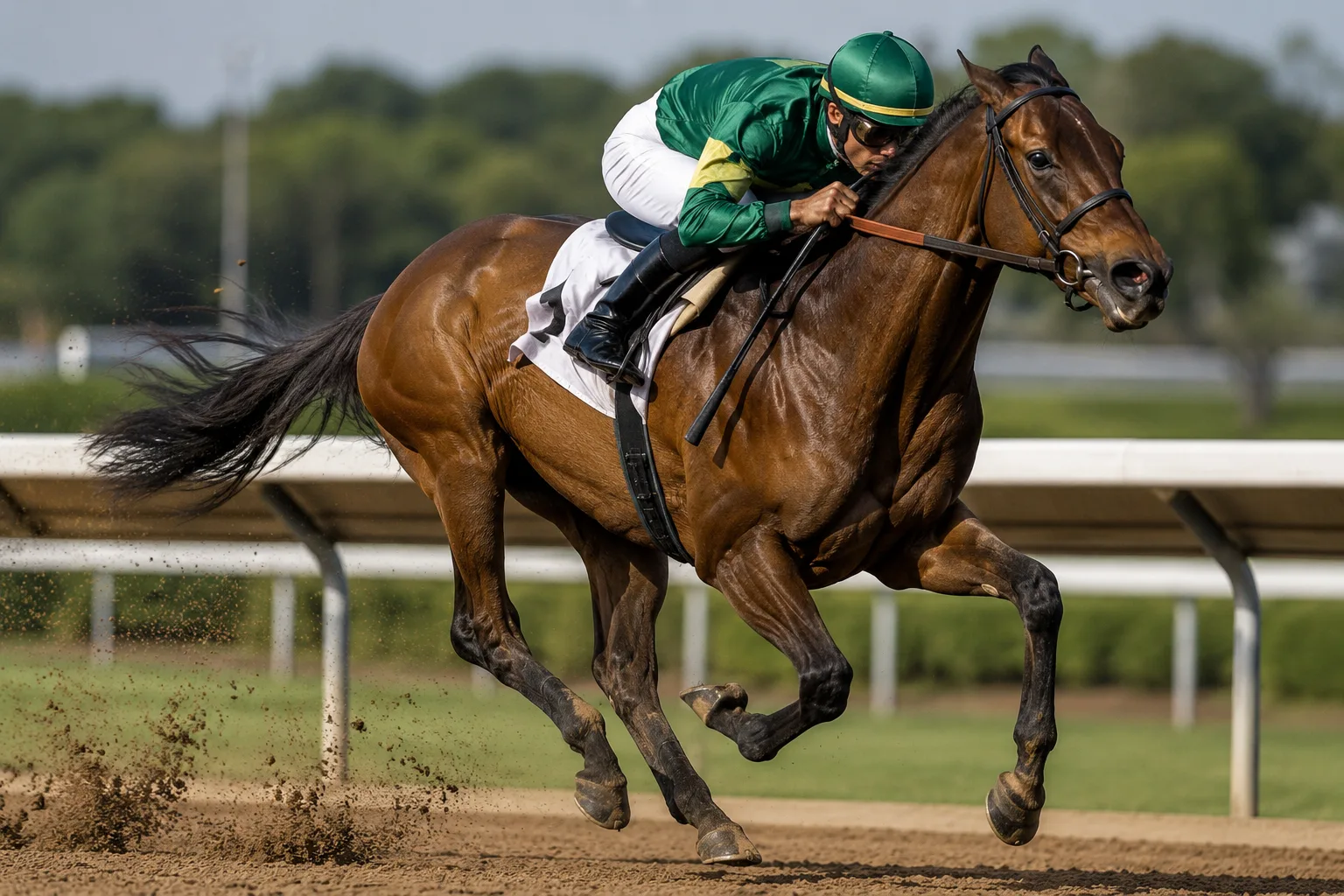
The gaits are ample, ground-covering, and very extended, particularly at the gallop, where it develops exceptional speed and power. The walk and trot are also energetic and efficient.
- Uses: Flat racing, Jump Racing, Breeding for the improvement of other sport horse breeds, Eventing, Show Jumping, Dressage
- Disciplines: Horse racing (flat and jump racing), Eventing (CCE), Show jumping (CSO), Dressage
Feeding the Thoroughbred
The Thoroughbred is a demanding athlete with a fast metabolism. It requires a rich and balanced diet to support its performance and maintain muscle mass. It does not generally tend to be overweight but requires a high caloric intake, often in the form of energy-rich concentrates (grains, compound feeds) in addition to good quality forage in sufficient quantity.
Although generally robust, the Thoroughbred can be sensitive to dietary imbalances, particularly in cases of a diet too rich in starch or sudden changes, which can lead to colic or gastric ulcers. It does not have a documented breed-specific predisposition to laminitis or EMS, but an unsuitable diet can always pose risks.
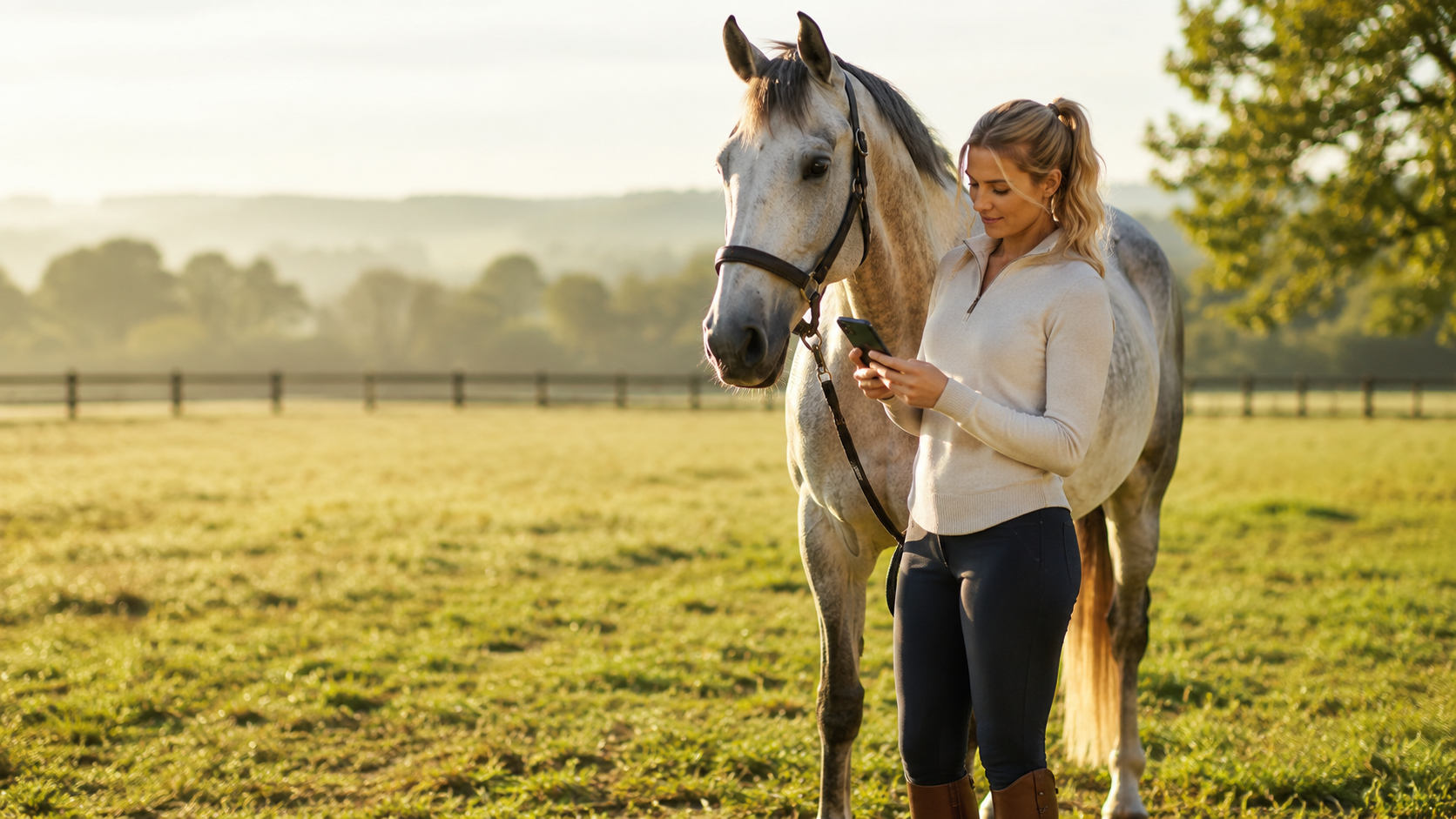
With Equio, every feed, supplement or treat is read against the horse's real profile (age, weight, Body Condition Score, conditions) — useful for a Thoroughbred as soon as a metabolic or digestive sensitivity is known.
Health and points to watch
Regular monitoring of the musculoskeletal system is essential due to the stresses of racing and sport. Particular attention must be paid to digestive (ulcer prevention) and respiratory health. Regular veterinary follow-up is essential to detect and manage conditions early.
- Documented genetic disorders: Osteochondritis dissecans (OCD) - multifactorial predisposition, Exercise-induced pulmonary hemorrhage (EIPH) - genetic and environmental predisposition
- More frequent conditions: Gastric ulcers, Colic, Joint problems (osteoarthritis, tendonitis) related to training intensity, Stress fractures, Respiratory problems (EIPH, inflammatory airway diseases)
Care and grooming
The hooves, often small, require trimming and shoeing adapted to intense athletic activity. The mane and tail are generally fine and do not require special care, apart from regular brushing. The fine and shiny coat is easy to maintain, but clipping is often necessary for racehorses in winter. Good general hygiene and skin care are important to prevent skin conditions.
Did you know?
- All Thoroughbreds born in the Northern Hemisphere have their birthday on January 1st, and those born in the Southern Hemisphere on August 1st, regardless of their actual date of birth, to simplify age categories in racing.
- The Thoroughbred is the fastest breed in the world over short to medium distances, capable of reaching speeds of over 70 km/h.
- The name 'Thoroughbred' means 'bred through' or 'of pure blood', highlighting the rigor of its genealogical selection.
The Thoroughbred and how to track it
The Thoroughbred is very present in France, primarily in the horse racing industry (breeding, training, competition) and as a sire for the improvement of other sport horse breeds. It is also used in Olympic disciplines.
Equio lets you build a complete profile for a Thoroughbred: identity, weight, Body Condition Score, feeding, conditions, care reminders (vaccines, worming, trimming) and an exportable health log. The breed sets the identity; everyday decisions still depend on the real horse and your vet's advice.
- Record the activity level: rest, leisure, sport or breeding
- Add known conditions or sensitivities
- Scan feeds, plants and care products
- Keep reminders (vaccines, worming, trimming)
- Prepare a PDF export before a vet appointment
Frequently asked questions
What is the price of a Thoroughbred?
The price of a Thoroughbred is extremely variable. A foal destined for racing can be worth from a few thousand to several million euros, depending on its lineage and potential. An off-the-track Thoroughbred, intended for retraining, can be acquired for a few hundred to a few thousand euros, but often requires rehabilitation work.
Is the Thoroughbred suitable for beginner riders?
In general, the Thoroughbred is not recommended for beginner riders. Its lively temperament, high sensitivity, and reactivity require an experienced, calm, and fair rider, capable of channeling its energy and understanding its reactions.
How to retrain an off-the-track Thoroughbred?
Retraining an off-the-track Thoroughbred requires patience and method. First, it needs a period of rest and dietary transition. Then, progressive and varied work, focused on relaxation and learning new aids, is essential to adapt it to a new discipline. Professional guidance is often recommended.
What are the main qualities of the Thoroughbred in sport?
The main qualities of the Thoroughbred in sport are its speed, endurance, courage, reactivity, and will to win. These attributes make it an exceptional horse for racing, eventing, and show jumping, where it can fully express its athletic potential.
Is the Thoroughbred a good leisure horse?
Although primarily intended for sport, a well-retrained Thoroughbred with a suitable temperament can make an excellent leisure horse for an experienced rider. It is enduring for trail riding and can be very pleasant to ride, but its energy and sensitivity require good management.