
Horse breed
Przewalski's Horse
Przewalski's horse is the only wild horse subspecies that has never been domesticated. Discovered by Russian Colonel Nikolai Przewalski in 1879, it was first captured in the late 19th century.
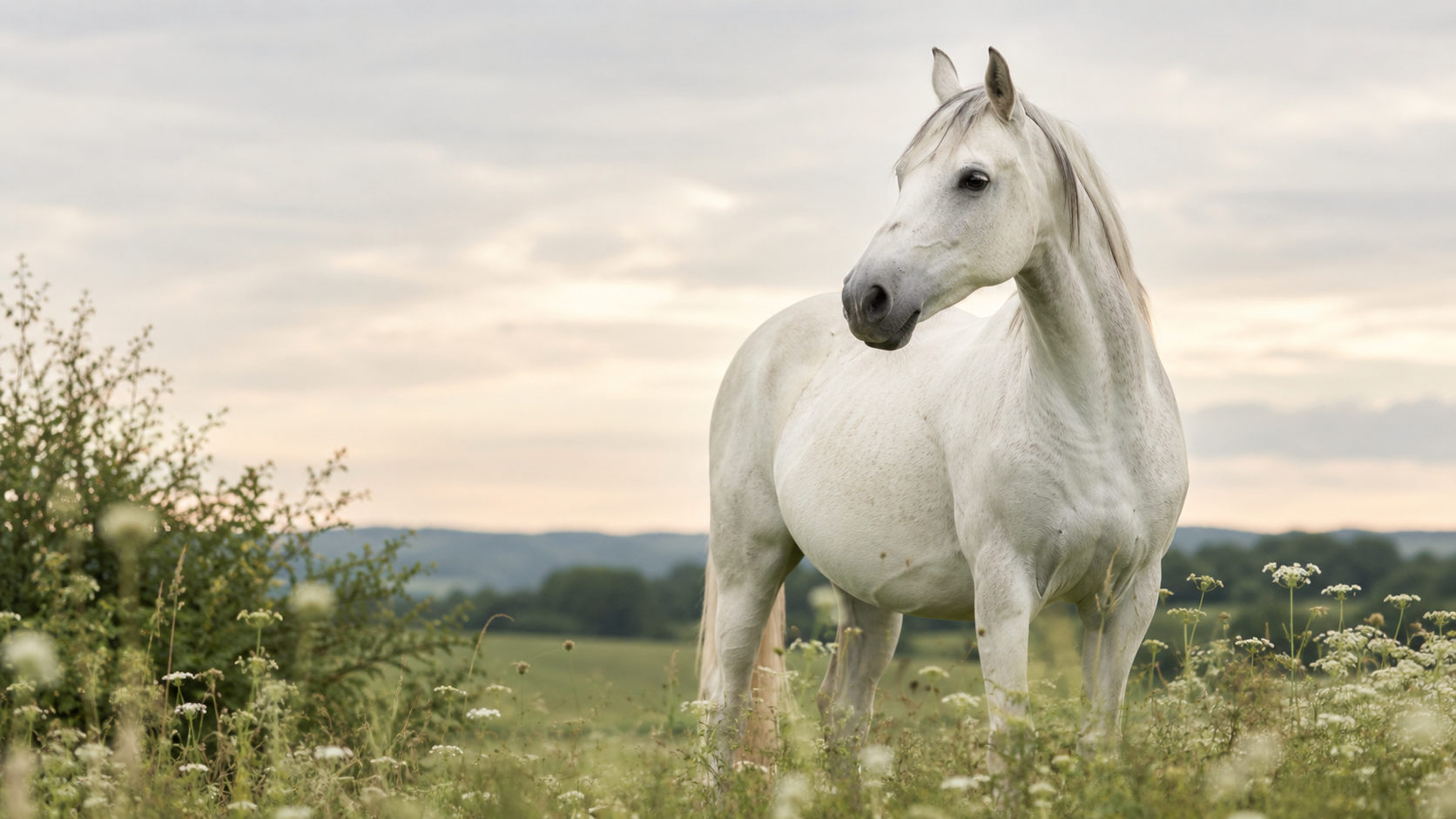
The breed at a glance
Przewalski's horse is a wild horse, with a fierce temperament and wary of humans. It is very resilient, self-sufficient, and possesses a strong survival instinct. It lives in hierarchical herds.
- Category
- hardy breed
- Origin
- Mongolia · Pleistocene (modern discovery in the 19th century)
- Height at withers
- 125–145 cm
- Weight
- 250–350 kg
- Lifespan
- 20-25 years
- Common coats
- dun (fawn), bay dun
- Disciplines
- none (wild horse)
- Other names
- Cheval de Przewalski, Takhi, Mongolian Wild Horse
Origin and history
Przewalski's horse is the only wild horse subspecies that has never been domesticated. Discovered by Russian Colonel Nikolai Przewalski in 1879, it was first captured in the late 19th century. The breed faced extinction in the mid-20th century, surviving only through captive breeding programs. Reintroduction efforts have successfully restored wild populations in Mongolia and China.
Conformation and physique
A small, stocky, and muscular horse, with strong bone structure and short limbs. It has a primitive and robust build, adapted to wild life.
Relatively large and heavy head, with a straight or slightly convex profile. The eyes are small and expressive, the ears short and pointed.
Short, thick, and very muscular neck, carried horizontally. The withers are not very pronounced and blend into the topline.
Short, straight back, strong topline. Broad and deep chest. Short, muscular, and slightly sloping croup.
Short, strong, and well-muscled limbs, with broad joints and thick bones. The cannons are short, and the feet are small, round, and very hard. No feathering.
- Common coats: dun (fawn), bay dun
Temperament and aptitudes
Przewalski's horse is a wild horse, with a fierce temperament and wary of humans. It is very resilient, self-sufficient, and possesses a strong survival instinct. It lives in hierarchical herds.
Short, energetic, and very sure-footed gaits, adapted to rough terrain. The walk is active, and the trot is powerful, with good impulsion.
- Uses: biodiversity conservation, scientific research, reintroduction into natural habitats
- Disciplines: none (wild horse)
Feeding the Przewalski's Horse
Przewalski's horse is a strict herbivore, very economical, and adapted to arid environments. Its metabolism is designed to utilize poor and fibrous forages. It has a great capacity to store reserves and is prone to obesity if its diet is too rich. Its need for concentrates is zero, even with intense work (which is not the case for this breed).
Due to its adaptation to poor diets, Przewalski's horse can be sensitive to diets too rich in sugars and starch, which could potentially increase the risk of laminitis or Equine Metabolic Syndrome (EMS) if it were fed like a domestic horse. However, these pathologies are rarely observed in its natural habitat.
With Equio, every feed, supplement or treat is read against the horse's real profile (age, weight, Body Condition Score, conditions) — useful for a Przewalski's Horse as soon as a metabolic or digestive sensitivity is known.

Health and points to watch
Health monitoring of wild populations focuses on signs of infectious or parasitic diseases that could affect herd survival. In captivity, particular attention is paid to preventing obesity and hoof problems related to a lack of natural hoof wear.
- More frequent conditions: parasitism (in the wild), injuries related to social interactions or predators
Care and grooming
In its natural environment, Przewalski's horse requires no specific care. Its hooves wear naturally, and its mane, tail, and coat are adapted to climatic variations. In captivity, regular trimming may be necessary if natural wear is insufficient. No grooming or clipping is practiced.
Did you know?
- Przewalski's horse has 66 chromosomes, unlike domestic horses which have 64. Despite this, they can reproduce, but their offspring are sterile.
- It was declared extinct in the wild in 1969, before being successfully reintroduced starting in the 1990s.
- Its characteristic dun coat is often called 'Przewalski coat' due to its prevalence in this breed.
The Przewalski's Horse and how to track it
France hosts populations of Przewalski's horses in zoological parks and nature reserves, participating in international conservation and reintroduction programs. Breeding is strictly regulated for genetic preservation.
Equio lets you build a complete profile for a Przewalski's Horse: identity, weight, Body Condition Score, feeding, conditions, care reminders (vaccines, worming, trimming) and an exportable health log. The breed sets the identity; everyday decisions still depend on the real horse and your vet's advice.
- Record the activity level: rest, leisure, sport or breeding
- Add known conditions or sensitivities
- Scan feeds, plants and care products
- Keep reminders (vaccines, worming, trimming)
- Prepare a PDF export before a vet appointment
Frequently asked questions
Can Przewalski's horse be domesticated?
While it is possible to tame it to some extent, Przewalski's horse retains a very strong wild instinct. It has never been domesticated in the traditional sense and is not suited for riding or work.
What is the difference between a Przewalski's horse and a domestic horse?
Besides the chromosome count (66 versus 64), Przewalski's horse is genetically distinct from domestic horses. It exhibits primitive physical characteristics and wild behavior, having never undergone human selection.
Where can Przewalski's horses be seen?
They can be observed in specialized zoological parks, nature reserves, and reintroduction areas in Mongolia, China, and parts of Europe.
What is the conservation status of the Przewalski's horse?
Thanks to conservation efforts, the Przewalski's horse's status has improved from 'extinct in the wild' to 'endangered' and then 'near threatened' according to the IUCN. This represents a major success in species conservation.
Why is the Przewalski's horse so important?
The Przewalski's horse is the last truly wild horse on the planet, representing a unique genetic heritage and a valuable study model for understanding the evolution of equids and the mechanisms of wild life.