
Horse breed
Bali Pony
The Bali Pony is an ancient breed, likely descended from Mongolian horses imported into Southeast Asia. It has been influenced by crosses with Javanese horses and other local breeds.
The breed at a glance
The Bali Pony is renowned for its calm, docile, and very hardy temperament. It is courageous, hardworking, and demonstrates great hardiness, making it a reliable and easy-to-handle companion.
- Category
- pony
- Origin
- Indonesia (Bali Island) · Antiquity / Middle Ages
- Height at withers
- 120–130 cm
- Weight
- 250–350 kg
- Lifespan
- 20-25 years
- Common coats
- bay, chestnut, black, grey
- Disciplines
- trail riding, light driving, recreational riding
- Other names
- Bali Pony
Origin and history
The Bali Pony is an ancient breed, likely descended from Mongolian horses imported into Southeast Asia. It has been influenced by crosses with Javanese horses and other local breeds. Traditionally used for transport and agricultural work, it is deeply rooted in Balinese culture. The breed does not have strict official international recognition but is well-established locally.

Conformation and physique
It is a small-sized, compact, and robust pony, with strong bone structure and well-developed musculature. It has a rustic build, adapted to its tropical environment and its role as a pack animal.
The head is rather small, with a straight or slightly concave profile. The eyes are lively and expressive, the ears are short and well-set. The muzzle is broad.
The neck is short, thick, and well-set, blending into a low but muscular wither. It is proportionate to the pony's robust body.
The back is short and strong, the topline is straight and solid. The chest is deep and broad, offering good respiratory capacity. The croup is short, muscular, and slightly sloped.
The legs are short, clean, and very strong, with well-defined joints and clean tendons. The hooves are small, hard, and resilient, adapted to varied terrain. Feathering is generally absent or very sparse.
- Common coats: bay, chestnut, black, grey
Temperament and aptitudes
The Bali Pony is renowned for its calm, docile, and very hardy temperament. It is courageous, hardworking, and demonstrates great hardiness, making it a reliable and easy-to-handle companion.
The gaits are free-moving, energetic, and sure-footed, with good impulsion. The walk is active and the trot is regular, allowing the pony to move efficiently over difficult terrain.
- Uses: transport of goods and people, light agricultural work (ploughing, draft work), equestrian trail riding, recreational riding for children and small adults, traditional pony races
- Disciplines: trail riding, light driving, recreational riding
Feeding the Bali Pony
The Bali Pony is a very economical pony, accustomed to limited resources. Its metabolism is adapted to utilizing low-quality forage. It tends to become overweight if its diet is too rich. A base of roughage (grass, hay) is sufficient for most individuals, with minimal concentrate intake only in cases of intense work or specific needs (gestation, lactation).
Due to its economical metabolism, the Bali Pony can be predisposed to laminitis and Equine Metabolic Syndrome (EMS) if overfed or if it has unlimited access to rich pastures. Careful dietary management is crucial to prevent these conditions.
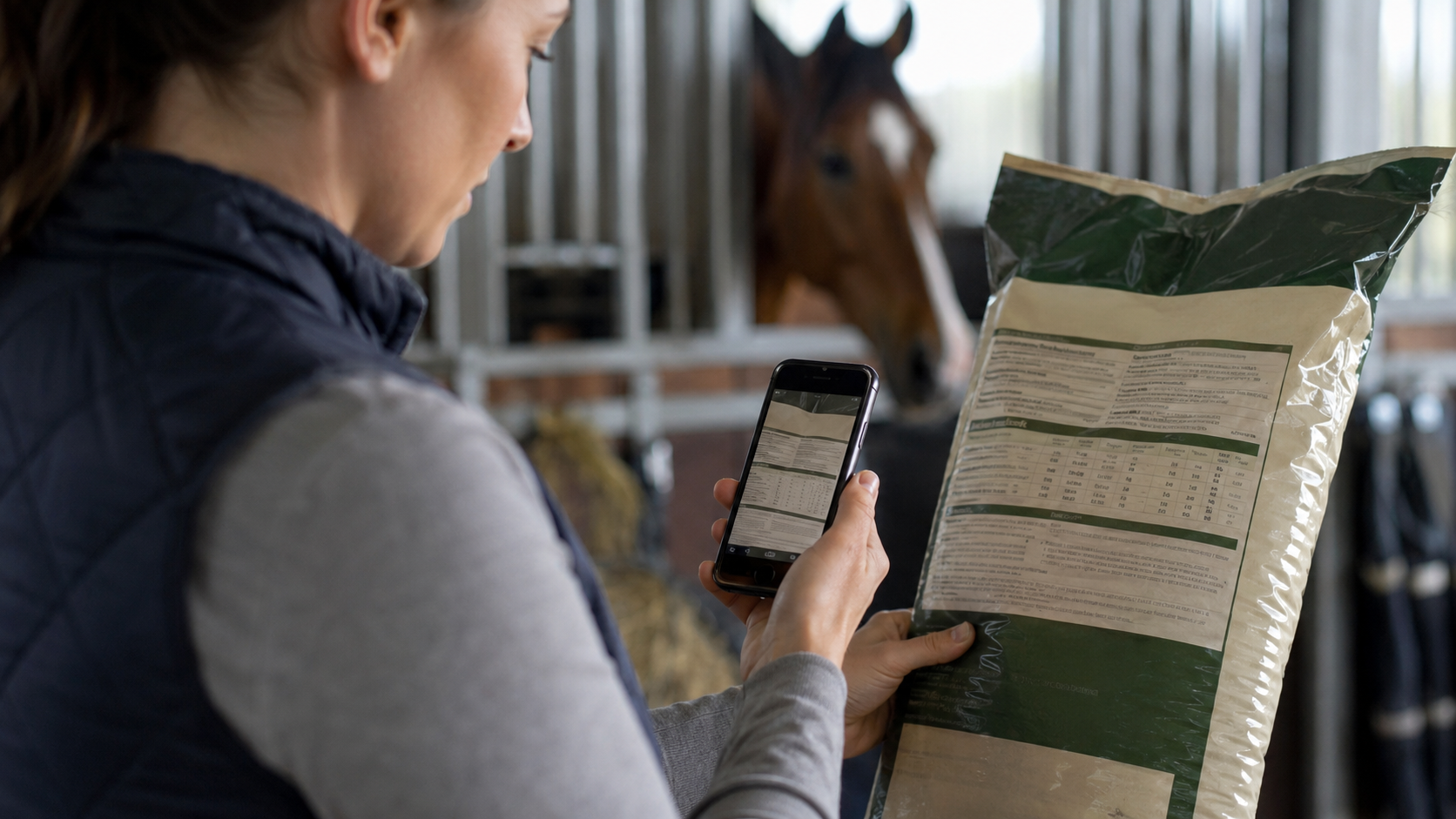
With Equio, every feed, supplement or treat is read against the horse's real profile (age, weight, Body Condition Score, conditions) — useful for a Bali Pony as soon as a metabolic or digestive sensitivity is known.

Health and points to watch
Regular monitoring of weight and body condition is essential to prevent obesity and associated risks. Hooves must be inspected frequently due to their intensive use on varied terrain. Particular attention should be paid to parasite management in its tropical environment.
- More frequent conditions: laminitis, Equine Metabolic Syndrome (EMS), age-related dental problems
Care and grooming
The Bali Pony's hooves are naturally hard and resilient, requiring regular trimming but often less intensive than other breeds. The short, fine coat does not require special care, and clipping is rarely necessary. The mane and tail are generally left natural, requiring occasional brushing.
Did you know?
- In Bali, these ponies are often decorated with flower garlands and colorful fabrics during traditional ceremonies.
- They are sometimes used in local pony races, which are very popular with children.
- Their small size and robustness make them ideal for transporting tourists on the island's steep paths.
The Bali Pony and how to track it
The Bali Pony is very rare in France and is not bred there. A few individuals may exist privately, imported for their uniqueness or hardiness, but there is no significant population or organized breeding.
Equio lets you build a complete profile for a Bali Pony: identity, weight, Body Condition Score, feeding, conditions, care reminders (vaccines, worming, trimming) and an exportable health log. The breed sets the identity; everyday decisions still depend on the real horse and your vet's advice.
- Record the activity level: rest, leisure, sport or breeding
- Add known conditions or sensitivities
- Scan feeds, plants and care products
- Keep reminders (vaccines, worming, trimming)
- Prepare a PDF export before a vet appointment
Frequently asked questions
Is the Bali Pony suitable for children?
Yes, thanks to its calm and docile temperament, the Bali Pony is generally very suitable for children. Its small size and robustness make it a safe mount for learning to ride and for pleasure rides.
What is the average lifespan of a Bali Pony?
The typical life expectancy of a Bali Pony is around 20 to 25 years, but with good care and an appropriate diet, some individuals can live longer.
Can the Bali Pony live outdoors all year round?
Yes, the Bali Pony is a hardy breed accustomed to tropical climates. It can live outdoors all year round, provided it has natural or artificial shelter to protect itself from inclement weather and intense sun.
Is it easy to find a Bali Pony outside Indonesia?
No, the Bali Pony is very difficult to find outside Indonesia. There is no significant breeding abroad, and imports are rare, making it a breed not widely spread internationally.
What are the main uses of the Bali Pony?
Historically and currently, the Bali Pony is primarily used for the transport of goods and people, light agricultural work, and recreational riding. It is also present in local traditions.