
Horse breed
Pampa Horse
The Pampa Horse is a Brazilian breed developed from crosses between Portuguese saddle horses (Mangalarga Marchador, Campolina) and imported pinto-patterned breeds. The goal was to create a versatile, comfortable saddle horse with colorful coat patterns.
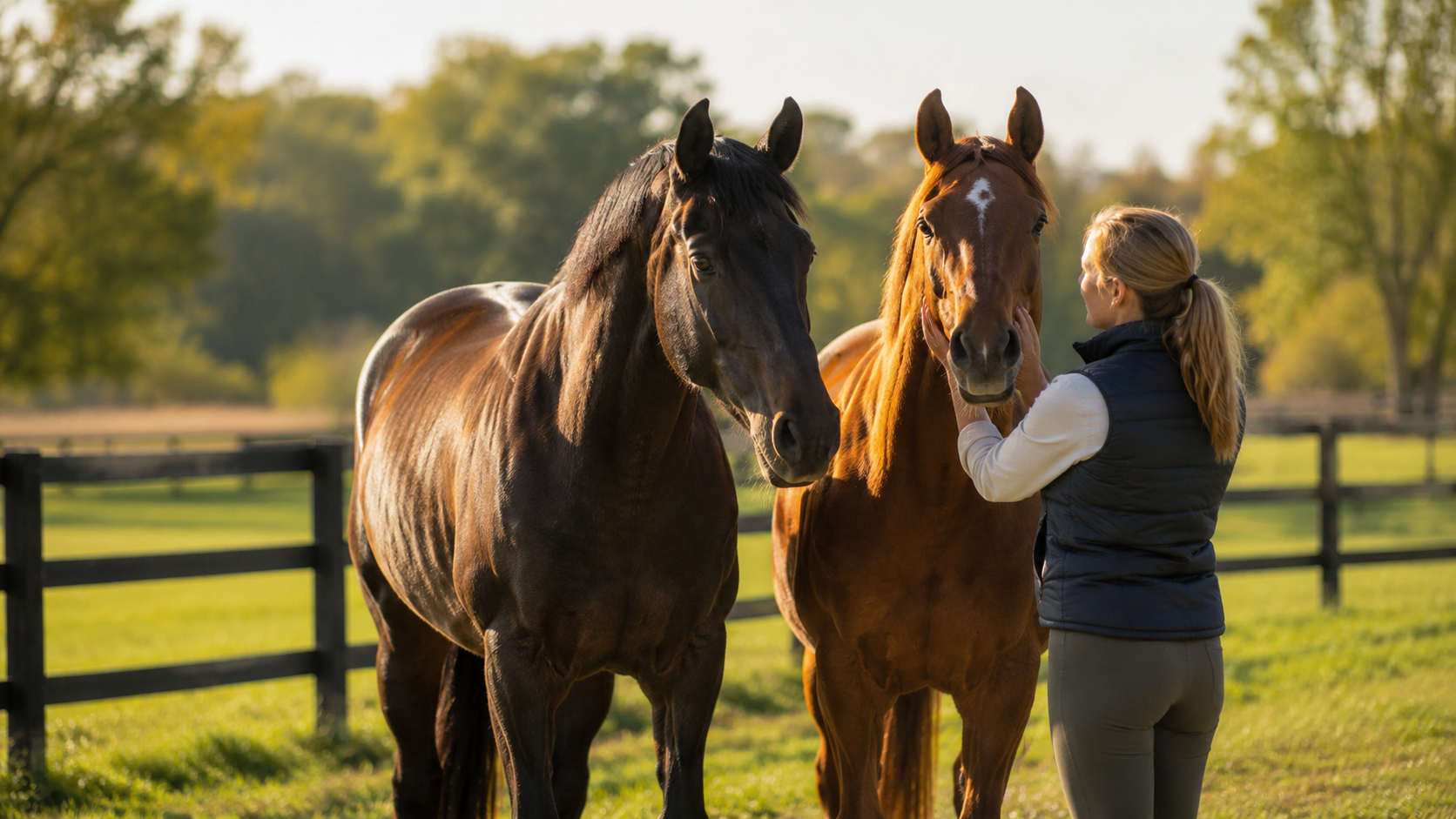
The breed at a glance
It is a horse with a gentle, intelligent, and cooperative temperament, which makes it an excellent partner for work and leisure. It is renowned for its docility and ease of learning, while being energetic and willing.
- Category
- saddle horse
- Origin
- Brazil · 20th century
- Height at withers
- 140–155 cm
- Weight
- 350–500 kg
- Lifespan
- 25-30 years
- Common coats
- pinto (tobiano, overo, sabino, splashed white), chestnut, bay, black, grey
- Disciplines
- working equitation, equestrian trail riding, dressage (amateur level), show jumping (amateur level)
- Other names
- Pampa
Origin and history
The Pampa Horse is a Brazilian breed developed from crosses between Portuguese saddle horses (Mangalarga Marchador, Campolina) and imported pinto-patterned breeds. The goal was to create a versatile, comfortable saddle horse with colorful coat patterns. The breed was officially recognized in Brazil in the 1990s, with a studbook dedicated to preserving its unique characteristics.

Conformation and physique
The Pampa Horse is a medium-sized, harmonious, and well-proportioned horse, with a solid bone structure without excessive heaviness. It presents an elegant and athletic silhouette, typical of a saddle horse.
The head is medium-sized, well-chiseled, with a straight or slightly convex profile. The eyes are expressive and the ears are medium-sized, well-set.
The neck is well-set, muscular, and arched, blending harmoniously into a well-defined and extended wither. It contributes to the horse's overall balance.
The back is short and strong, the topline is taut and muscular. The chest is broad and deep, and the croup is rounded and muscular, often slightly sloped.
The legs are strong, with well-defined joints and clean tendons. The cannon bones are of medium length and the feet are hard and well-formed. The feathers are generally sparse.
- Common coats: pinto (tobiano, overo, sabino, splashed white), chestnut, bay, black, grey
Temperament and aptitudes
It is a horse with a gentle, intelligent, and cooperative temperament, which makes it an excellent partner for work and leisure. It is renowned for its docility and ease of learning, while being energetic and willing.
The Pampa Horse is renowned for its comfortable and smooth gaits, particularly the walk and canter. Some individuals may exhibit additional gaits such as the 'marcha' (a four-beat gait typical of Brazilian breeds), although this is not a mandatory criterion for the Pampa breed.
- Uses: recreational riding, trail riding, cattle work, dressage, light show jumping, driving
- Disciplines: working equitation, equestrian trail riding, dressage (amateur level), show jumping (amateur level)
Feeding the Pampa Horse
The Pampa Horse generally has an efficient metabolism, capable of effectively utilizing forage. It is not particularly prone to being overweight if maintained at a regular activity level. A diet based on good quality forage (hay or grass) is essential. Concentrate requirements are moderate and should be adjusted according to work intensity, with particular attention to mineral and vitamin intake.
There are no documented predispositions to specific food sensitivities or major metabolic risks (such as EMS or PSSM) for the Pampa Horse breed. Balanced dietary management remains paramount for preventing common disorders like laminitis in any equine.
With Equio, every feed, supplement or treat is read against the horse's real profile (age, weight, Body Condition Score, conditions) — useful for a Pampa Horse as soon as a metabolic or digestive sensitivity is known.
Health and points to watch
Particular attention must be paid to limb conformation and hoof quality to prevent locomotor problems. Regular dental care and appropriate deworming are also essential for maintaining good general health.
- More frequent conditions: locomotor disorders related to intensive use (osteoarthritis, tendinitis) if poorly managed
Care and grooming
The maintenance of the Pampa Horse is relatively standard. Hooves require regular trimming adapted to their natural shape. The mane and tail can be thick and require regular detangling. The coat, often pinto, does not require specific care beyond usual grooming. Clipping is rarely necessary except for sport horses in intense work.
Did you know?
- The name 'Pampa' refers to the vast plains of South America, although the breed originates from Brazil and not the Argentinian or Uruguayan pampas.
- The pinto coat is an essential and sought-after characteristic of the breed, to the extent that non-pinto horses are generally not registered in the studbook.
- The Pampa Horse is valued for its versatility, being capable of adapting to various disciplines and rider types.
The Pampa Horse and how to track it
The Pampa Horse breed is very poorly represented in France; its breeding there is uncommon, and individuals present are generally imported for leisure riding or the appeal of their pinto coats.
Equio lets you build a complete profile for a Pampa Horse: identity, weight, Body Condition Score, feeding, conditions, care reminders (vaccines, worming, trimming) and an exportable health log. The breed sets the identity; everyday decisions still depend on the real horse and your vet's advice.
- Record the activity level: rest, leisure, sport or breeding
- Add known conditions or sensitivities
- Scan feeds, plants and care products
- Keep reminders (vaccines, worming, trimming)
- Prepare a PDF export before a vet appointment
Frequently asked questions
What is the main distinguishing feature of the Pampa Horse?
The main distinguishing feature of the Pampa Horse lies in its pinto coat, which is an essential characteristic and a selection criterion for the breed. It is also valued for its gentle temperament and comfortable gaits.
Is the Pampa Horse suitable for beginners?
Yes, thanks to its calm, intelligent, and cooperative temperament, the Pampa Horse is often considered an excellent mount for beginner riders or those seeking a reliable and safe horse.
Can one compete with a Pampa Horse?
The Pampa Horse is versatile and can participate in various equestrian disciplines, particularly in working equitation, trail riding, or amateur-level dressage and show jumping. Its versatility makes it a good leisure and light competition horse.
Where can one find a Pampa Horse in France?
The Pampa Horse is rare in France. It is unlikely to find them bred locally. Individuals present are generally imported from Brazil or other countries where the breed is more established. It is advised to contact Brazilian breed associations or specialized importers.
Does the Pampa Horse have special gaits?
Although the Pampa Horse breed is not defined by a mandatory special gait, some individuals, due to their origins (notably the Mangalarga Marchador), may exhibit four-beat gaits like the 'marcha', which is very comfortable for the rider.