
Horse breed
Misaki
The Misaki horse is an indigenous breed from Japan, descending from horses introduced to the country centuries ago. They have been raised in a semi-feral state on Cape Toi, in Miyazaki Prefecture, since at least 1697, when the Akizuki clan established a management system for these horses.
The breed at a glance
The Misaki is renowned for its calm, gentle, and resilient temperament. Accustomed to living in herds and in a semi-feral state, it is sociable and not easily frightened. It possesses a great capacity for adaptation and natural intelligence, making it easy to handle despite its hardy nature.
- Category
- hardy breed
- Origin
- Japan · 17th century
- Height at withers
- 125–135 cm
- Lifespan
- 25-30 years
- Common coats
- bay, chestnut, black
- Disciplines
- equestrian trail riding, recreational riding
- Other names
- Misaki Uma
Origin and history
The Misaki horse is an indigenous breed from Japan, descending from horses introduced to the country centuries ago. They have been raised in a semi-feral state on Cape Toi, in Miyazaki Prefecture, since at least 1697, when the Akizuki clan established a management system for these horses. The breed was designated a national natural monument in 1953, ensuring its protection and conservation. Today, they are one of eight recognized indigenous Japanese breeds.
Conformation and physique
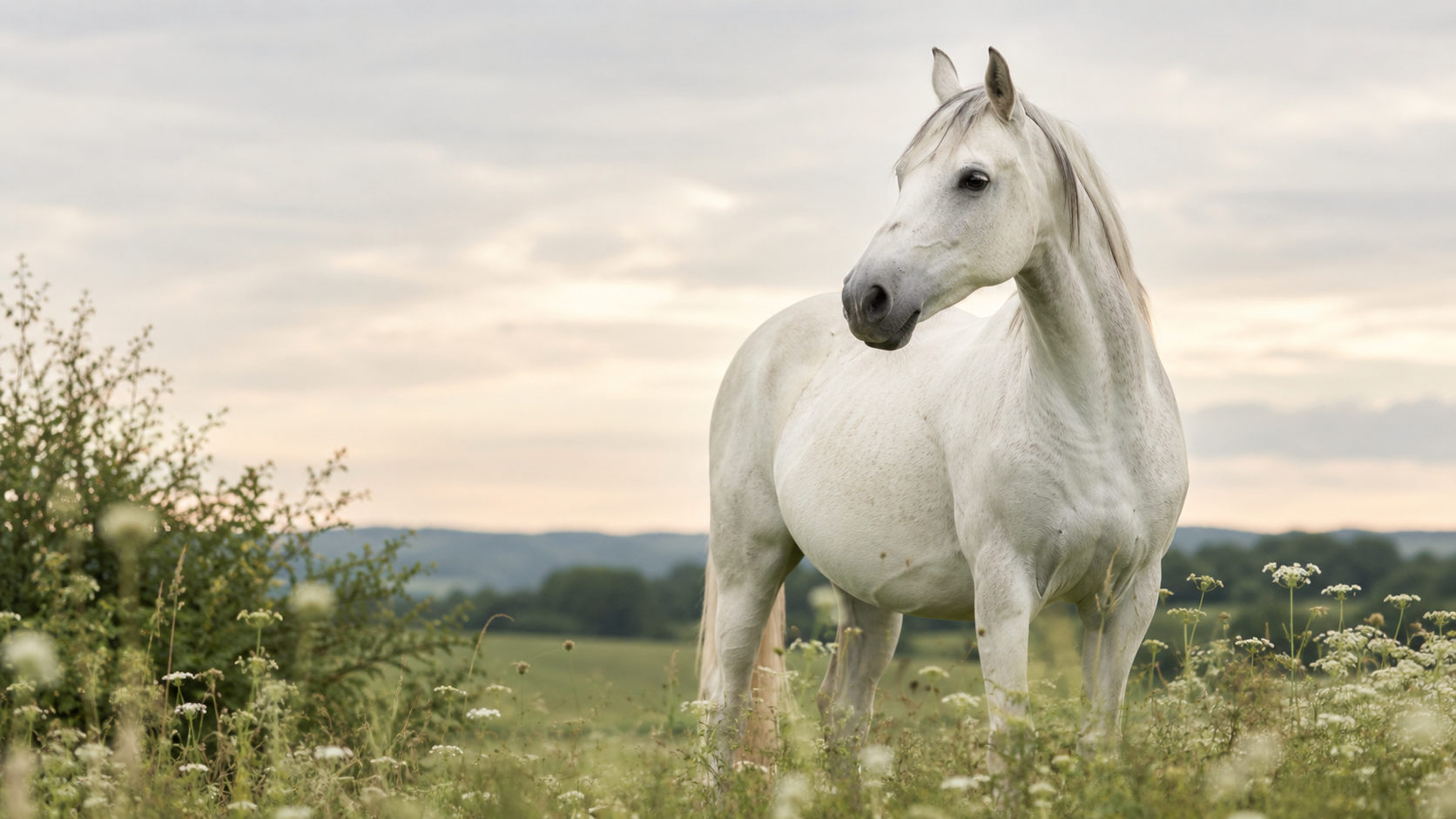
The Misaki is a small, pony-type horse, with a compact build and fine yet robust bone structure. It has a hardy silhouette, adapted to semi-feral life in a coastal environment. Its musculature is well-developed for its size.
The head is medium-sized, with a straight or slightly concave profile. The eyes are expressive, and the ears are small and well-set. The muzzle is rather short.
The neck is short and muscular, well-set into the body. The withers are not very pronounced, blending harmoniously into the topline.
The back is short and strong, and the topline is straight. The chest is deep, providing good respiratory capacity. The croup is slightly sloped and muscular.
The limbs are fine but strong, with well-defined joints and clean tendons. The hooves are small, hard, and resilient, adapted to varied terrain. Feathering is generally absent or very sparsely developed.
- Common coats: bay, chestnut, black
Temperament and aptitudes
The Misaki is renowned for its calm, gentle, and resilient temperament. Accustomed to living in herds and in a semi-feral state, it is sociable and not easily frightened. It possesses a great capacity for adaptation and natural intelligence, making it easy to handle despite its hardy nature.
The gaits are free, energetic, and sure-footed, with good agility. The walk is regular, the trot is supple, and the canter is balanced, reflecting their adaptation to life in the wild.
- Uses: historically used for light agricultural work and transport, today primarily for conservation and gentle equestrian tourism
- Disciplines: equestrian trail riding, recreational riding
Feeding the Misaki
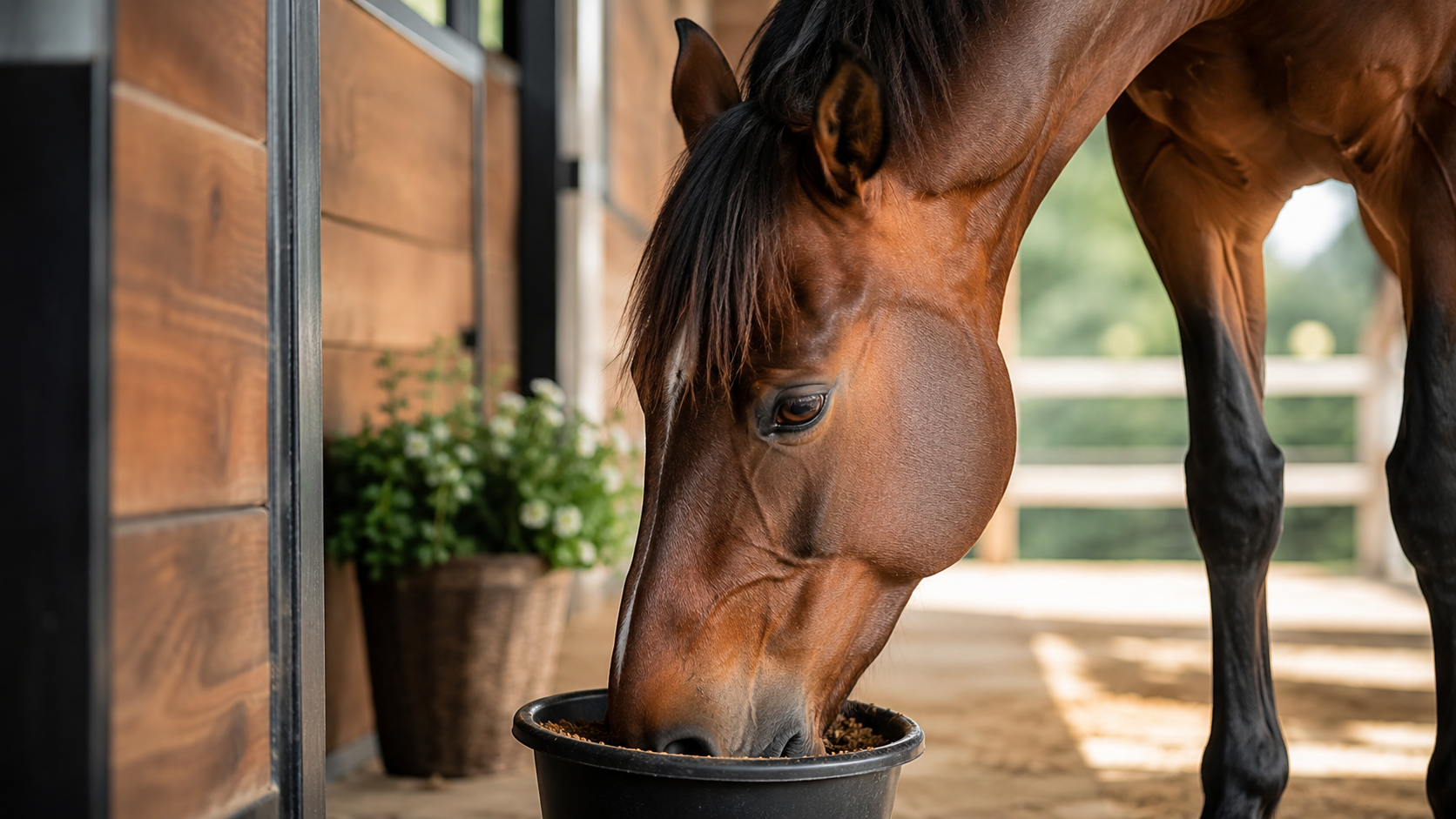
The Misaki is a very thrifty breed, accustomed to feeding on poor forage and surviving in difficult conditions. Its metabolism is adapted to a frugal diet, which makes it prone to obesity if caloric intake is too high. It primarily thrives on pasture and good quality hay. Concentrates are generally only necessary in cases of intense work or specific deficiencies, and should be introduced with caution.
Due to its thrifty metabolism, the Misaki can be predisposed to Equine Metabolic Syndrome (EMS) and laminitis if overfed or exposed to pastures too rich in sugars and starch. Careful dietary management is crucial to prevent these conditions.
With Equio, every feed, supplement or treat is read against the horse's real profile (age, weight, Body Condition Score, conditions) — useful for a Misaki as soon as a metabolic or digestive sensitivity is known.

Health and points to watch
It is essential to carefully monitor the Misaki's weight and adapt its diet to prevent obesity and associated metabolic problems. Particular attention should be paid to hoof quality, which, although naturally resilient, can be susceptible to conditions related to humidity or inadequate trimming.
- More frequent conditions: laminitis, Equine Metabolic Syndrome (EMS)
Care and grooming
Care for the Misaki is relatively simple due to its hardiness. The hooves, naturally tough, require regular trimming but can often go unshod. The mane and tail are thick and can be left natural or maintained to prevent tangles. Its dense coat protects it from the elements and does not require clipping, except for medical reasons. Regular skin monitoring is recommended, especially in humid environments.
Did you know?
- Misaki horses live in a semi-feral state on Cape Toi, in Miyazaki Prefecture, where they are managed by Cape Toi staff but retain wild behavior.
- They are considered a living national treasure in Japan and are a symbol of the Miyazaki region.
- Their population has remained relatively stable thanks to conservation efforts, but they remain an endangered breed due to their low numbers and limited range.
The Misaki and how to track it
The Misaki breed is extremely rare outside of Japan and is not bred in France. Its global population is very limited, and it is primarily conserved in its natural habitat in Japan.
Equio lets you build a complete profile for a Misaki: identity, weight, Body Condition Score, feeding, conditions, care reminders (vaccines, worming, trimming) and an exportable health log. The breed sets the identity; everyday decisions still depend on the real horse and your vet's advice.
- Record the activity level: rest, leisure, sport or breeding
- Add known conditions or sensitivities
- Scan feeds, plants and care products
- Keep reminders (vaccines, worming, trimming)
- Prepare a PDF export before a vet appointment
Frequently asked questions
Where can Misaki horses be seen?
Misaki horses primarily live on Cape Toi (Cap Toi Misaki) in Miyazaki Prefecture, southern Japan. It is the only place where they can be observed in their natural, semi-feral environment.
Is the Misaki horse a pony?
Yes, with an average height of 125 to 135 cm at the withers, the Misaki is classified as a pony. However, it is often referred to as a 'horse' due to its ancestry and general characteristics.
What is unique about the Misaki?
The Misaki's uniqueness lies in its centuries-long semi-feral lifestyle on Cape Toi, which has allowed it to retain genetic and behavioral traits very close to its wild ancestors. It is a hardy, resilient breed and a living natural monument of Japan.
Can a Misaki horse be purchased outside of Japan?
It is extremely difficult, if not impossible, to acquire a Misaki horse outside of Japan. The breed is protected as a national natural monument, and its population is strictly managed for conservation, limiting any export.
Is the Misaki suitable for children?
Thanks to its calm and gentle temperament, the Misaki can be an excellent companion for children, especially for recreational riding and trekking, provided it is well-trained and handled. Its small size is also an advantage.