
Horse breed
Karachai
The Karachai horse originates from the Caucasus Mountains, developed by the Karachai people. It resulted from crosses between local horses and Oriental horses, particularly Persian and Turkmen, adapted to difficult terrain.

The breed at a glance
The Karachai is renowned for its calm, courageous, and docile temperament. It is intelligent, easy to train, and very enduring, making it an excellent companion for work and trekking.
- Category
- hardy breed
- Origin
- Russia (North Caucasus, Karachay-Cherkessia) · 17th century
- Height at withers
- 145–155 cm
- Weight
- 400–500 kg
- Lifespan
- 25-30 years
- Common coats
- black, bay, chestnut
- Disciplines
- equestrian trail riding, endurance riding, working equitation
- Other names
- Karachayev, Karachay Horse
Origin and history
The Karachai horse originates from the Caucasus Mountains, developed by the Karachai people. It resulted from crosses between local horses and Oriental horses, particularly Persian and Turkmen, adapted to difficult terrain. The breed was officially recognized in 1935 but then suffered significant setbacks during World War II and the deportation of the Karachai people. It has since been reconstituted and is now valued for its qualities as a mountain horse.
Conformation and physique
It is a medium-sized horse, compact and muscular, with strong bone. Its build is typical of mountain horses, robust and enduring.
The head is medium-sized, with a straight or slightly convex profile. The eyes are expressive and the ears are medium-sized and well-set.
The neck is medium-length, muscular, and well-set, blending harmoniously into a well-defined and muscular wither.
The back is short and strong, the topline is straight and solid. The chest is broad and deep, and the croup is muscular, often slightly sloped.
The limbs are clean, strong, and well-muscled, with solid joints and well-defined tendons. The hooves are hard and resilient, often without feathering or with very light feathering.
- Common coats: black, bay, chestnut
Temperament and aptitudes
The Karachai is renowned for its calm, courageous, and docile temperament. It is intelligent, easy to train, and very enduring, making it an excellent companion for work and trekking.
The gaits are energetic, sure-footed, and regular, with excellent aptitude for travel in mountainous terrain. The walk is ample, the trot supple, and the canter balanced.
- Uses: saddle horse, pack horse, light draft horse, equestrian trail riding, mountain livestock farming
- Disciplines: equestrian trail riding, endurance riding, working equitation
Feeding the Karachai
The Karachai is a hardy horse with an efficient metabolism, adapted to harsh living conditions and poor pastures. It tends to utilize its feed well and can easily become overweight if its energy intake is too high. A diet based on good quality forage is generally sufficient, with concentrates only needed for intense work or specific requirements.
Due to its efficient metabolism, the Karachai can be predisposed to laminitis and Equine Metabolic Syndrome (EMS) if overfed or if it has unlimited access to rich pastures. It is important to monitor its weight and adapt its diet to prevent these risks.
With Equio, every feed, supplement or treat is read against the horse's real profile (age, weight, Body Condition Score, conditions) — useful for a Karachai as soon as a metabolic or digestive sensitivity is known.

Health and points to watch
The breed's hardiness limits specific health problems. It is advisable to monitor hoof condition, especially if subjected to abrasive terrain, and to maintain a regular deworming and vaccination program. Particular attention should be paid to weight management to prevent metabolic disorders.
- More frequent conditions: age-related locomotor disorders (osteoarthritis)
Care and grooming
The Karachai's hooves are naturally hard and resilient, requiring regular trimming but often less intensive than other breeds. The mane and tail are generally thick and may require regular detangling. The coat is dense and does not require special care, apart from regular brushing to remove dead hair.
Did you know?
- The Karachai is often used by Russian border guards for its robustness and its ability to operate in mountainous terrain.
- It is renowned for its ability to cross rivers and torrents with ease.
- The breed almost disappeared after the deportation of the Karachai people in 1943 but was saved thanks to the efforts of a few dedicated breeders.
The Karachai and how to track it
The Karachai breed is very rare in France, with an almost non-existent population. There is no structured breeding or significant use of this breed on French territory.
Equio lets you build a complete profile for a Karachai: identity, weight, Body Condition Score, feeding, conditions, care reminders (vaccines, worming, trimming) and an exportable health log. The breed sets the identity; everyday decisions still depend on the real horse and your vet's advice.
- Record the activity level: rest, leisure, sport or breeding
- Add known conditions or sensitivities
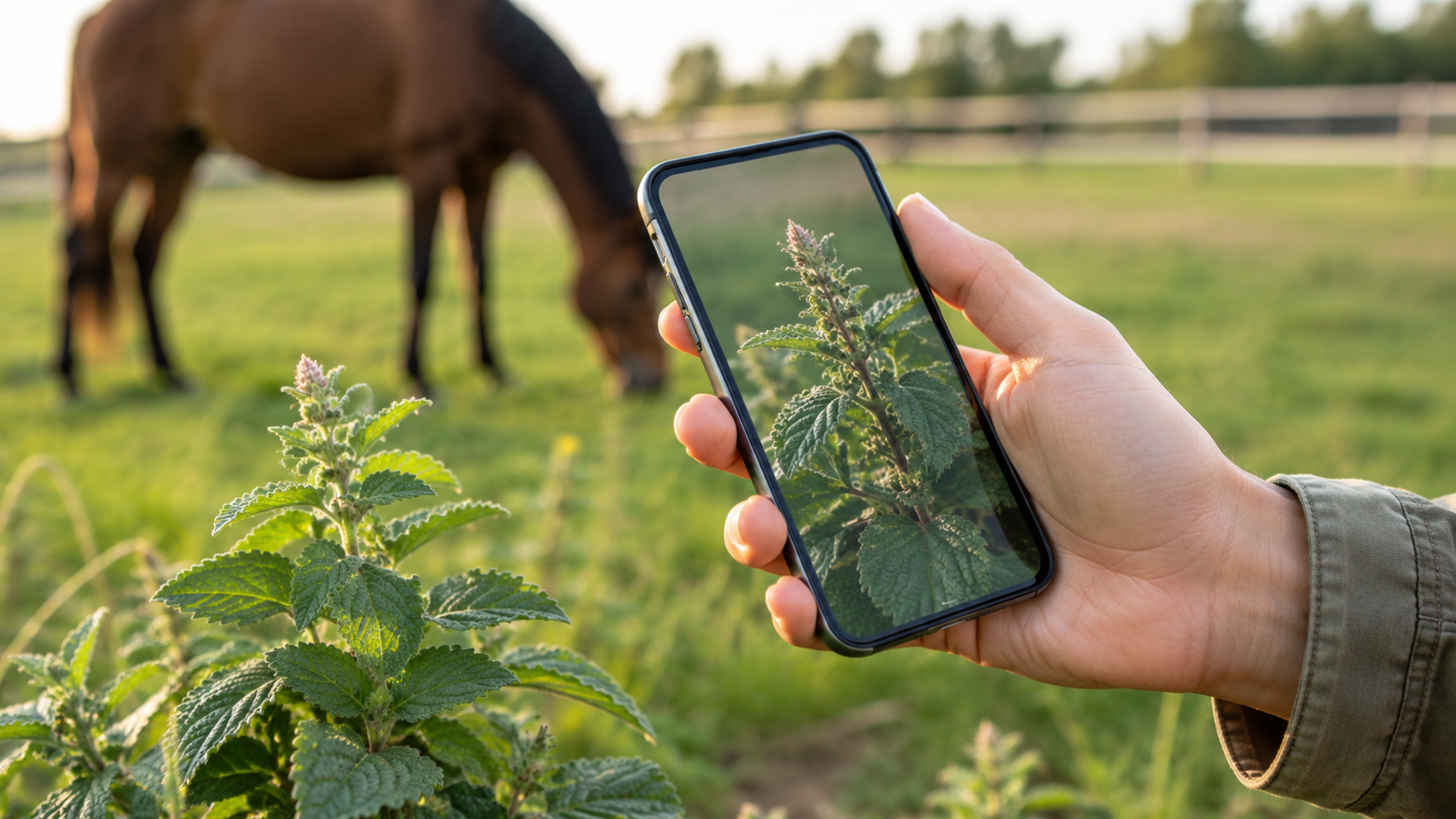
- Scan feeds, plants and care products
- Keep reminders (vaccines, worming, trimming)
- Prepare a PDF export before a vet appointment
Frequently asked questions
Is the Karachai a good horse for beginners?
Yes, thanks to its calm and docile temperament, the Karachai can be an excellent horse for beginner riders or those seeking a reliable and safe mount, especially for trekking.
What is the main quality of the Karachai horse?
Its main quality is its exceptional robustness and endurance in difficult terrain. It is a quintessential mountain horse, sure-footed and very resistant to harsh weather and prolonged exertion.
Is the Karachai adapted to cold climates?
Absolutely. Originating from the Caucasus Mountains, the Karachai is perfectly adapted to cold and harsh climates. Its dense coat offers excellent protection against cold and humidity.
Can Karachai horses be found outside Russia?
Although primarily bred in Russia, a few individuals can be found in other countries, often imported by enthusiasts. However, the breed remains rare outside its region of origin.
Is the Karachai a threatened breed?
After being threatened in the past, the Karachai population is now stable and subject to conservation programs in Russia, although it is not widely spread globally.