
Horse breed
Hackney Horse
The Hackney Horse resulted from crosses between Norfolk Trotter stallions and Thoroughbred mares in the 18th century, with the aim of creating a fast and elegant carriage horse. The breed was officially recognized with the establishment of the Hackney Horse Society in 1883.

The breed at a glance
The Hackney is an intelligent, courageous, and energetic horse, with a willing and sometimes spirited temperament. It is renowned for its great stamina and ability to concentrate on work but requires an experienced rider and firm yet fair training.
- Category
- sport horse
- Origin
- United Kingdom · 18th century (established in the 19th century)
- Height at withers
- 142–165 cm
- Weight
- 450–550 kg
- Lifespan
- 20-25 years
- Common coats
- bay, chestnut, black, grey
- Disciplines
- Driving (single, pair, four-in-hand), Dressage (for its gaits)
- Other names
- Hackney
Origin and history
The Hackney Horse resulted from crosses between Norfolk Trotter stallions and Thoroughbred mares in the 18th century, with the aim of creating a fast and elegant carriage horse. The breed was officially recognized with the establishment of the Hackney Horse Society in 1883. It played a crucial role in the development of carriage and sport horses, particularly for its high-stepping gaits. Its studbook is one of the oldest and most stringent.
Conformation and physique
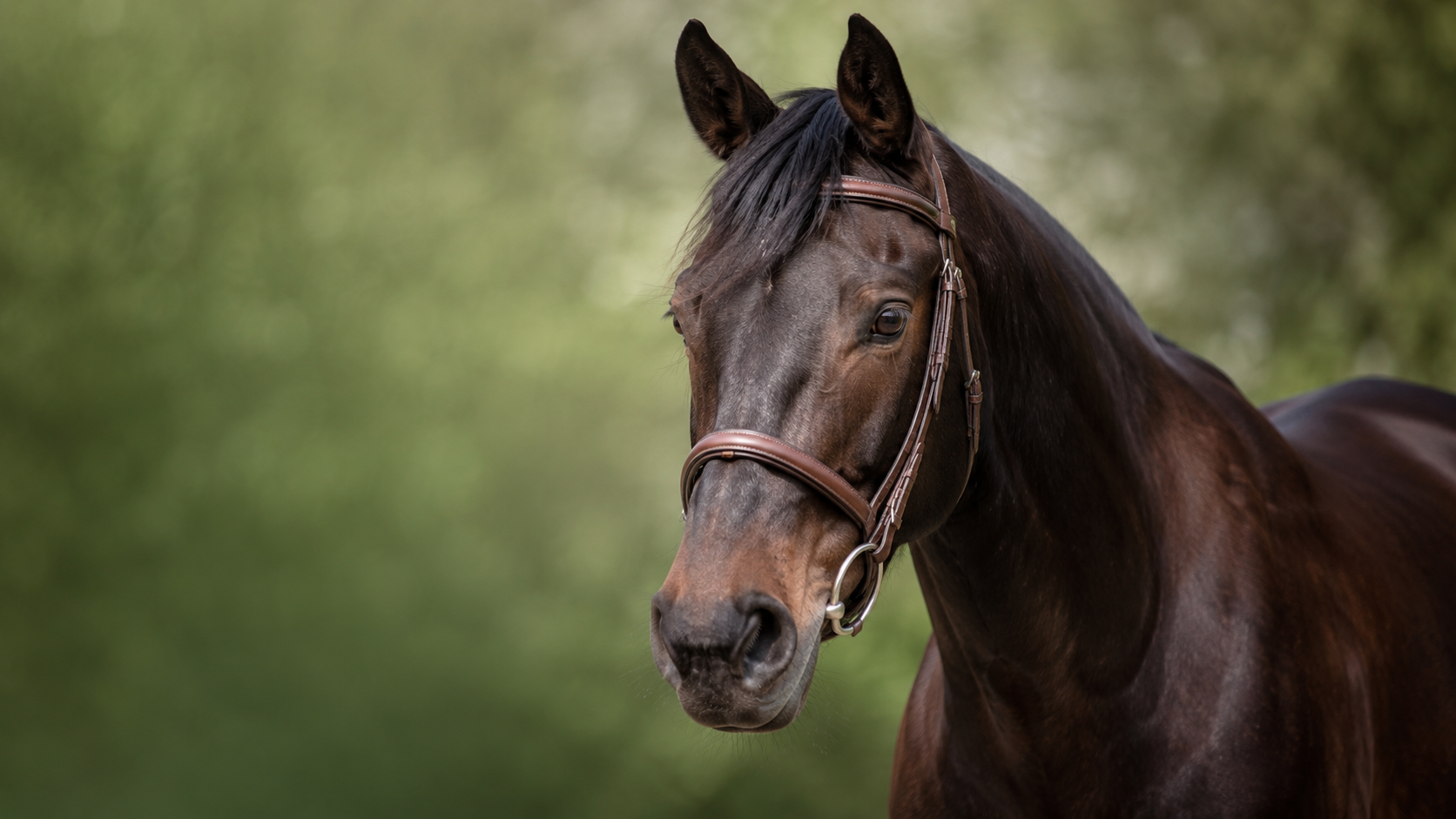
The Hackney Horse is an elegant, compact, and powerful horse, with a square build and a strong yet refined bone structure. It is renowned for its proud carriage and noble appearance, typical of high-level carriage horses.
The head is small, well-chiseled, with a straight or slightly concave profile. The eyes are large and expressive, the ears small and well-placed, and the nostrils wide.
The neck is long, muscular, and arched, set high, blending harmoniously into a well-defined and prominent wither, contributing to its elevated carriage.
The back is short and strong, the topline taut. The chest is deep and wide, the ribs well-sprung. The croup is muscular, slightly sloped, with a high-set tail.
The limbs are clean, muscular, and have large, strong joints. The cannons are short, the pasterns of medium length. The feet are round and hard. Feathering is generally sparse.
- Common coats: bay, chestnut, black, grey
Temperament and aptitudes
The Hackney is an intelligent, courageous, and energetic horse, with a willing and sometimes spirited temperament. It is renowned for its great stamina and ability to concentrate on work but requires an experienced rider and firm yet fair training.
The gaits are the most distinctive characteristic of the Hackney, particularly the trot, which is very high-stepping, energetic, and spectacular, with high knee and hock action. The walk and canter are also expansive and supple.
- Uses: Competitive driving, Leisure driving, Riding horse (rarer), Equestrian Show
- Disciplines: Driving (single, pair, four-in-hand), Dressage (for its gaits)
Feeding the Hackney Horse
The Hackney Horse is an athlete that, despite its compact appearance, has significant energy requirements during periods of intense work. It is not particularly prone to obesity if worked regularly. A balanced diet, rich in good quality forage (ad libitum hay) and supplemented with concentrates appropriate for its activity level, is essential to maintain its physical condition and energy. Protein and mineral intake should be monitored.
The Hackney Horse breed is not documented as having particular predispositions to specific dietary sensitivities such as laminitis or EMS, unlike some hardier breeds. However, like any sport horse, a diet too rich in sugars and starch without sufficient exercise can lead to metabolic or digestive disorders.
With Equio, every feed, supplement or treat is read against the horse's real profile (age, weight, Body Condition Score, conditions) — useful for a Hackney Horse as soon as a metabolic or digestive sensitivity is known.

Health and points to watch
Particular attention must be paid to hoof care and joint monitoring, especially the hocks and knees, due to the very high-stepping action of its gaits. Regular veterinary check-ups and appropriate shoeing are crucial to prevent locomotor problems.
- More frequent conditions: Joint problems (due to the high-stepping action of its gaits if poorly managed), Tendinitis (related to the intensity of driving work)
Care and grooming
The Hackney's hooves require regular trimming and often specific shoeing to support its gaits and prevent excessive wear. The mane and tail are generally left long and full, requiring regular brushing. The coat is easy to maintain, but clipping may be necessary for competition horses in winter. Good general hygiene is essential to maintain skin health.
Did you know?
- The Hackney is one of the few breeds whose name is directly linked to a type of gait: the term 'hack' formerly referred to a riding horse or light harness horse.
- Hackney Ponies, a smaller version of the breed, are also very popular and share the same spectacular gait characteristics.
- The Hackney has been exported worldwide and has influenced many other driving breeds.
The Hackney Horse and how to track it
The Hackney Horse population in France is relatively small, but the breed is appreciated by enthusiasts of competitive and show driving. A few specialized breeders maintain the breed, primarily for sport driving.
Equio lets you build a complete profile for a Hackney Horse: identity, weight, Body Condition Score, feeding, conditions, care reminders (vaccines, worming, trimming) and an exportable health log. The breed sets the identity; everyday decisions still depend on the real horse and your vet's advice.
- Record the activity level: rest, leisure, sport or breeding
- Add known conditions or sensitivities
- Scan feeds, plants and care products
- Keep reminders (vaccines, worming, trimming)
- Prepare a PDF export before a vet appointment
Frequently asked questions
Is the Hackney Horse suitable for beginners?
No, due to its energetic temperament and sensitivity, the Hackney Horse is generally recommended for experienced riders or drivers. It requires a soft but firm hand and a good understanding of its willing nature.
What is the primary use of the Hackney Horse today?
Its primary use is competitive driving, where its spectacular action and elegance are highly sought after. It excels in presentation and handling classes.
Can the Hackney Horse be ridden?
Yes, although less common, the Hackney Horse can be ridden. It is capable of dressage and can be an excellent riding horse for an experienced rider who appreciates its energy and elevated action.
How to maintain the Hackney's elevated action?
Maintaining the Hackney's elevated action involves specific and regular driving training, often with light shoeing weights to enhance the action. Appropriate shoeing and muscle strengthening exercises are also essential.
Is the Hackney Horse a rare breed?
While not classified as 'critically endangered', the Hackney Horse population is relatively small compared to other more popular breeds. It is a niche breed, appreciated by a circle of connoisseurs and driving enthusiasts.