
Horse breed
Gelderland
The Gelderland is an old breed from the Netherlands, developed in the 19th century in the province of Gelderland. It resulted from crosses between local mares and imported stallions (Oldenburg, Norfolk Roadster, Hackney, Thoroughbred, Anglo-Norman).

The breed at a glance
The Gelderland is renowned for its calm, willing, and cooperative temperament. It is an intelligent horse, easy to train, and eager to please, making it an excellent partner for various disciplines.
- Category
- saddle horse
- Origin
- Netherlands · 19th century
- Height at withers
- 155–165 cm
- Weight
- 500–650 kg
- Lifespan
- 25-30 years
- Common coats
- chestnut, bay, black, grey
- Disciplines
- driving, dressage, show jumping (historically), recreational riding
- Other names
- Gelders Paard, Gelderlander
Origin and history
The Gelderland is an old breed from the Netherlands, developed in the 19th century in the province of Gelderland. It resulted from crosses between local mares and imported stallions (Oldenburg, Norfolk Roadster, Hackney, Thoroughbred, Anglo-Norman). Initially used as a versatile carriage and farm horse, it was officially recognized and its studbook established to preserve its qualities. It played a fundamental role in the development of the Dutch sport horse (KWPN).
Conformation and physique
It is a medium to large saddle horse with an elegant yet robust build, possessing good bone structure and well-developed musculature. It presents a noble appearance and a proud carriage.
The head is expressive, medium-sized, with a straight or slightly convex profile (Roman nose). The eyes are large and lively, the ears well-set and mobile.
The neck is long, well-muscled, and arched, set high, blending harmoniously into a well-defined and extended wither.
The back is strong and short, the topline is solid. The chest is deep and wide, the ribs well-sprung. The croup is powerful, often slightly sloped and well-muscled, with a high-set tail.
The limbs are strong, with large and well-defined joints. The cannons are short and strong, the pasterns of medium length. The feet are well-formed and resilient. Feathers are generally sparse.
- Common coats: chestnut, bay, black, grey
Temperament and aptitudes
The Gelderland is renowned for its calm, willing, and cooperative temperament. It is an intelligent horse, easy to train, and eager to please, making it an excellent partner for various disciplines.
The gaits are expansive, energetic, and elevated, with good impulsion. The trot is particularly expressive, with high action and good engagement of the hindquarters, a legacy of its past as a carriage horse.
- Uses: carriage horse, versatile farm horse, saddle horse, sport horse (dressage, driving), leisure horse
- Disciplines: driving, dressage, show jumping (historically), recreational riding
Feeding the Gelderland
The Gelderland is a horse of robust constitution, generally an efficient metabolizer. It requires a balanced diet, primarily based on good quality forage (hay, grass). Concentrates should be adjusted according to its activity level to prevent obesity, especially if it is lightly worked. Particular attention should be paid to mineral and vitamin intake.
Although robust, like any horse, it can be prone to laminitis in cases of overfeeding or an unsuitable diet. There is no documented predisposition to specific metabolic syndromes (EMS, PSSM) for the Gelderland breed as such, but careful management of sugar and starch intake is always recommended.
With Equio, every feed, supplement or treat is read against the horse's real profile (age, weight, Body Condition Score, conditions) — useful for a Gelderland as soon as a metabolic or digestive sensitivity is known.

Health and points to watch
Regular monitoring of joints is advised, especially for older horses or those with an intense sports career. Hoof care is crucial to prevent foot ailments. Annual veterinary check-ups and good parasite management are essential.
- More frequent conditions: osteoarthritis (related to age or joint wear and tear), dental problems (requiring regular checks)
Care and grooming
Care is typical for a saddle horse. Regular hoof trimming is essential to maintain their integrity. The mane and tail, often thick, require regular detangling. The coat is easy to maintain; daily brushing is sufficient. Clipping may be necessary in winter if the horse works intensely.
Did you know?
- The Gelderland is one of the founding breeds of the KWPN (Koninklijk Warmbloed Paard Nederland), the Dutch sport horse studbook, which is today one of the most renowned in the world.
- Historically, the Gelderland was a 'luxury' horse for affluent farmers, capable of working in the fields during the week and pulling the family carriage on Sundays.
- Despite its crucial role in the history of Dutch horse breeding, the purebred Gelderland is now considered rare and is the subject of conservation efforts.
The Gelderland and how to track it
The Gelderland breed is poorly represented in France as a pure breed, but its genetic influence is present through the KWPN. Some passionate breeders may maintain pure lines for driving or leisure.
Equio lets you build a complete profile for a Gelderland: identity, weight, Body Condition Score, feeding, conditions, care reminders (vaccines, worming, trimming) and an exportable health log. The breed sets the identity; everyday decisions still depend on the real horse and your vet's advice.
- Record the activity level: rest, leisure, sport or breeding
- Add known conditions or sensitivities
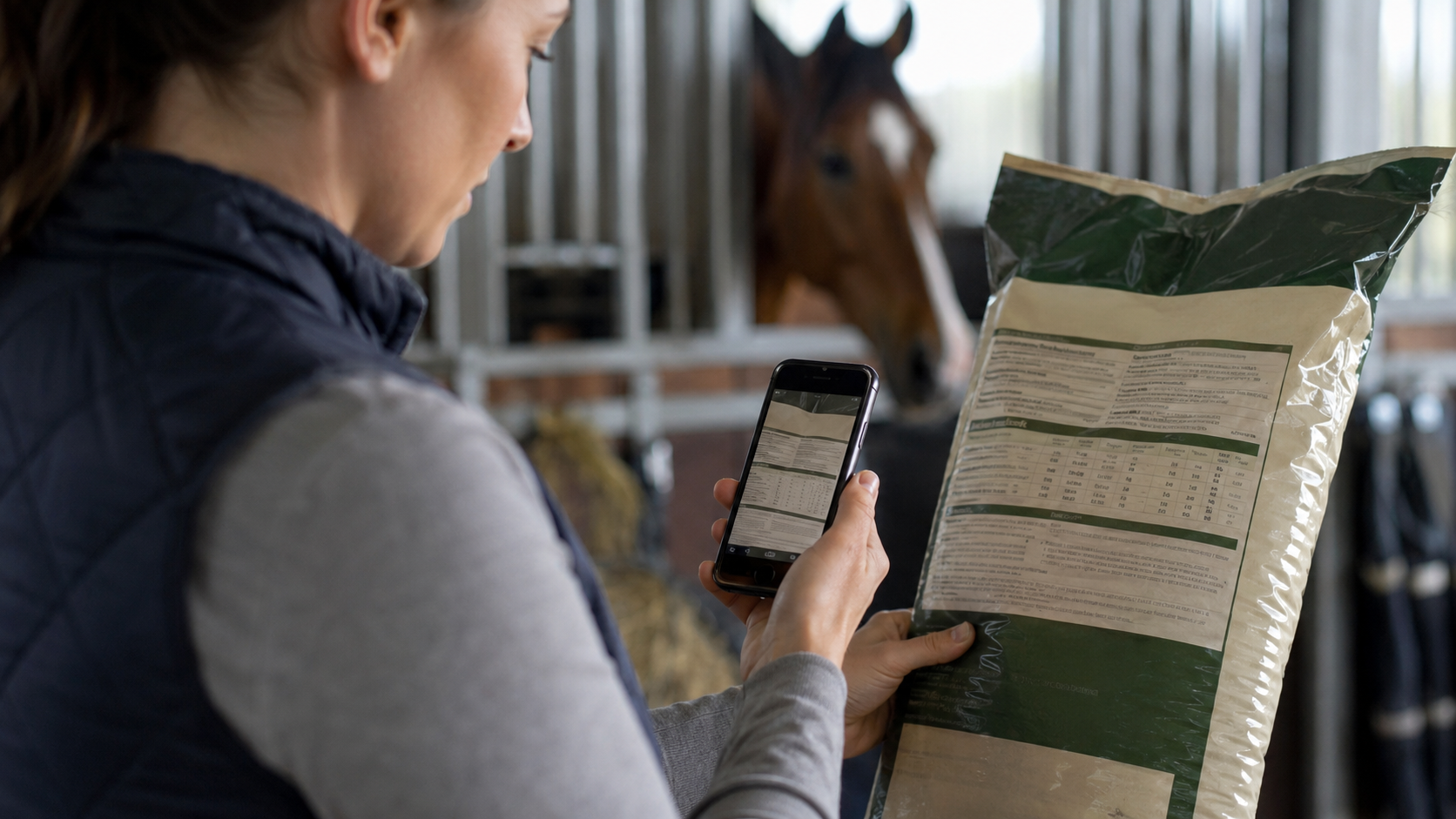
- Scan feeds, plants and care products
- Keep reminders (vaccines, worming, trimming)
- Prepare a PDF export before a vet appointment
Frequently asked questions
What is the difference between a Gelderland and a KWPN?
The Gelderland is a founding breed of the KWPN. The modern KWPN is a sport horse selected for its performance in dressage and show jumping, while the Gelderland is the original, older lineage, with a heavier build and more elevated gaits, historically oriented towards driving and agricultural work.
Is the Gelderland a good horse for driving?
Yes, absolutely. The Gelderland is historically an excellent driving horse, renowned for its elevated gaits, elegant carriage, strength, and calm, willing temperament, making it an ideal partner for this discipline.
Is the Gelderland suitable for beginners?
Thanks to its calm, cooperative temperament and willingness to please, the Gelderland can be a good choice for beginner or intermediate riders, provided they are supervised and the horse has been well-trained.
Where to find a Gelderland in France?
Purebred Gelderlanders are rare in France. It is more likely to find them through specialized breeders in the Netherlands or by contacting breed associations. A few enthusiasts may breed them in France, often for driving or leisure.
What is the price of a Gelderland horse?
The price of a Gelderland can vary considerably depending on its age, training level, lineage, and rarity. As a less common breed, prices can be higher for quality individuals, ranging from a few thousand to over ten thousand euros.