
Horse breed
Yonaguni Horse
The Yonaguni Horse is an indigenous Japanese breed, originating from Yonaguni Island, the westernmost of the Ryūkyū Islands. Its history dates back thousands of years, likely descending from horses imported from China or Korea.

The breed at a glance
The Yonaguni Horse is renowned for its calm, gentle, and docile temperament. It is intelligent, easy to handle, and very hardy. Its placid nature makes it an excellent companion, even for children.
- Category
- hardy breed
- Origin
- Japan · Antiquity
- Height at withers
- 110–120 cm
- Lifespan
- 25-30 years
- Common coats
- bay, chestnut, black
- Disciplines
- recreational riding, trail riding
- Other names
- Yonaguni Uma
Origin and history
The Yonaguni Horse is an indigenous Japanese breed, originating from Yonaguni Island, the westernmost of the Ryūkyū Islands. Its history dates back thousands of years, likely descending from horses imported from China or Korea. The breed was isolated on the island, which helped preserve its primitive characteristics. It was officially recognized as a natural monument of Okinawa Prefecture in 1978.
Conformation and physique
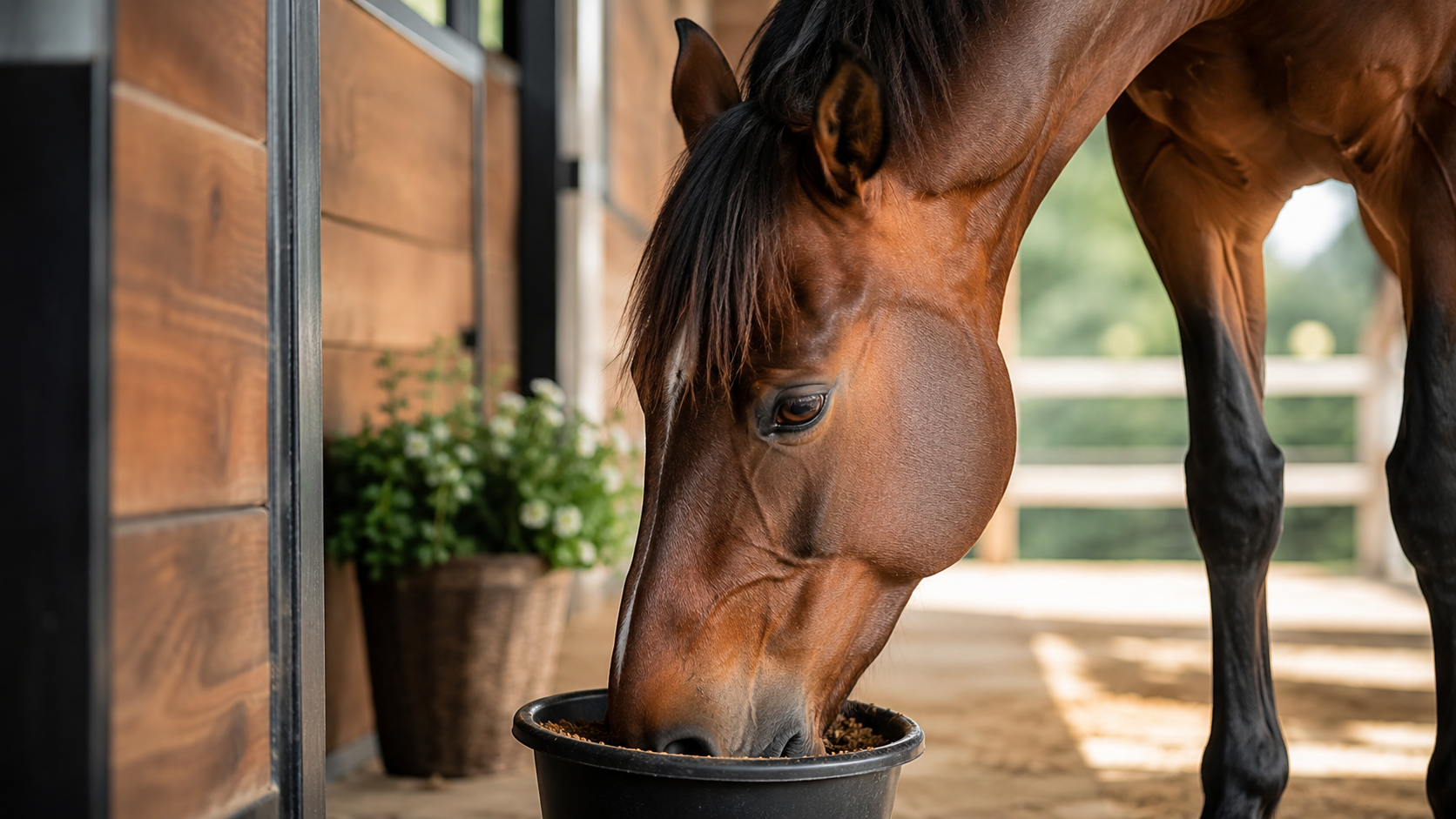
It is a small, pony-type horse, with a compact and robust build and strong bone structure. It has a hardy silhouette, adapted to its island environment. Its musculature is well-developed for its size.
The head is medium-sized, with a straight or slightly concave profile. The eyes are expressive, and the ears are small and well-set. The muzzle is broad.
The neck is short and thick, well-set, blending into a low-set wither. It is muscular, reflecting the breed's strength.
The back is short and straight, the topline is strong. The chest is deep and broad, providing good respiratory capacity. The croup is rounded and muscular.
The limbs are short, strong, and clean, with well-defined joints. The hooves are small, hard, and resilient, adapted to rocky terrain. Feathering is generally absent or very sparsely developed.
- Common coats: bay, chestnut, black
Temperament and aptitudes
The Yonaguni Horse is renowned for its calm, gentle, and docile temperament. It is intelligent, easy to handle, and very hardy. Its placid nature makes it an excellent companion, even for children.
The gaits are free-moving, short, and energetic, with good impulsion. The walk is sure-footed, and the trot is regular, reflecting its agility on difficult terrain.
- Uses: transport of goods, light agricultural work, recreational riding, equestrian tourism, genetic preservation
- Disciplines: recreational riding, trail riding
Feeding the Yonaguni Horse
The Yonaguni Horse is a very thrifty breed, accustomed to limited resources. Its metabolism is adapted to a poor diet, and it tends to become overweight if the intake is too rich. It primarily subsists on coarse forage such as grass and hay. Concentrates are generally not necessary, except in cases of intense work or specific needs, and should be introduced sparingly.
Due to its thrifty metabolism, the Yonaguni Horse can be predisposed to Equine Metabolic Syndrome (EMS) and laminitis if overfed or exposed to pastures too rich in sugars. Careful monitoring of its weight and diet is essential to prevent these conditions.
With Equio, every feed, supplement or treat is read against the horse's real profile (age, weight, Body Condition Score, conditions) — useful for a Yonaguni Horse as soon as a metabolic or digestive sensitivity is known.
Health and points to watch
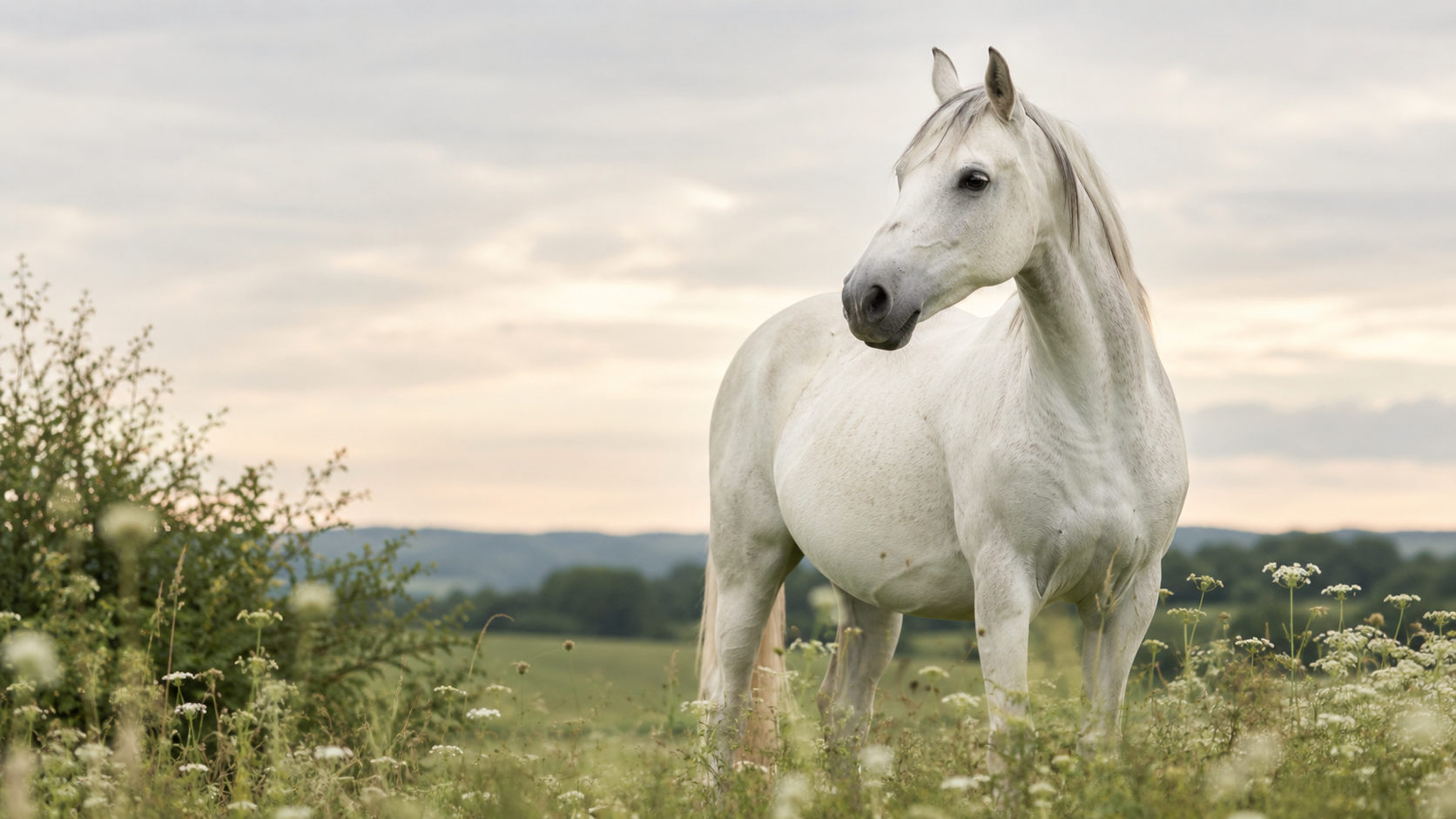
It is important to monitor its weight and adapt its diet to avoid obesity and associated metabolic problems. Particular attention must be paid to the condition of its hooves, which are naturally very resilient but require regular trimming to maintain their integrity.
- More frequent conditions: laminitis, Equine Metabolic Syndrome (EMS)
Care and grooming
The Yonaguni Horse's hooves are naturally hard and resilient, requiring regular but often less intensive trimming than other breeds. Its mane and tail are thick and may require occasional detangling. Its hardy coat does not require special care, and clipping is rarely necessary.
Did you know?
- The Yonaguni Horse is one of Japan's eight indigenous horse breeds, all considered national or regional treasures.
- It is often used for equestrian tourism on Yonaguni Island, offering rides along the coasts and through the local landscapes.
- The breed is endangered, with a very small population, and is the subject of dedicated conservation efforts.
The Yonaguni Horse and how to track it
The Yonaguni Horse is a very rare breed outside of Japan and is not bred in France. Its presence is anecdotal, limited to a few individuals imported for conservation or curiosity.
Equio lets you build a complete profile for a Yonaguni Horse: identity, weight, Body Condition Score, feeding, conditions, care reminders (vaccines, worming, trimming) and an exportable health log. The breed sets the identity; everyday decisions still depend on the real horse and your vet's advice.
- Record the activity level: rest, leisure, sport or breeding
- Add known conditions or sensitivities
- Scan feeds, plants and care products
- Keep reminders (vaccines, worming, trimming)
- Prepare a PDF export before a vet appointment
Frequently asked questions
Is the Yonaguni Horse suitable for children?
Yes, thanks to its calm, gentle, and docile temperament, the Yonaguni Horse is particularly suitable for children and beginner riders. Its small size and placid nature make it an excellent family pony.
What is the average size of a Yonaguni Horse?
The Yonaguni Horse is a small horse, generally measuring between 110 and 120 cm at the wither. It is classified as a pony due to its size.
Is the Yonaguni Horse an endangered breed?
Yes, the Yonaguni Horse is a rare and endangered breed. Conservation efforts are being implemented on Yonaguni Island to preserve this unique indigenous breed.
What type of diet is suitable for the Yonaguni Horse?
As a hardy and thrifty breed, the Yonaguni Horse feeds mainly on forage (grass, hay). It is important to monitor its caloric intake to prevent obesity and metabolic problems, as it is accustomed to sparse diets.
Can Yonaguni Horses be found outside Japan?
It is extremely rare to find Yonaguni Horses outside Yonaguni Island in Japan. The breed is primarily maintained on its island of origin and is not commercially exported.