
Horse breed
Spiti Horse
The Spiti Horse is an ancient breed originating from the Spiti Valley in Himachal Pradesh, India. It is the result of natural adaptation to extreme high-altitude conditions and has no documented foundational crossbreeding.
The breed at a glance
The Spiti Horse is renowned for its calm, docile, and courageous temperament. It is very hardy, enduring, and highly intelligent, making it an excellent, reliable, and self-assured working companion, even in difficult conditions.
- Category
- hardy breed
- Origin
- India · Ancient (several centuries old)
- Height at withers
- 120–130 cm
- Lifespan
- 20-25 years
- Common coats
- bay, chestnut, grey, black
- Disciplines
- equestrian trail riding, mountain trekking
- Other names
- Spiti Pony
Origin and history
The Spiti Horse is an ancient breed originating from the Spiti Valley in Himachal Pradesh, India. It is the result of natural adaptation to extreme high-altitude conditions and has no documented foundational crossbreeding. The breed is traditionally raised by local communities for transport and agricultural work. Its official recognition is primarily local and linked to its economic and cultural role in the region.
Conformation and physique
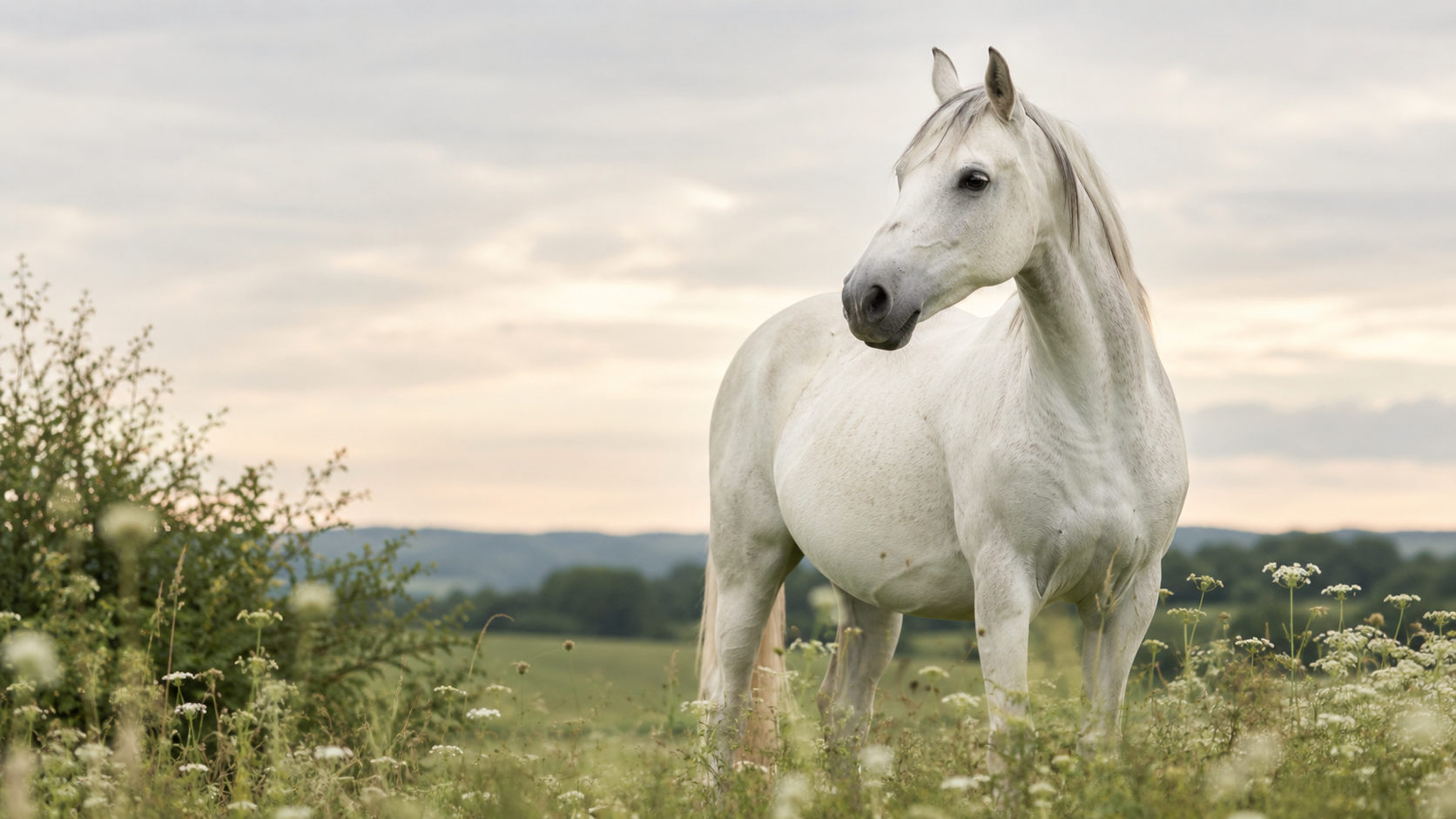
It is a small, compact, and robust pony, with a strong bone structure and well-developed musculature, adapted to mountainous terrain. It exhibits a typical silhouette of hardy mountain breeds.
The head is medium-sized, with a straight or slightly convex profile. The eyes are lively and expressive, and the ears are small and well-placed.
The neck is short, thick, and muscular, well-set into the withers. The withers are not very pronounced, blending smoothly into the topline.
The back is short and strong, and the topline is straight and solid. The chest is broad and deep, providing good respiratory capacity. The croup is muscular and slightly sloped.
The limbs are short, strong, and well-muscled, with robust joints and well-defined tendons. The hooves are hard and resilient, adapted to rocky terrain. Feathering is generally sparse.
- Common coats: bay, chestnut, grey, black
Temperament and aptitudes
The Spiti Horse is renowned for its calm, docile, and courageous temperament. It is very hardy, enduring, and highly intelligent, making it an excellent, reliable, and self-assured working companion, even in difficult conditions.
The gaits are sure-footed, agile, and energetic, with an excellent ability to move over steep and difficult terrain. The walk is particularly secure, and the trot is steady and enduring.
- Uses: transport of goods and people in the mountains, light agricultural work, recreational riding and trekking in difficult terrain, pack animal
- Disciplines: equestrian trail riding, mountain trekking
Feeding the Spiti Horse
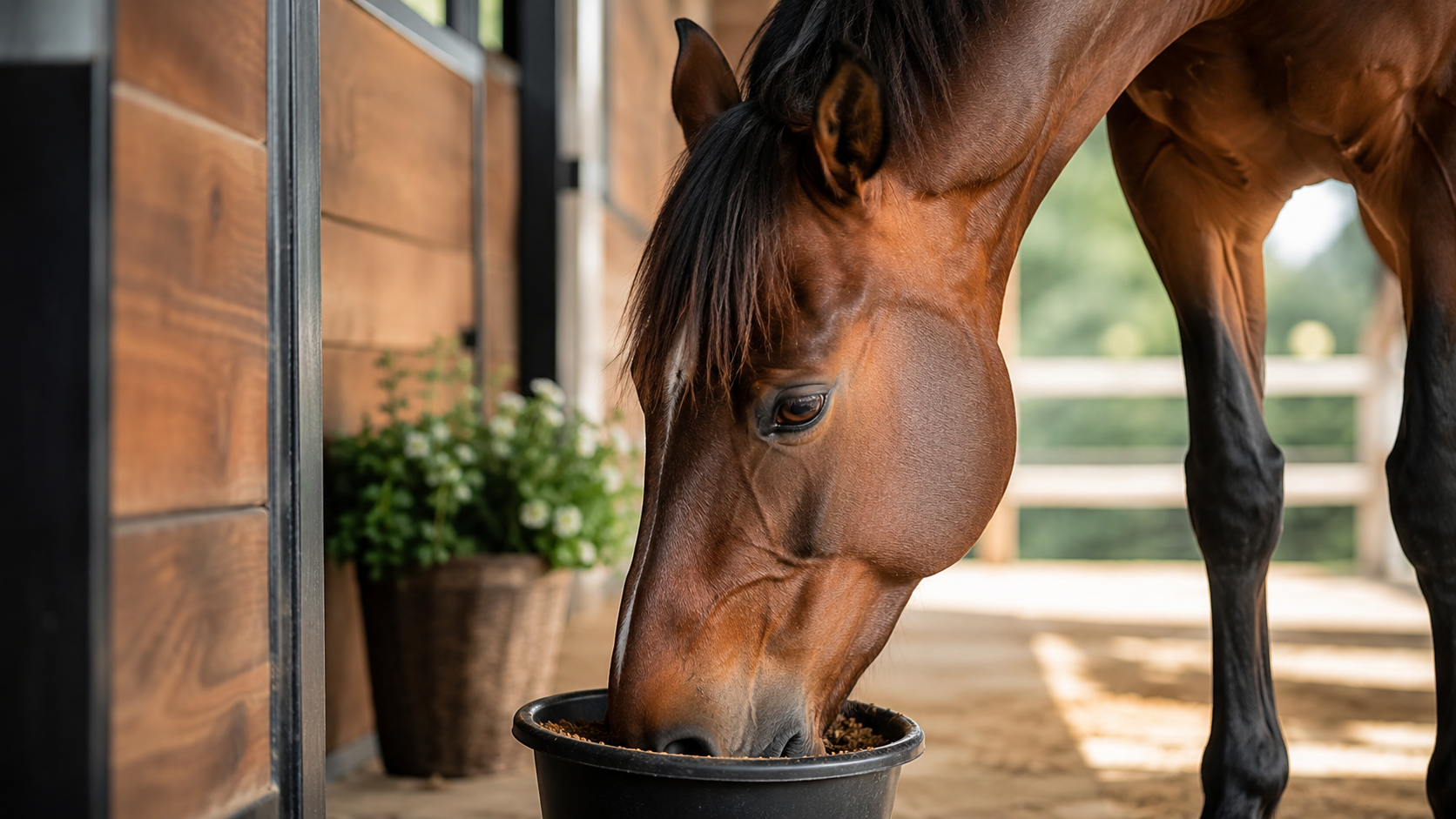
The Spiti Horse is a very economical pony, accustomed to sparse diets and harsh living conditions. Its metabolism is adapted to make the most of low-quality forage. It has a natural tendency to gain weight if its diet is not controlled, especially if it is not worked much. Coarse and abundant forage forms the basis of its diet, with concentrates only for intense work or specific needs (gestation, lactation).
Due to its economical metabolism, the Spiti Horse can be predisposed to Equine Metabolic Syndrome (EMS) and laminitis if overfed or sedentary, especially with diets rich in sugars and starch. It is important to monitor its weight and adjust its diet to avoid these risks.
With Equio, every feed, supplement or treat is read against the horse's real profile (age, weight, Body Condition Score, conditions) — useful for a Spiti Horse as soon as a metabolic or digestive sensitivity is known.

Health and points to watch
Particular attention should be paid to the condition of the hooves, which are naturally robust but may require regular trimming. Weight monitoring is crucial to prevent metabolic problems. Regular dental check-ups are also recommended, especially for older individuals.
- More frequent conditions: locomotor disorders related to joint wear due to mountain work (osteoarthritis), dental problems related to age and a rustic diet
Care and grooming
The hooves of the Spiti Horse are naturally hard and resilient, requiring regular trimming but often less frequently than other breeds. The mane and tail are thick and can be left natural or maintained according to preference. Its dense coat protects it well from the cold and does not require special clipping, except for comfort or intense work. Skin care is standard, with attention to rubbing caused by pack saddles.
Did you know?
- The Spiti Horse is capable of surviving at altitudes of over 4,000 meters, where oxygen is scarce and temperatures are extreme.
- It is often used to transport goods on narrow and dangerous trails, demonstrating exceptional agility and sure-footedness.
- The breed is threatened by the reduction of its natural habitat and the introduction of motorized vehicles for transport.
The Spiti Horse and how to track it
The Spiti Horse is a very rare breed outside its region of origin in India. There is no documented breeding or significant use of this breed in France.
Equio lets you build a complete profile for a Spiti Horse: identity, weight, Body Condition Score, feeding, conditions, care reminders (vaccines, worming, trimming) and an exportable health log. The breed sets the identity; everyday decisions still depend on the real horse and your vet's advice.
- Record the activity level: rest, leisure, sport or breeding
- Add known conditions or sensitivities
- Scan feeds, plants and care products
- Keep reminders (vaccines, worming, trimming)
- Prepare a PDF export before a vet appointment
Frequently asked questions
Is the Spiti Horse suitable for recreational riding in Europe?
Although docile and robust, the Spiti Horse is a rare breed highly specific to its mountainous environment. Its adaptation to different climates and uses in Europe would be possible, but it is unlikely to be found outside India.
What is special about its hooves?
The hooves of the Spiti Horse are renowned for their hardness and resilience, forged by centuries of evolution on rocky and steep terrain. They are naturally adapted to provide excellent grip and great robustness without shoeing.
Is it an endangered breed?
Yes, the Spiti Horse is considered an endangered breed. Its population is declining due to the modernization of transport in the Spiti Valley and the loss of its traditional role, as well as genetic dilution through crossbreeding with other breeds.
Can it be ridden despite its small size?
Yes, despite its small size (pony type), the Spiti Horse is extremely strong and capable of carrying weight. It is traditionally ridden by adults for transport and work, and can carry significant loads proportionate to its size.
What is its ideal diet?
Its ideal diet is based on coarse, medium-quality forages, with minimal concentrate intake. It is essential to monitor its weight to prevent obesity and associated metabolic problems, especially if it is not subjected to intense work.