
Horse breed
Kurdish Horse
The Kurdish Horse is an ancient breed, descended from indigenous horses of the Kurdistan mountains. Its history is closely linked to the Kurdish people, who have used it for centuries for transport, warfare, and agriculture in difficult terrain.
The breed at a glance
The Kurdish Horse is renowned for its courageous, resilient, and docile temperament. It is intelligent, loyal, and very enduring, making it an excellent working and trekking companion, capable of withstanding harsh conditions.
- Category
- hardy breed
- Origin
- Kurdistan (cross-border region between Turkey, Iran, Iraq, and Syria) · Antiquity, ancient local breeds
- Height at withers
- 135–150 cm
- Weight
- 350–450 kg
- Lifespan
- 25-30 years
- Common coats
- bay, chestnut, grey, black
- Disciplines
- equestrian trail riding, endurance (potential)
- Other names
- Kurdish Horse, Kurdish Pony
Origin and history
The Kurdish Horse is an ancient breed, descended from indigenous horses of the Kurdistan mountains. Its history is closely linked to the Kurdish people, who have used it for centuries for transport, warfare, and agriculture in difficult terrain. It is considered a descendant of horses from ancient Mesopotamia. Official recognition and standardization of the breed are still under development in some regions, but efforts are being made to preserve its bloodlines.
Conformation and physique
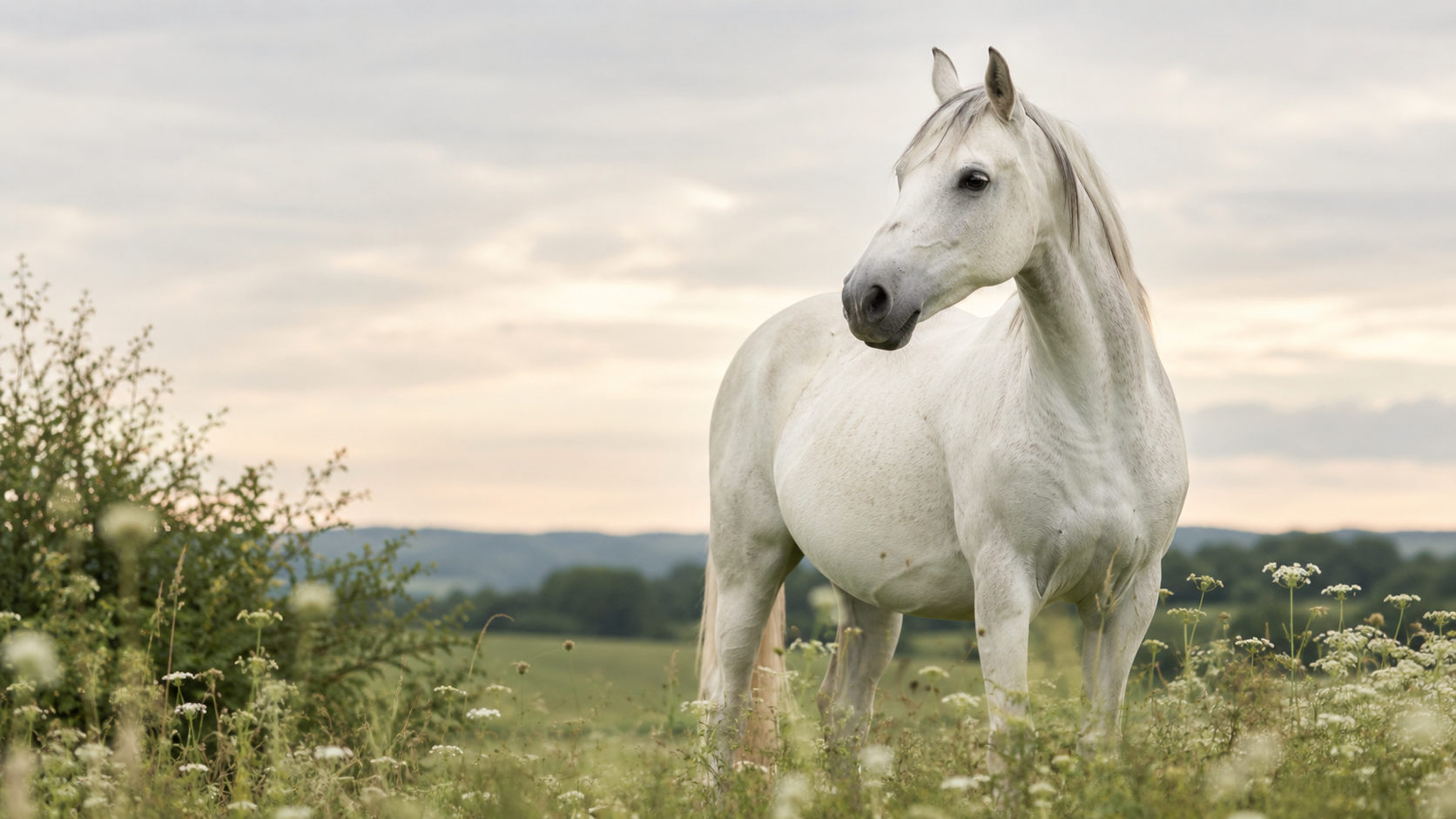
It is a medium-sized, compact, and muscular horse, adapted to mountainous terrain. It possesses a solid bone structure and a robust build, typical of hardy and enduring breeds.
The head is medium-sized, often with a straight or slightly convex profile. The eyes are expressive, and the ears are medium-sized and well-set.
The neck is strong and well-muscled, often short to medium, set into a low but well-defined wither.
The back is short and strong, and the topline is solid. The chest is broad and deep, ensuring good respiratory capacity. The croup is muscular and often slightly sloped.
The limbs are sturdy, with well-developed joints and clean tendons. The hooves are hard and resistant, adapted to rocky terrain. Feathering is generally sparse.
- Common coats: bay, chestnut, grey, black
Temperament and aptitudes
The Kurdish Horse is renowned for its courageous, resilient, and docile temperament. It is intelligent, loyal, and very enduring, making it an excellent working and trekking companion, capable of withstanding harsh conditions.
Its gaits are free, sure-footed, and energetic, with good agility, essential for moving over rugged terrain. The walk is sure-footed and the canter is powerful.
- Uses: pack animal / carrying loads, working mount (agriculture, pastoralism), recreational riding, equestrian trail riding, traditional races
- Disciplines: equestrian trail riding, endurance (potential)
Feeding the Kurdish Horse
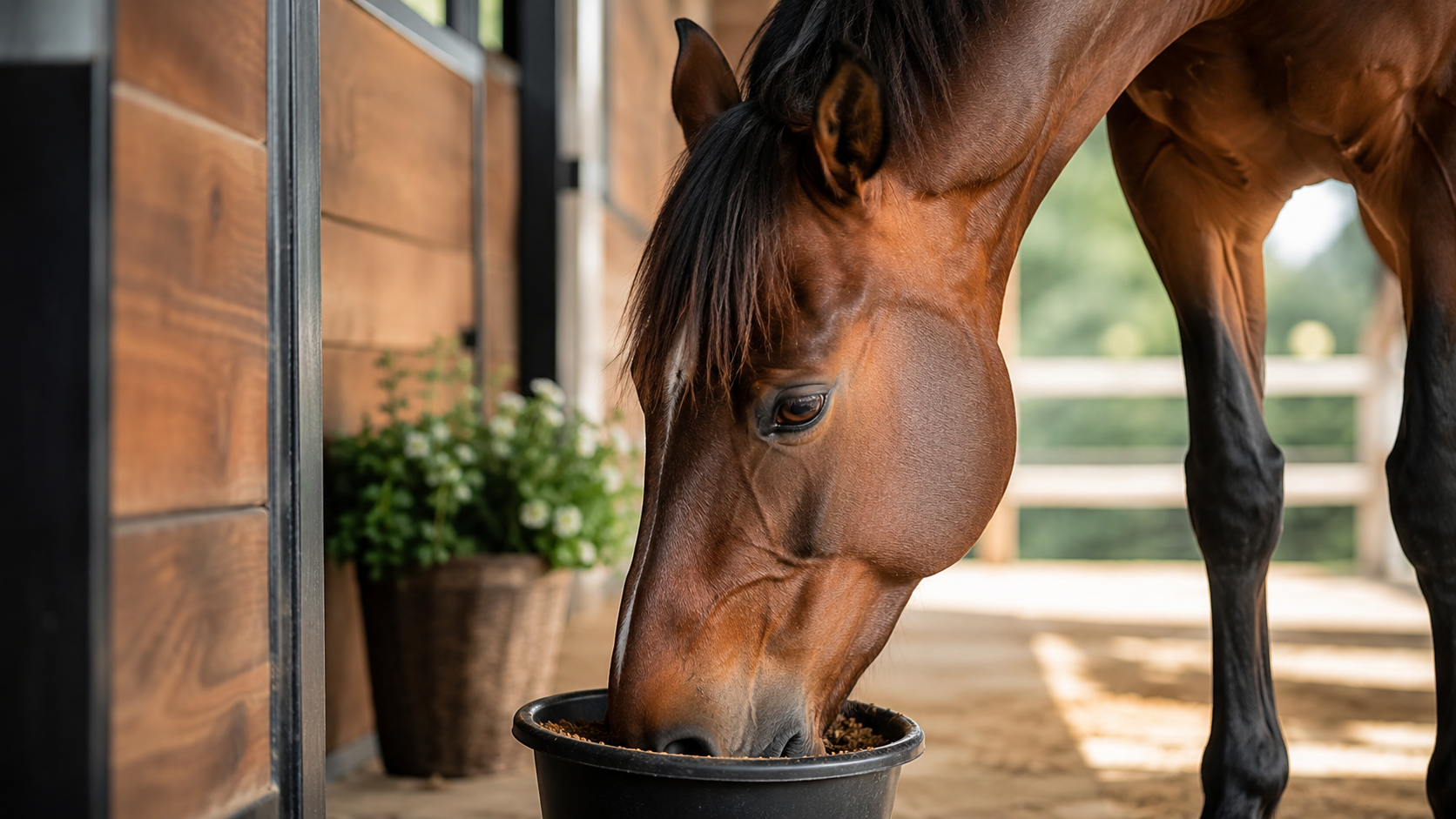
The Kurdish Horse is a hardy and economical breed, accustomed to frugal diets. Its metabolism is efficient, allowing it to thrive on medium-quality forage. It tends to become overweight if its diet is too rich and work is insufficient. A supply of good quality forage (hay, grass) is the basis of its diet, supplemented by concentrates only if the level of work is sustained.
As a hardy and economical breed, the Kurdish Horse can be predisposed to laminitis and Equine Metabolic Syndrome (EMS) if overfed or sedentary, especially with diets rich in sugars and starch. It is important to monitor its weight and adapt its diet to its activity level.
With Equio, every feed, supplement or treat is read against the horse's real profile (age, weight, Body Condition Score, conditions) — useful for a Kurdish Horse as soon as a metabolic or digestive sensitivity is known.
Health and points to watch
Particular attention must be paid to the condition of the hooves, which must be regularly trimmed to maintain their soundness. Weight monitoring is crucial to prevent metabolic risks. Good parasite management is also essential, as with any hardy breed.
- More frequent conditions: locomotor affections related to wear and tear on difficult terrain (osteoarthritis, foot problems if poorly maintained)
Care and grooming
The hooves of the Kurdish Horse are naturally hard and resilient, but require regular trimming to prevent uneven wear or cracks, especially if it does not work on abrasive terrain. The mane and tail are generally thick and may require occasional detangling. The coat is dense and does not require specific care; clipping is generally not necessary except for intensive work.
Did you know?
- The Kurdish Horse is often considered a historical 'warhorse,' having played a crucial role in conflicts in the Kurdistan region.
- It is renowned for its ability to cover long distances over mountainous and arid terrain with remarkable endurance.
- Some bloodlines are known for their aptitude for traditional local races, where their speed and endurance are put to the test.
The Kurdish Horse and how to track it
The breed is very poorly represented in France, where it is not officially recognized or significantly bred. The few individuals present are often imported or the result of crossbreeding.
Equio lets you build a complete profile for a Kurdish Horse: identity, weight, Body Condition Score, feeding, conditions, care reminders (vaccines, worming, trimming) and an exportable health log. The breed sets the identity; everyday decisions still depend on the real horse and your vet's advice.
- Record the activity level: rest, leisure, sport or breeding
- Add known conditions or sensitivities
- Scan feeds, plants and care products
- Keep reminders (vaccines, worming, trimming)
- Prepare a PDF export before a vet appointment
Frequently asked questions
Is the Kurdish Horse suitable for leisure riding in France?
Yes, its docile temperament, robustness, and endurance make it an excellent leisure horse, particularly for trail riding. However, its rarity in France makes its acquisition difficult.
What are the main qualities of the Kurdish Horse?
Its main qualities are its robustness, endurance, frugality, sure-footedness on difficult terrain, and its courageous and loyal temperament. It is very resistant to extreme climatic conditions.
Is the Kurdish Horse easy to maintain?
Yes, it is a hardy breed that requires little specific maintenance. Its dietary needs are moderate, and it is generally disease-resistant. The main attention should be paid to its hooves and weight management.
Can Kurdish Horses be found for sale in France?
It is very rare to find Kurdish Horses for sale in France, as the breed is not bred there. Acquisition would likely require importation, with the associated administrative and sanitary procedures.
Is the Kurdish Horse an endangered breed?
Although not officially classified as endangered globally, the breed faces preservation challenges in its region of origin due to conflicts and a lack of structured breeding programs. Local efforts are underway for its safeguarding.