
Horse breed
Belarusian Harness Horse
The breed was developed in Belarus after World War II, with the aim of creating a versatile draft horse, suitable for agricultural work and transport. It originated from complex crosses between local mares and stallions of European draft breeds such as the Soviet Heavy Draft, Russian Heavy Draft, Ardennes Draft, and Swedish Ardennes.

The breed at a glance
The Belarusian Harness Horse is renowned for its calm, docile, and hardworking temperament. It is willing, enduring, and easy to handle, making it an excellent partner for agricultural work and driving.
- Category
- draft horse
- Origin
- Belarus · Mid-20th century
- Height at withers
- 155–165 cm
- Weight
- 550–650 kg
- Lifespan
- 20-25 years
- Common coats
- bay, chestnut, black, grey
- Disciplines
- working draft, leisure driving
- Other names
- Belarusian Harness Horse, Biélorusse d'attelage
Origin and history
The breed was developed in Belarus after World War II, with the aim of creating a versatile draft horse, suitable for agricultural work and transport. It originated from complex crosses between local mares and stallions of European draft breeds such as the Soviet Heavy Draft, Russian Heavy Draft, Ardennes Draft, and Swedish Ardennes. The breed was officially recognized in 1980. Today, it is primarily used for harness work and the production of meat and milk.
Conformation and physique
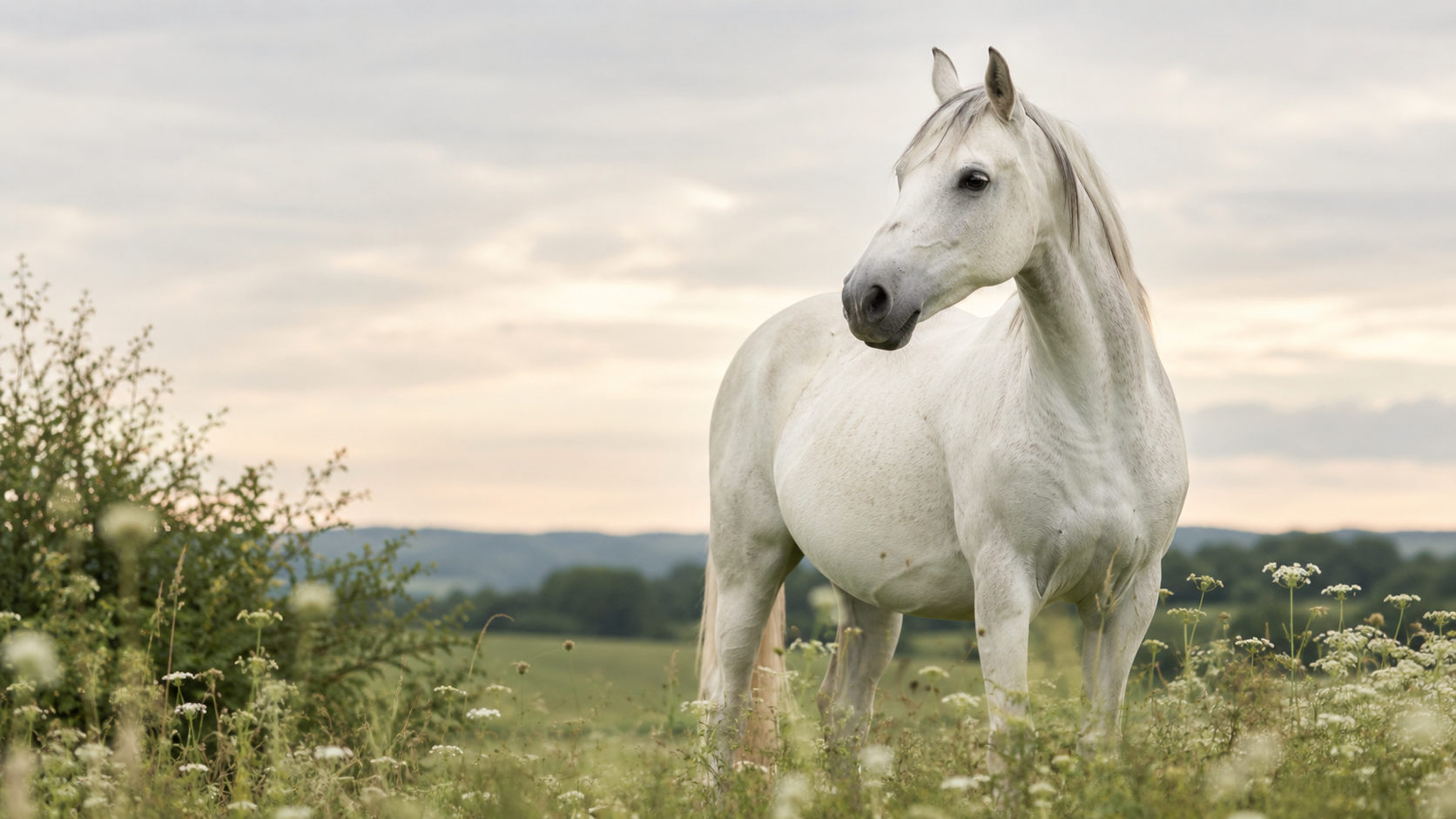
It is a medium to large-sized horse, with a robust and muscular silhouette, typical of draft horses. It possesses a strong bone structure and good body depth, a guarantee of strength and endurance.
The head is medium-sized, with a straight or slightly convex profile. The eyes are expressive and the ears are well-proportioned.
The neck is strong, muscular, and well-set, blending harmoniously into a broad and low wither.
The back is broad and short, the topline is straight and strong. The chest is deep and ample, and the croup is broad, muscular, and slightly sloping.
The limbs are short, strong, and well-muscled, with broad joints and well-defined tendons. Moderate feathering is often present.
- Common coats: bay, chestnut, black, grey
Temperament and aptitudes
The Belarusian Harness Horse is renowned for its calm, docile, and hardworking temperament. It is willing, enduring, and easy to handle, making it an excellent partner for agricultural work and driving.
The gaits are expansive, regular, and energetic, with good impulsion. The walk is particularly powerful, and the trot is balanced, well-suited for harness work.
- Uses: agricultural harnessing, leisure driving, transport, meat production, milk production
- Disciplines: working draft, leisure driving
Feeding the Belarusian Harness Horse
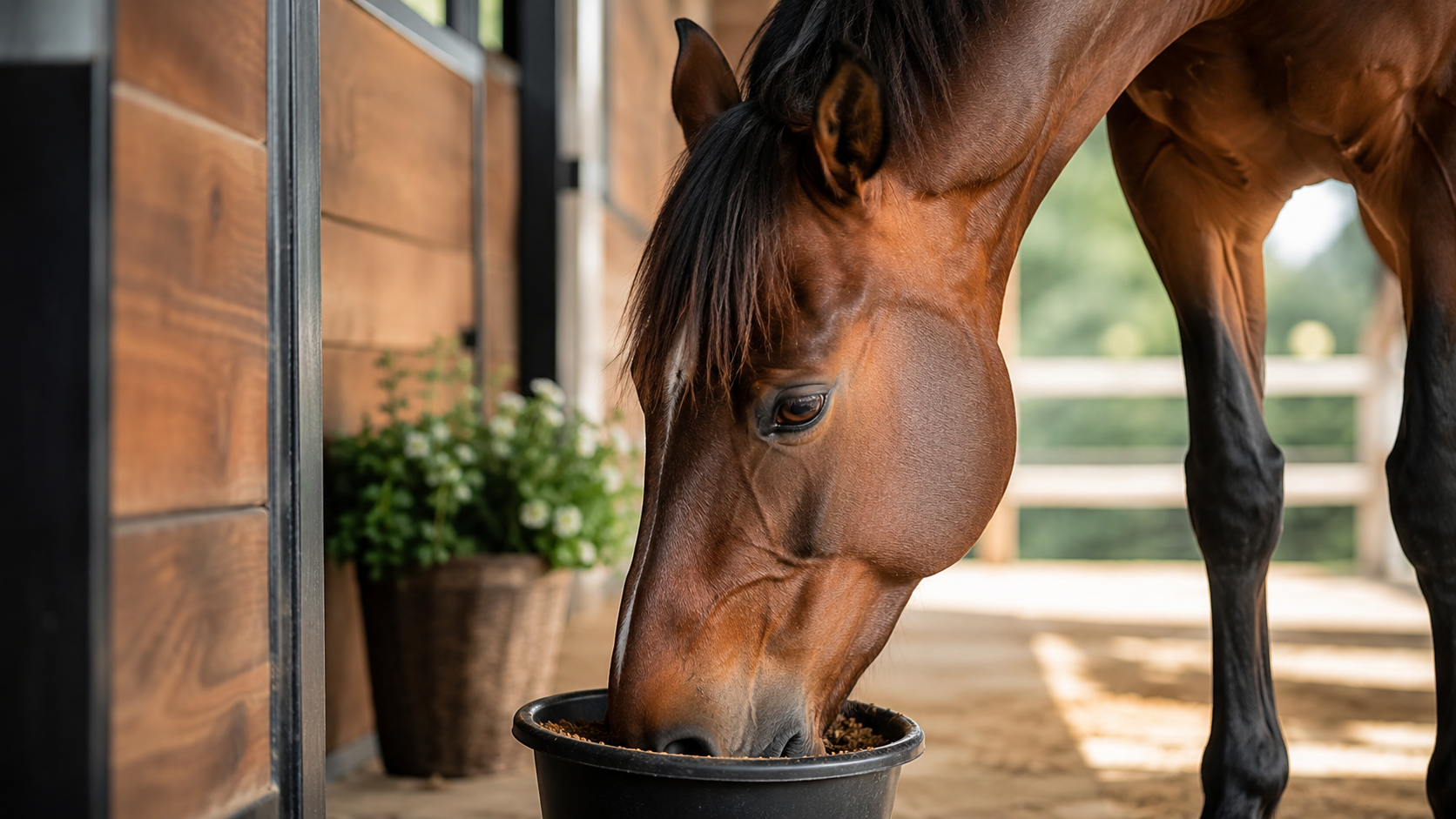
This is a horse with a rather efficient metabolism, capable of efficiently utilizing coarse forages. It tends to gain weight easily if its diet is not adjusted to its activity level. A base of good quality hay fed ad libitum is essential, supplemented with concentrates only if the work is intense, prioritizing feeds low in sugars and starch.
Like many easy-keeper draft horses, the Belarusian Harness Horse can be predisposed to Equine Metabolic Syndrome (EMS) and laminitis if overfed or if it has unlimited access to rich pastures. Careful dietary management is therefore crucial.
With Equio, every feed, supplement or treat is read against the horse's real profile (age, weight, Body Condition Score, conditions) — useful for a Belarusian Harness Horse as soon as a metabolic or digestive sensitivity is known.
Health and points to watch
It is important to regularly monitor body condition to prevent obesity and associated problems. Particular attention must be paid to joint and hoof health, especially in horses subjected to intense work.
- More frequent conditions: joint conditions due to heavy work, weight problems if diet is not managed
Care and grooming
The hooves require regular trimming suited to their size and robustness. The mane, tail, and feathering, often abundant, require regular care to prevent dermatitis. The coat is dense and does not require special clipping, except for aesthetic reasons or comfort during intense work.
Did you know?
- The Belarusian Harness Horse is also valued for its milk production in its country of origin, its milk being used for human consumption.
- It is recognized for its great hardiness and its ability to work in difficult climatic conditions.
- The breed played a crucial role in agricultural mechanization in Belarus before the advent of tractors.
The Belarusian Harness Horse and how to track it
The breed is very poorly represented in France, where it is not bred. The few individuals present are generally imported and used for recreational driving or collection.
Equio lets you build a complete profile for a Belarusian Harness Horse: identity, weight, Body Condition Score, feeding, conditions, care reminders (vaccines, worming, trimming) and an exportable health log. The breed sets the identity; everyday decisions still depend on the real horse and your vet's advice.
- Record the activity level: rest, leisure, sport or breeding
- Add known conditions or sensitivities
- Scan feeds, plants and care products
- Keep reminders (vaccines, worming, trimming)
- Prepare a PDF export before a vet appointment
Frequently asked questions
Is the Belarusian Harness Horse suitable for beginners?
Yes, thanks to its calm and docile temperament, the Belarusian Harness Horse can be a good choice for beginners, especially for recreational driving. Its strength and patience make it a reliable partner.
What is the cost of maintaining a Belarusian Harness Horse?
The cost of upkeep is comparable to that of other draft horses. It is generally economical to feed but requires regular veterinary and farriery care, as well as equipment suited to its size and strength.
Can a Belarusian Harness Horse be ridden?
Although primarily selected for harness work, the Belarusian Harness Horse can certainly be ridden. Its broad back and calm temperament make it a comfortable and safe mount, particularly for trail riding or light work.
Where can one find a Belarusian Harness Horse in France?
It is very difficult to find a Belarusian Harness Horse in France, as the breed is not bred there. Acquisition would likely require direct importation from Belarus or the Eastern European countries where the breed is present.
Is the Belarusian Harness Horse an endangered breed?
Although its population is not very large globally, the breed is not considered endangered in its country of origin, where it continues to be used for harness work and production.