
Horse breed
Camarillo White Horse
The breed was developed by Adolfo Camarillo in California, starting with a white Arabian Thoroughbred stallion named Sultan. Sultan was crossed with mares of various breeds, including Morgans and Thoroughbreds, to establish the white color.
The breed at a glance
The Camarillo White Horse is renowned for its gentle, intelligent, and cooperative temperament. It is generally easy to train, willing, and reliable, making it an excellent partner for various disciplines and riders of all levels.
- Category
- saddle horse
- Origin
- United States · Early 20th century (1920s)
- Height at withers
- 152–163 cm
- Weight
- 450–550 kg
- Lifespan
- 25-30 years
- Common coats
- white
- Disciplines
- dressage, western riding, equestrian trail riding, equestrian show
Origin and history
The breed was developed by Adolfo Camarillo in California, starting with a white Arabian Thoroughbred stallion named Sultan. Sultan was crossed with mares of various breeds, including Morgans and Thoroughbreds, to establish the white color. The breed was primarily used for parades and exhibitions by the Camarillo family for decades. It was officially recognized in 1992 with the creation of the breed association.
Conformation and physique
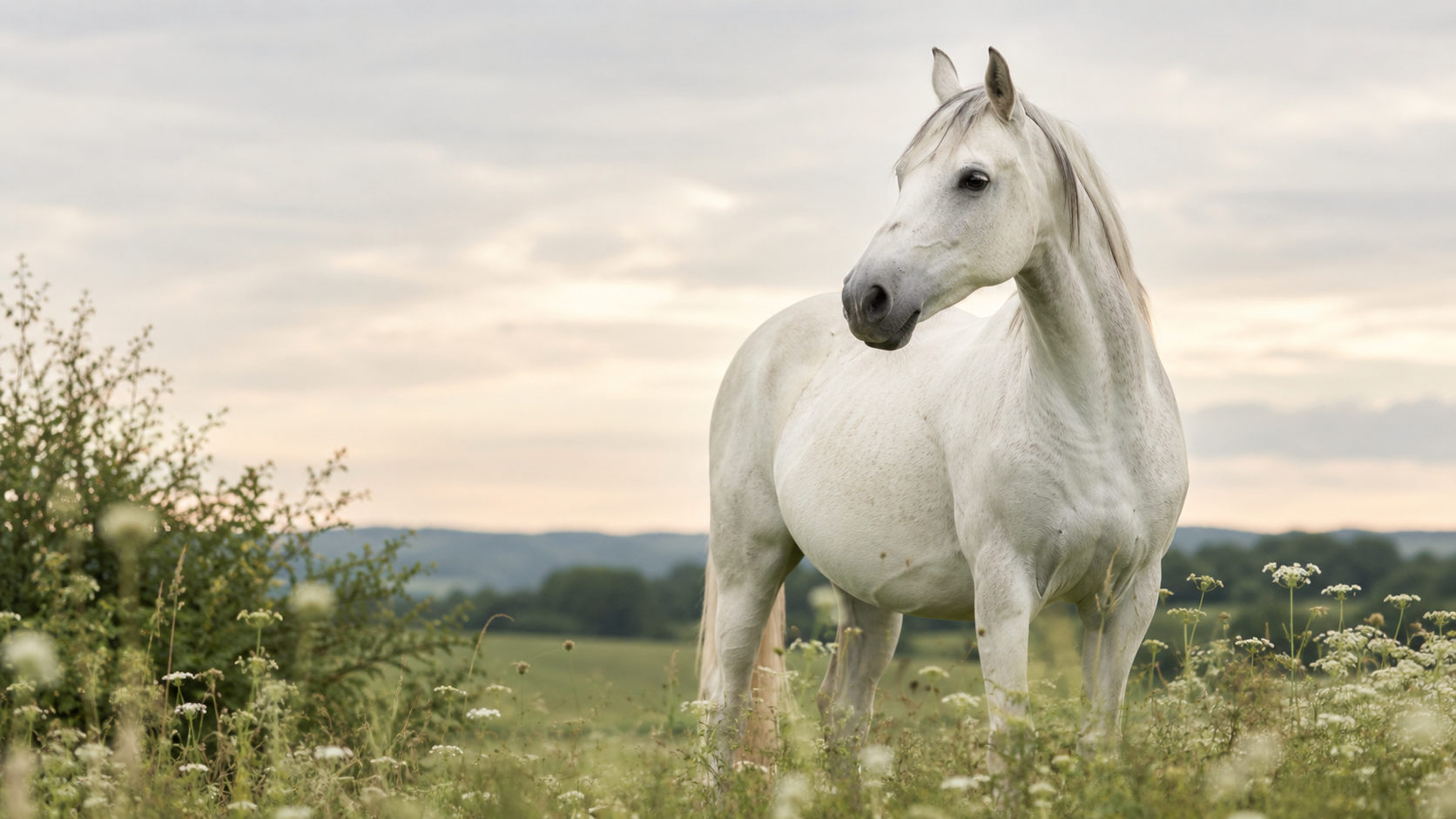
It is a medium-sized saddle horse, elegant and athletic, with a solid yet refined bone structure. It presents a harmonious silhouette, combining the refinement of the Arabian Thoroughbred and the robustness of American breeds.
Well-proportioned head, often with a straight or slightly concave profile, large expressive eyes, and wide nostrils. The ears are medium-sized and well-placed.
Long, well-arched neck, blending harmoniously into well-defined and muscular withers. The head carriage is proud.
Short, strong back, taut topline. Deep and wide chest, well-sprung ribs. Muscular and rounded croup, with a high-set tail.
Strong and well-muscled limbs, with clean joints and well-defined tendons. Cannons are of medium length, and the feet are well-formed and resilient. No excessive feathering.
- Common coats: white
Temperament and aptitudes
The Camarillo White Horse is renowned for its gentle, intelligent, and cooperative temperament. It is generally easy to train, willing, and reliable, making it an excellent partner for various disciplines and riders of all levels.
The gaits are supple, expansive, and energetic, with good impulsion. The walk is regular, the trot is airy, and the canter is balanced and comfortable.
- Uses: parade and show, recreational riding, dressage, working equitation, trail riding
- Disciplines: dressage, western riding, equestrian trail riding, equestrian show
Feeding the Camarillo White Horse
The Camarillo White Horse generally has a balanced metabolism, neither particularly economical nor excessively demanding. It requires a basic diet consisting of good quality forage (hay or grass) ad libitum. Concentrate requirements will depend on the intensity of work; a horse in light to moderate work may only need a mineral and vitamin supplement, while an athletic horse will require concentrates tailored to its activity level.
There are no documented specific predispositions to dietary sensitivities or particular metabolic risks for the Camarillo White Horse breed. A balanced diet tailored to activity remains paramount to prevent general metabolic disorders such as laminitis or EMS.
With Equio, every feed, supplement or treat is read against the horse's real profile (age, weight, Body Condition Score, conditions) — useful for a Camarillo White Horse as soon as a metabolic or digestive sensitivity is known.

Health and points to watch
Like all white horses, they can be more susceptible to sunburn, especially on areas of pink skin (muzzle, eyelids). Regular skin monitoring is recommended. The white color is not linked to the grey gene, so they do not develop the melanomas associated with grey horses.
Care and grooming
Care for the Camarillo White Horse is similar to that of other saddle horses. The white coat requires regular brushing to maintain its cleanliness and luster. The mane and tail, often abundant, may require frequent detangling. Hoof care is standard, with regular trimming.
Did you know?
- All Camarillo White Horses descend from a single foundation stallion, Sultan, born in 1912.
- The Camarillo family maintained the purity of the breed and presented it at numerous parades and events for 70 years, without ever selling a single one of these horses.
- The white color of the Camarillo White Horse is due to a dominant gene called the 'white gene' (W), distinct from the grey gene. White horses are born white and remain so throughout their lives.
The Camarillo White Horse and how to track it
The Camarillo White Horse breed is very rare in France and Europe. There is no significant breeding or established population in French territory.
Equio lets you build a complete profile for a Camarillo White Horse: identity, weight, Body Condition Score, feeding, conditions, care reminders (vaccines, worming, trimming) and an exportable health log. The breed sets the identity; everyday decisions still depend on the real horse and your vet's advice.
- Record the activity level: rest, leisure, sport or breeding
- Add known conditions or sensitivities
- Scan feeds, plants and care products
- Keep reminders (vaccines, worming, trimming)
- Prepare a PDF export before a vet appointment
Frequently asked questions
What is the difference between a Camarillo White Horse and a grey horse?
A Camarillo White Horse is born white and remains white throughout its life, due to a dominant white gene. A grey horse is born another color (often black, bay, or chestnut) and progressively whitens with age, becoming grey then white. Their genetics are distinct.
Is the Camarillo White Horse an albino?
No, the Camarillo White Horse is not an albino. True albino horses do not actually exist; white horses have blue or brown eyes and pigmented pink skin, whereas a true albino would have a complete absence of pigmentation, including in the eyes (red eyes).
Is it a rare breed?
Yes, the Camarillo White Horse is a very rare breed. Its global population is low, and it is primarily concentrated in California, its place of origin.
Is the Camarillo White Horse suitable for beginners?
Thanks to its gentle, intelligent, and cooperative temperament, the Camarillo White Horse can be an excellent choice for beginner riders or those seeking a reliable and easy-to-manage partner.
What is the price of a Camarillo White Horse?
Due to its rarity, the price of a Camarillo White Horse can be high and varies considerably depending on age, sex, bloodline, training level, and location. It is difficult to provide a precise range without specific information.