
Horse breed
Borana
The Borana horse is an indigenous breed from Ethiopia, specifically bred by the Borana people in the Oromia region. Its development is the result of natural and traditional selection over centuries, adapted to the arid and semi-arid conditions of the Horn of Africa.
The breed at a glance
The Borana is renowned for its calm, docile, and courageous temperament. It is very resilient, enduring, and easy to handle, making it an excellent working partner. It is also intelligent and learns quickly.
- Category
- hardy breed
- Origin
- Ethiopia · Antiquity / Middle Ages (progressive development)
- Height at withers
- 130–145 cm
- Weight
- 300–400 kg
- Lifespan
- 20-25 years
- Common coats
- bay, chestnut, grey, black, dun
- Disciplines
- equestrian trail riding, endurance (local), agricultural work
Origin and history
The Borana horse is an indigenous breed from Ethiopia, specifically bred by the Borana people in the Oromia region. Its development is the result of natural and traditional selection over centuries, adapted to the arid and semi-arid conditions of the Horn of Africa. It is primarily used for transport, agricultural work, and as a war or prestige mount. The breed has no major official international recognition but is crucial for local communities.
Conformation and physique
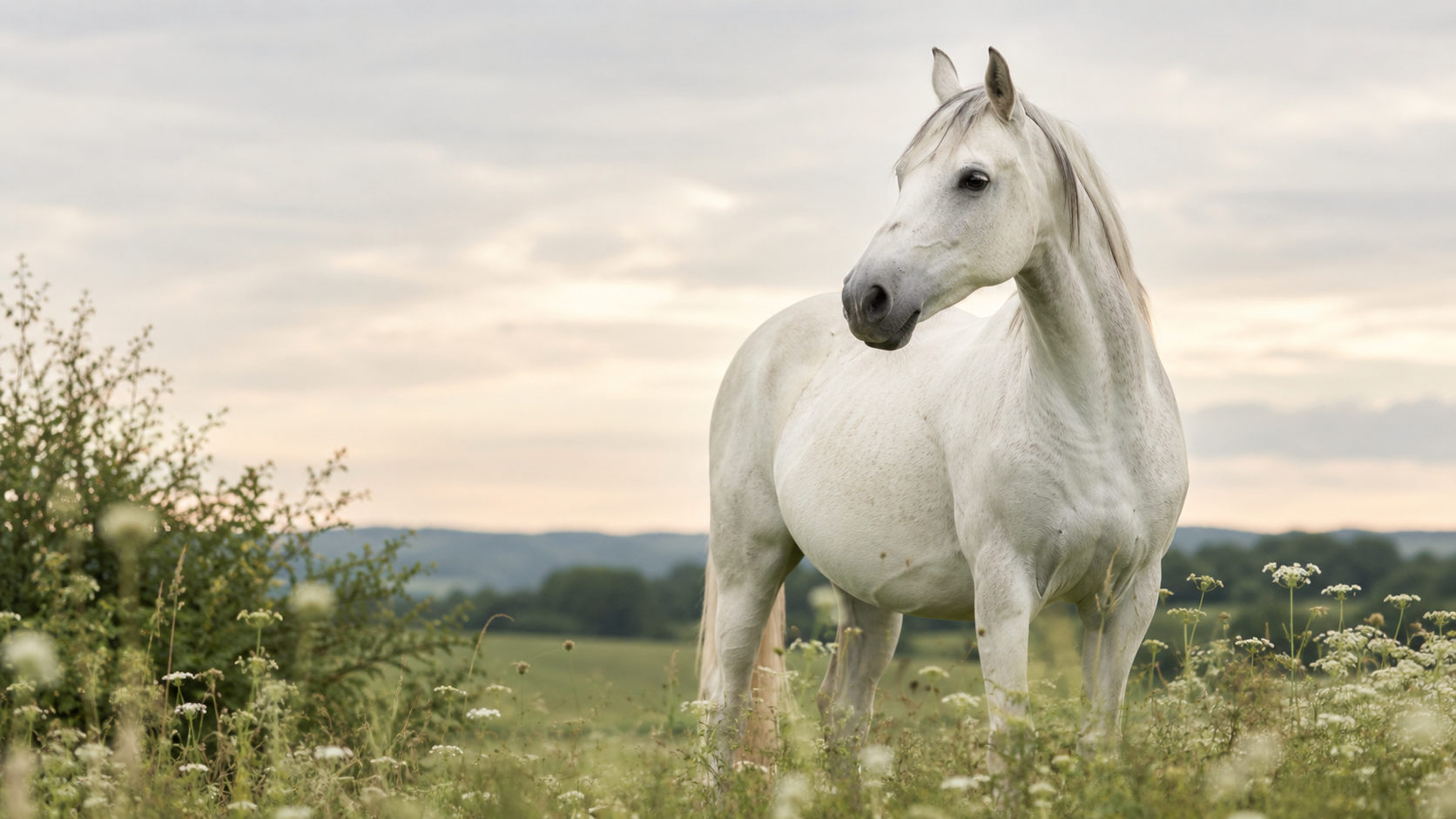
The Borana is a small to medium-sized horse, with a compact and muscular build, typical of hardy breeds adapted to harsh environments. Its bone structure is solid, without being heavy, giving it good endurance and agility.
The head is medium-sized, often with a straight or slightly convex profile. The eyes are expressive and the nostrils are well-opened. The ears are medium-sized and well-set.
The neck is of medium length, well-set and muscular, joining a wither that is not very pronounced but well-defined. It is proportioned to the body, allowing good mobility.
The back is short and strong, the topline is straight and muscular. The chest is deep and wide, offering good lung capacity. The croup is rounded and well-muscled, often slightly sloping.
The limbs are clean, strong, and well-conformed, with robust joints. The cannon bones are short and the hooves are hard and well-formed, adapted to rocky terrain. Feathers are generally absent or very sparse.
- Common coats: bay, chestnut, grey, black, dun
Temperament and aptitudes
The Borana is renowned for its calm, docile, and courageous temperament. It is very resilient, enduring, and easy to handle, making it an excellent working partner. It is also intelligent and learns quickly.
The gaits are free, energetic, and sure-footed, with good ground cover. The walk is active, the trot is supple, and an amble is sometimes observed, which is appreciated for long journeys.
- Uses: transport of people and goods, agricultural work (light plowing, draft), war and prestige mount (historical), traditional breeding, trail riding
- Disciplines: equestrian trail riding, endurance (local), agricultural work
Feeding the Borana
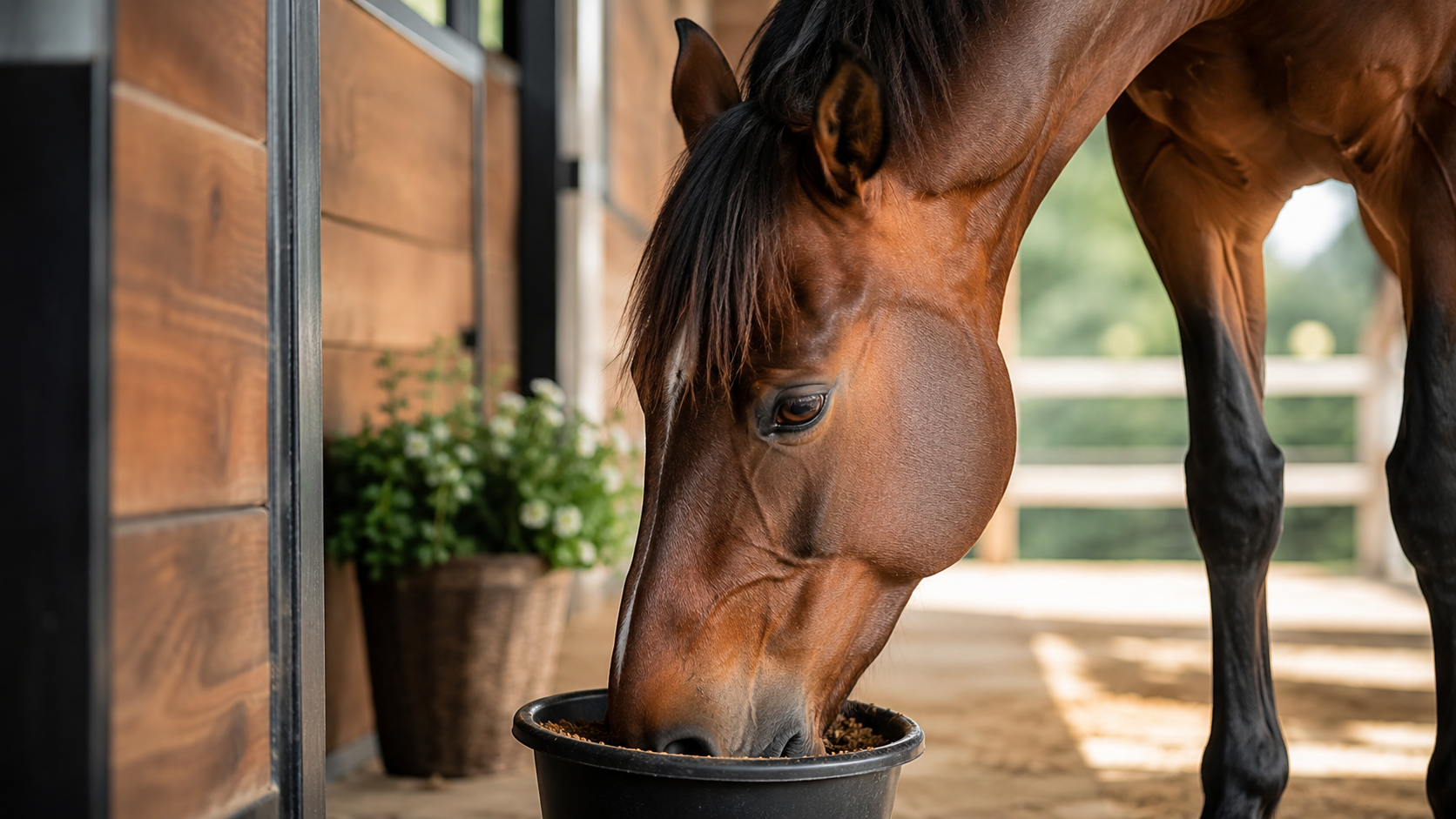
The Borana is a very thrifty horse, adapted to poor diets and limited forage conditions. It has an efficient metabolism and is capable of utilizing coarse forages. It has a natural tendency to gain weight if its diet is too rich. Its concentrate requirements are low, except in cases of intense and prolonged work, where moderate supplementation may be necessary.
Due to its thrifty metabolism, the Borana can be predisposed to obesity and, by extension, to metabolic risks such as laminitis or Equine Metabolic Syndrome (EMS) if overfed with diets rich in sugars and starch, especially if it lacks exercise. Careful dietary management is crucial.
With Equio, every feed, supplement or treat is read against the horse's real profile (age, weight, Body Condition Score, conditions) — useful for a Borana as soon as a metabolic or digestive sensitivity is known.
Health and points to watch
Particular attention should be paid to parasite management, hoof condition, and dentition, especially in older horses. Weight monitoring is also important to prevent metabolic problems related to obesity.
- More frequent conditions: gastrointestinal parasitism (due to husbandry conditions), dental problems related to age and tooth wear from abrasive forages, hoof ailments (if hooves are not maintained or on overly wet ground)
Care and grooming
Care for the Borana is relatively simple due to its hardiness. Its naturally hard hooves require regular trimming but are less prone to problems than those of other breeds. The mane and tail are generally left natural. The coat is short and does not require clipping, except for aesthetic reasons or comfort in very hot climates. Good general hygiene and regular brushing are sufficient.
Did you know?
- The Borana people traditionally use these horses not only for work, but also as a symbol of social status and wealth.
- These horses are renowned for their ability to cover long distances in extreme climatic conditions, with little water and food.
- The Borana is one of the many indigenous equine breeds of Ethiopia, a country with great equine genetic diversity.
The Borana and how to track it
The Borana breed is virtually non-existent in France. There is no documented breeding or significant use of this breed outside its country of origin, Ethiopia.
Equio lets you build a complete profile for a Borana: identity, weight, Body Condition Score, feeding, conditions, care reminders (vaccines, worming, trimming) and an exportable health log. The breed sets the identity; everyday decisions still depend on the real horse and your vet's advice.
- Record the activity level: rest, leisure, sport or breeding
- Add known conditions or sensitivities
- Scan feeds, plants and care products
- Keep reminders (vaccines, worming, trimming)
- Prepare a PDF export before a vet appointment
Frequently asked questions
Is the Borana horse adapted to cold climates?
The Borana is primarily adapted to the hot and arid climates of Ethiopia. Although hardy, it is not naturally prepared for harsh winters and would require specific adaptations (shelter, blanketing, diet) in cold regions.
What is the availability of the Borana outside Ethiopia?
The Borana is a very localized breed, and its availability outside Ethiopia is extremely limited. It is not commercially exported and is rarely seen outside its region of origin.
Is the Borana a good horse for beginners?
Thanks to its calm and docile temperament, the Borana could potentially be suitable for beginners, provided it is well-trained. However, its rarity makes it an unrealistic choice for most beginner riders.
What are the main qualities of the Borana?
The main qualities of the Borana are its hardiness, endurance, disease resistance, calm temperament, and its ability to survive in harsh environments with few resources. It is a reliable and versatile working horse.
Is the Borana an endangered breed?
Although the exact population is not always precisely documented, indigenous breeds like the Borana can be vulnerable to uncontrolled crossbreeding and environmental changes. Local conservation efforts are often necessary to maintain the purity of the breed.