
Horse breed
Albanian Horse
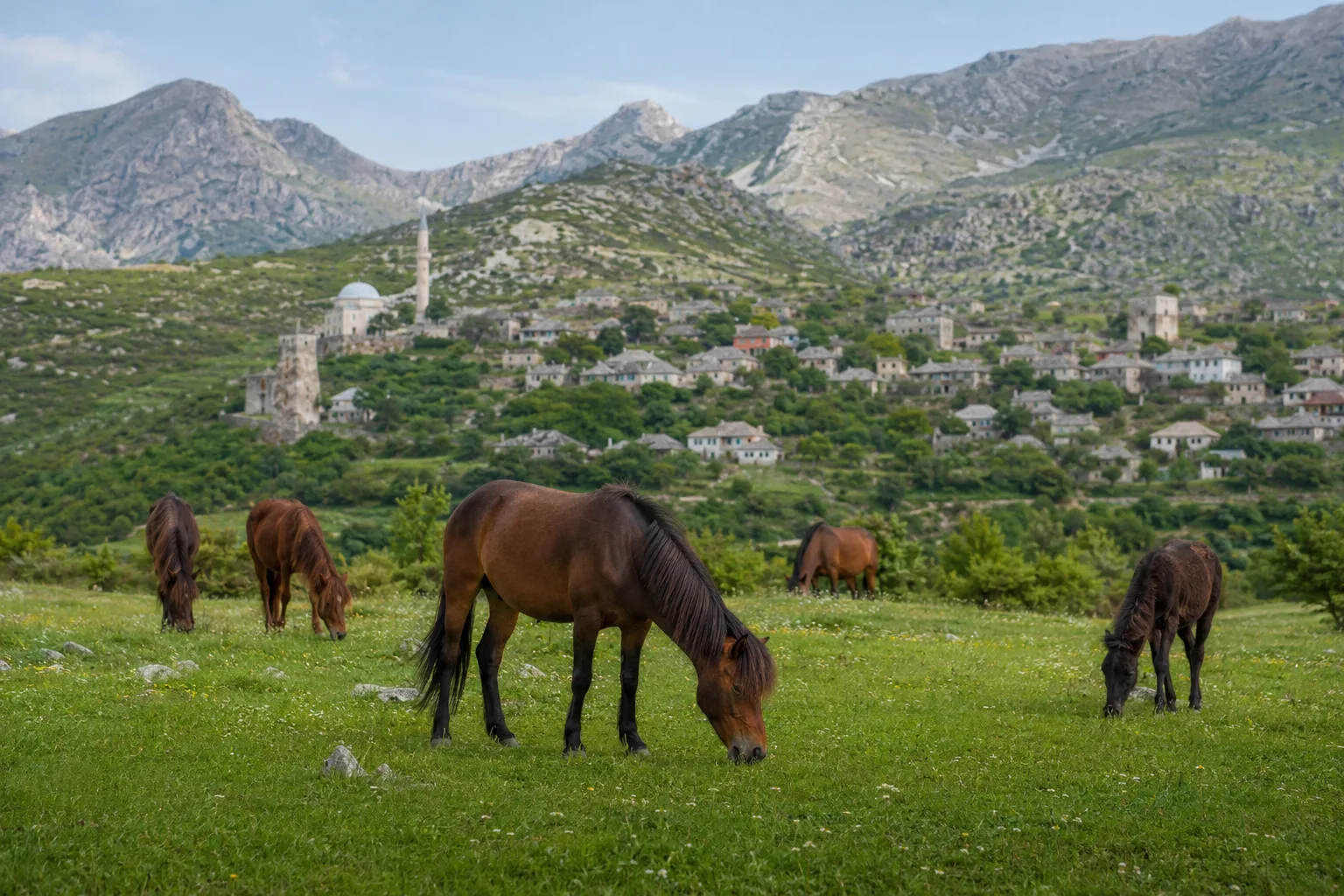
The Albanian horse is an ancient breed, likely descending from indigenous Balkan horses and having been influenced by oriental breeds over the centuries. It was shaped by Albania's challenging geographical and climatic conditions, as well as by the local population's needs for transport and agricultural work.

The breed at a glance
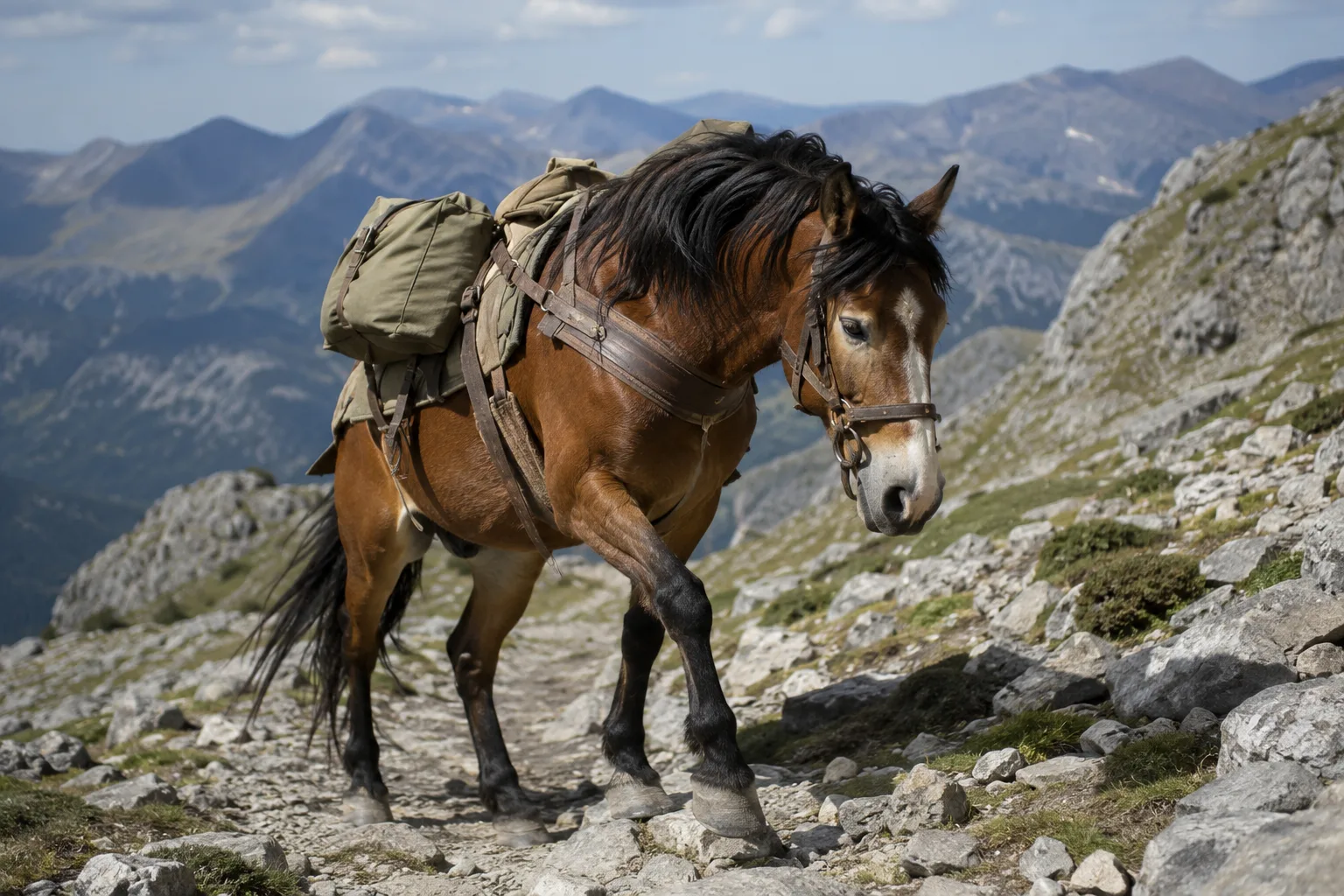
The Albanian horse is renowned for its calm, courageous, and enduring temperament. It is docile, easy to handle, and very resilient, making it an excellent working and pack horse, capable of carrying significant loads over long distances.
- Category
- hardy breed
- Origin
- Albania · Antiquity / Middle Ages
- Height at withers
- 125–135 cm
- Weight
- 250–350 kg
- Lifespan
- 20-25 years
- Common coats
- bay, chestnut, black, grey
- Disciplines
- equestrian trail riding, working equitation
- Other names
- Cheval Albanais, Cheval des montagnes albanaises
Origin and history
The Albanian horse is an ancient breed, likely descending from indigenous Balkan horses and having been influenced by oriental breeds over the centuries. It was shaped by Albania's challenging geographical and climatic conditions, as well as by the local population's needs for transport and agricultural work. The breed did not undergo intensive selection before the 20th century, but preservation and improvement efforts have been undertaken, notably through crosses with Arabian and Nonius breeds to enhance its size and conformation. It is officially recognized in Albania as a national breed.
Conformation and physique
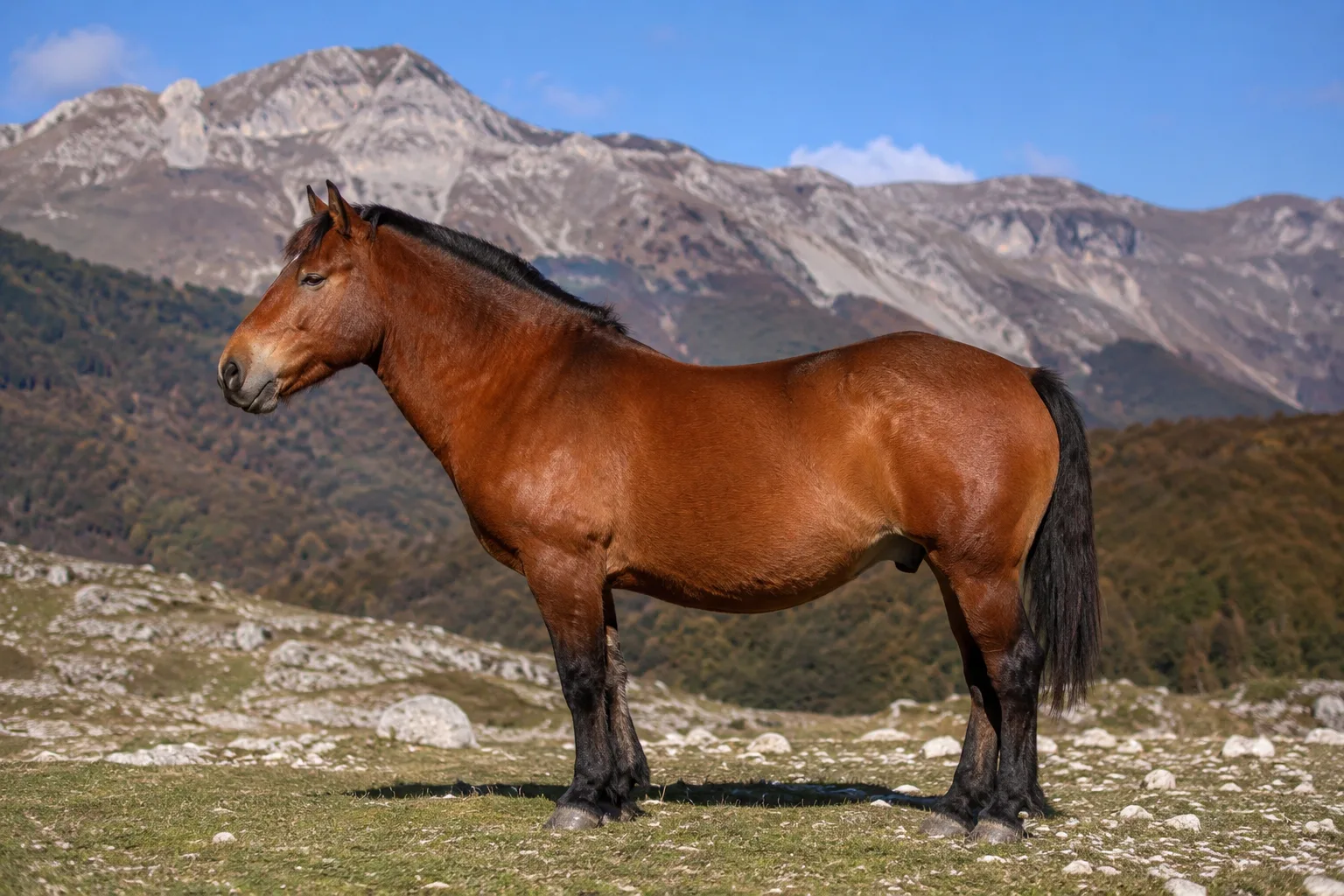
It is a small-sized horse, compact and robust, with strong bone structure and well-developed musculature, adapted to mountainous terrain. It exhibits a typical silhouette of hardy working horses.
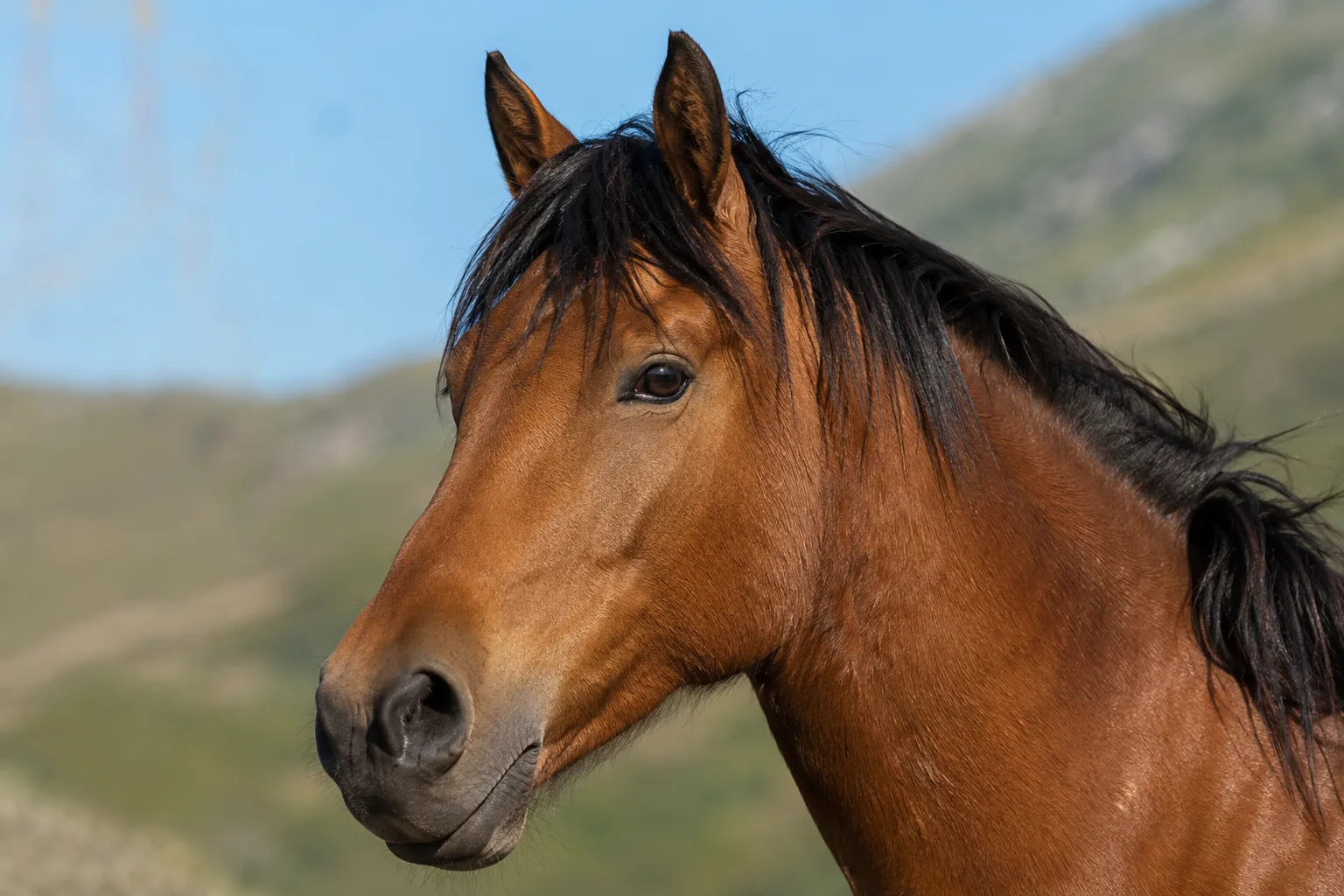
The head is medium-sized, often with a straight or slightly convex profile. The eyes are expressive, and the ears are medium-sized and well-set.
The neck is short and muscular, well-set, blending into a low but broad wither.
The back is short and strong, the topline is straight. The chest is deep and broad, and the croup is muscular, often slightly sloped.
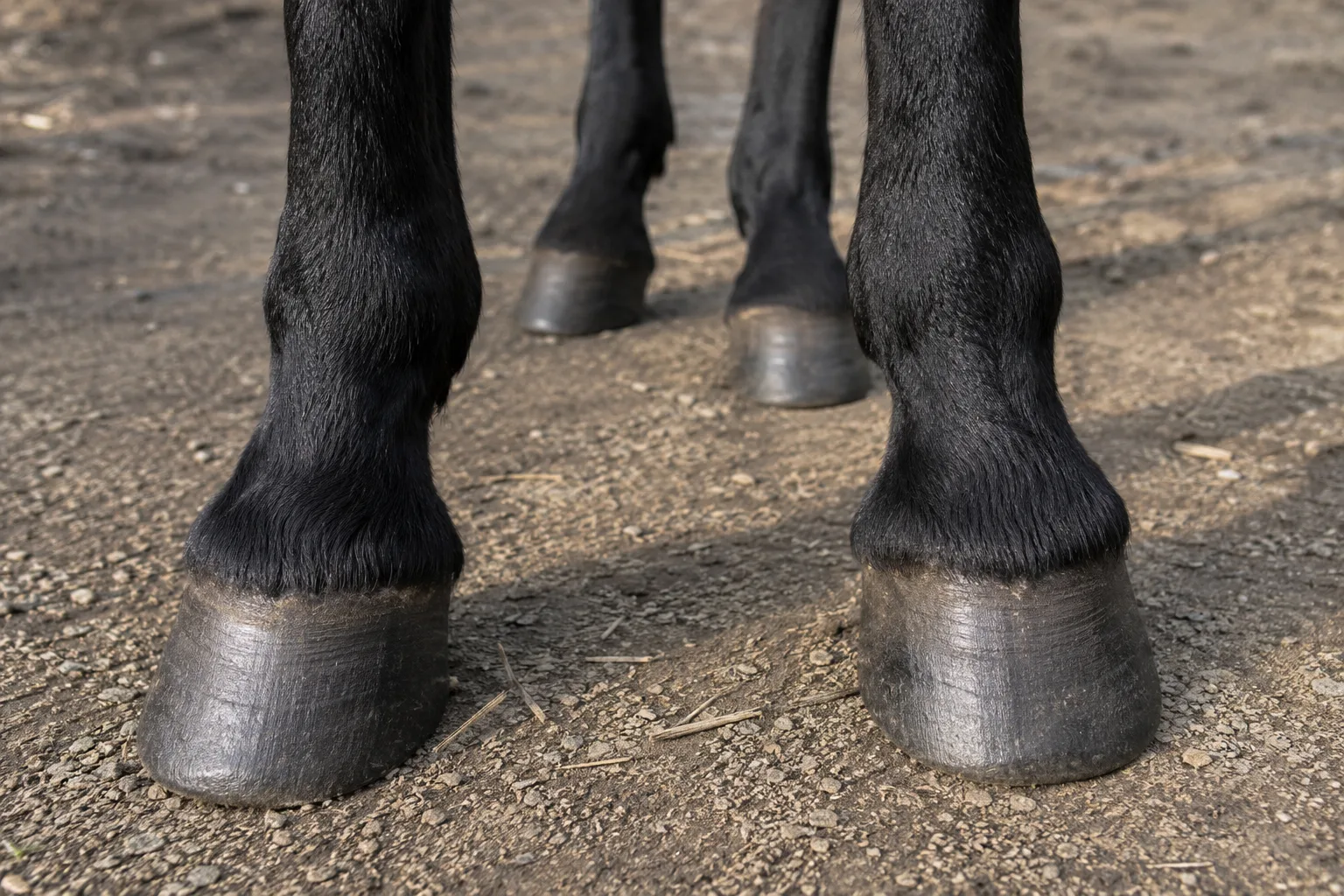
The limbs are short, strong, and clean, with well-defined joints and hard, resilient hooves, adapted to rocky terrain. Feathering is generally sparse.
- Common coats: bay, chestnut, black, grey
Temperament and aptitudes
The Albanian horse is renowned for its calm, courageous, and enduring temperament. It is docile, easy to handle, and very resilient, making it an excellent working and pack horse, capable of carrying significant loads over long distances.
The gaits are energetic, sure-footed, and regular, with a good aptitude for travel over difficult terrain. The walk is particularly sure-footed and the trot is active.
- Uses: pack horse, light draft horse, agricultural work mount, mountain transport, recreational riding
- Disciplines: equestrian trail riding, working equitation
Feeding the Albanian Horse
The Albanian horse is an efficient metabolizer, accustomed to frugal diets. It tends to utilize coarse forages well and can easily become overweight if its diet is not adapted to its activity level. A diet based on good quality hay is generally sufficient, along with mineral and vitamin supplements. Concentrates are only necessary for horses subjected to intense work.
As a hardy and economical breed, the Albanian horse may be predisposed to Equine Metabolic Syndrome (EMS) and laminitis if overfed or sedentary, especially with diets rich in sugars and starch. It is important to monitor its weight and adjust its diet accordingly.
With Equio, every feed, supplement or treat is read against the horse's real profile (age, weight, Body Condition Score, conditions) — useful for a Albanian Horse as soon as a metabolic or digestive sensitivity is known.
Health and points to watch
Particular attention should be paid to weight management to prevent metabolic risks. The robustness of its hooves requires regular trimming but can tolerate longer intervals than other breeds. Joint monitoring is advisable for older working horses.
- More frequent conditions: locomotor disorders related to wear and tear (osteoarthritis) in older or heavily worked horses, age-related dental problems
Care and grooming
The Albanian horse's hooves are naturally hard and resilient, requiring regular trimming but often able to go unshod on non-abrasive terrain. The mane and tail are generally thick and require simple maintenance. The coat is dense and does not demand special care, apart from regular brushing. Its hardiness makes it less susceptible to skin conditions.
Did you know?
- The Albanian horse is often compared to Balkan ponies for its size and robustness, but it is considered a full-fledged horse in Albania.
- It played a crucial role in Albania's history, being the primary means of transport and work in mountainous regions before motorization.
- There are several types within the Albanian breed, often named after their region of origin, such as the Myzeqeja or the Shkodra, each with slight variations in size and conformation.
The Albanian Horse and how to track it
The Albanian breed is very rare in France, if not non-existent as a structured breeding program. A few individuals may be present through isolated imports or crossbreeding, but it is neither recognized nor actively bred on French territory.
Equio lets you build a complete profile for a Albanian Horse: identity, weight, Body Condition Score, feeding, conditions, care reminders (vaccines, worming, trimming) and an exportable health log. The breed sets the identity; everyday decisions still depend on the real horse and your vet's advice.
- Record the activity level: rest, leisure, sport or breeding
- Add known conditions or sensitivities
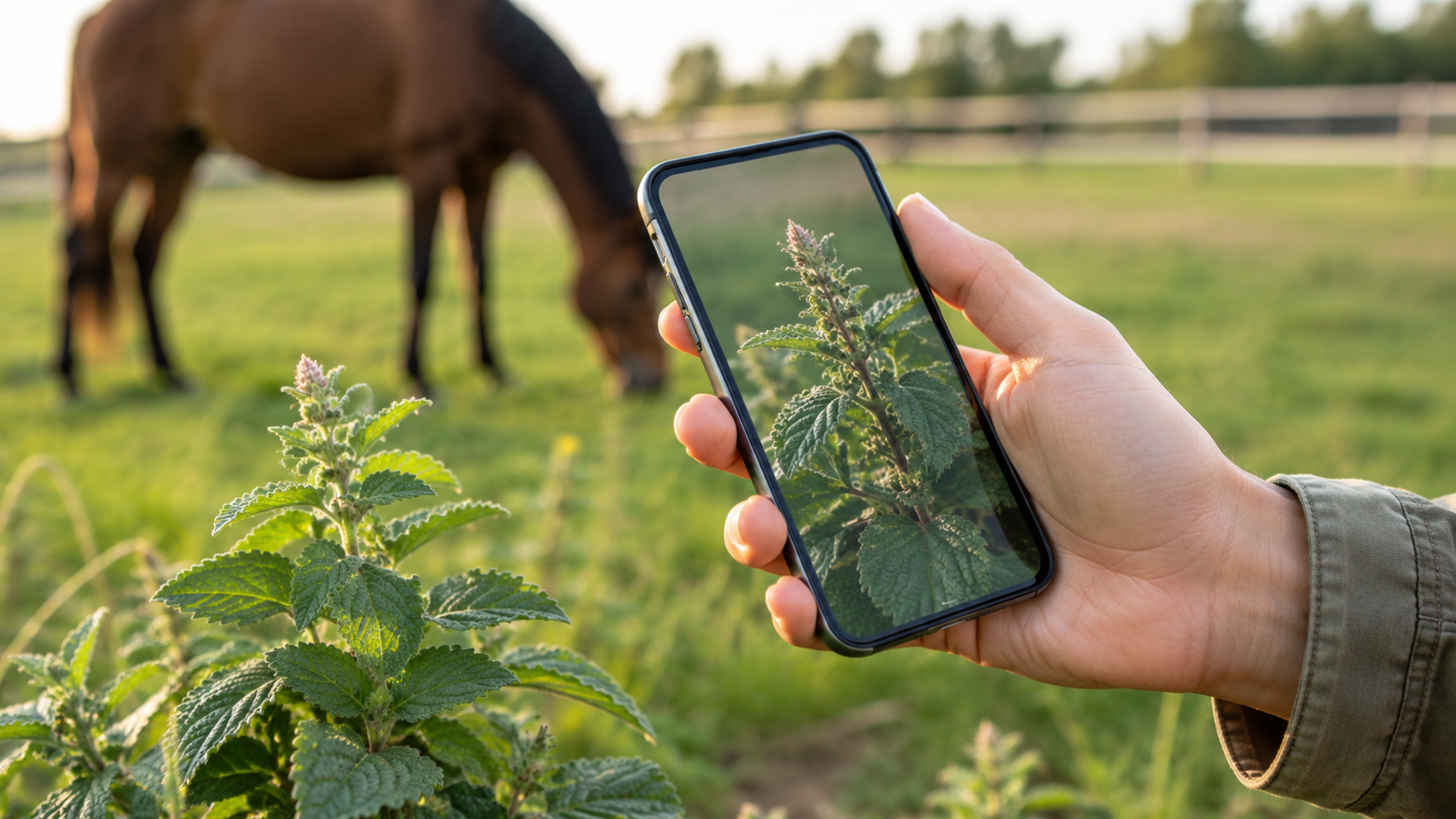
- Scan feeds, plants and care products
- Keep reminders (vaccines, worming, trimming)
- Prepare a PDF export before a vet appointment
Frequently asked questions
Is the Albanian horse suitable for leisure riding in France?
Although very rare in France, the Albanian horse, with its calm temperament and robustness, would be an excellent companion for equestrian trekking and leisure riding, especially on varied terrain. Its small size, however, can be a limiting factor for some riders.
What is the difference between an Albanian horse and a pony?
Although small in size (often under 148 cm), the Albanian horse is considered a horse due to its general conformation, strength, and bone structure. The distinction between a horse and a pony is sometimes cultural and related to historical usage.
Is it possible to buy an Albanian horse in France?
It is extremely difficult to find a purebred Albanian horse in France. You would likely need to consider direct import from Albania or neighboring countries, which involves complex administrative and sanitary procedures.
Is the Albanian horse an endangered breed?
Yes, like many local hardy breeds, the Albanian horse is considered endangered due to motorization and the decline of its traditional role. Conservation efforts are underway in Albania to preserve the breed.
What type of rider is best suited for an Albanian horse?
A rider looking for a reliable, hardy, and sure-footed partner for trekking, outdoor work, or leisure riding will appreciate the Albanian horse. It is suitable for both beginners and experienced riders due to its good temperament.